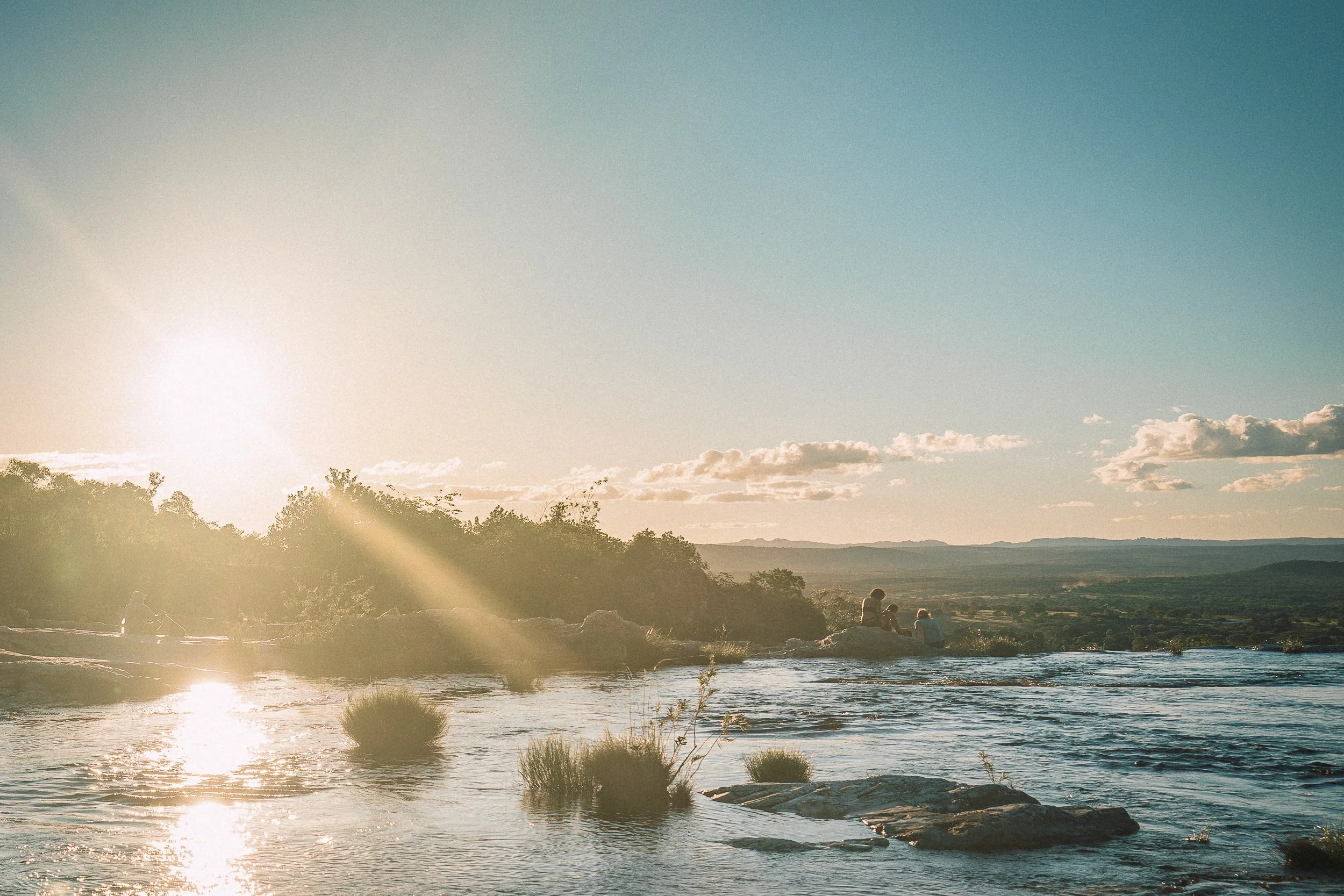
What to Expect
What Our Trips are Like on the Ground
Long days outside. Simple wood-fired meals. Time in small communities. Few others on the trail.
However you travel with us, the core stays the same: original routes, active days, honest comfort, and a level of immersion that’s increasingly rare.
Elisa and I lead each trip ourselves, alongside men and women who call the range home.
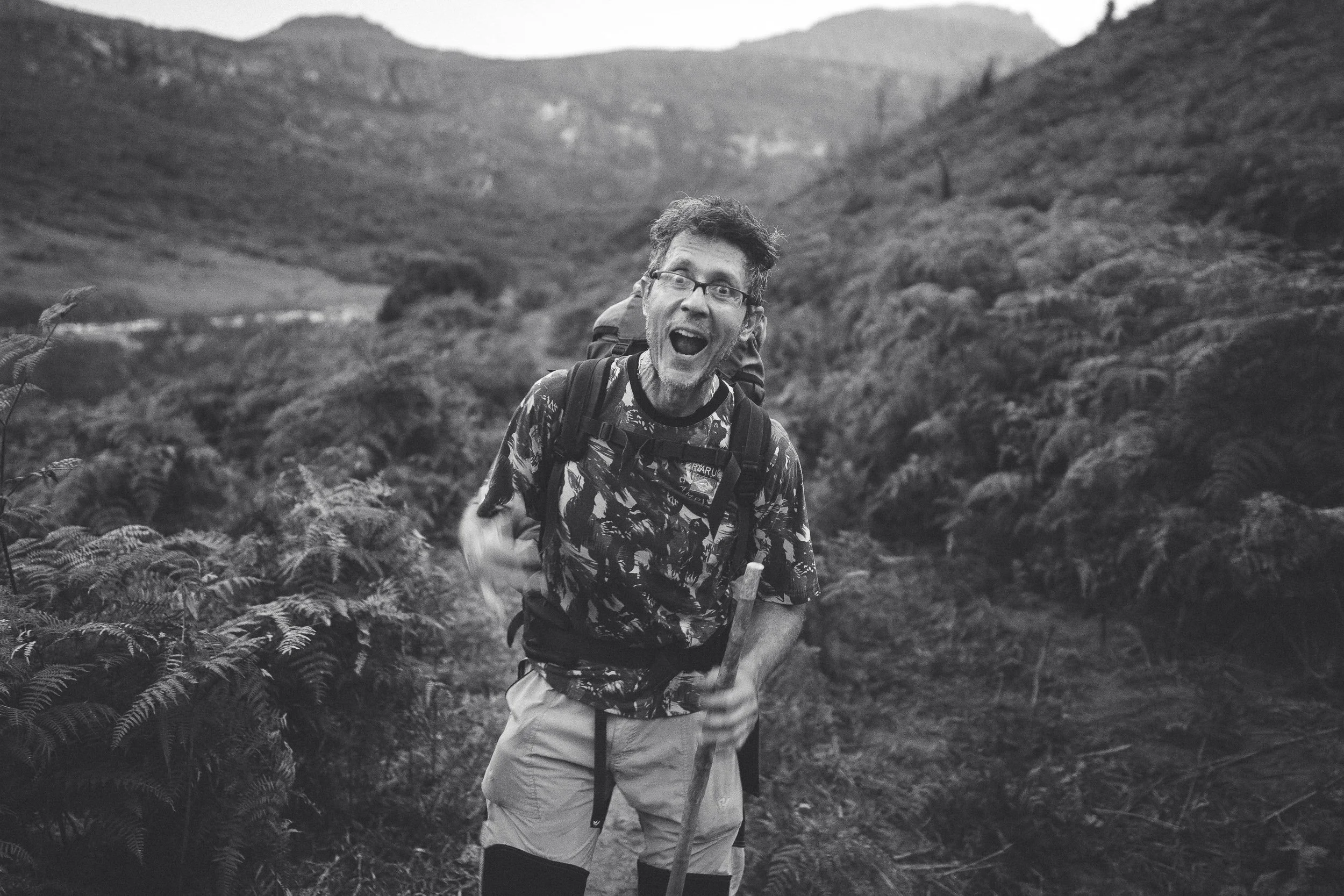
Going to Santo’s house.
Bica d’Agua, October
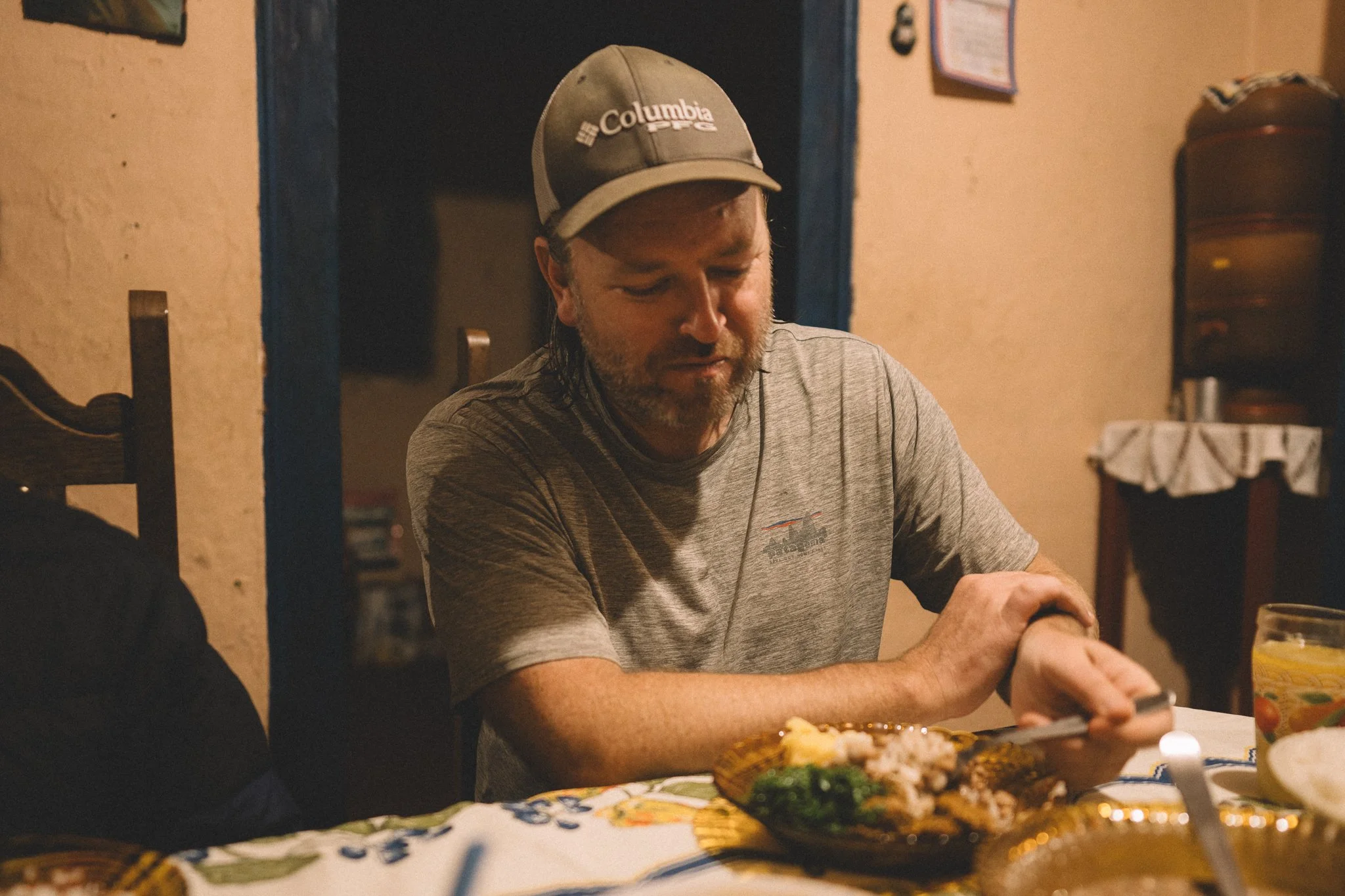
Dinner at Poliana’s.
Quartel do Indaiá, July
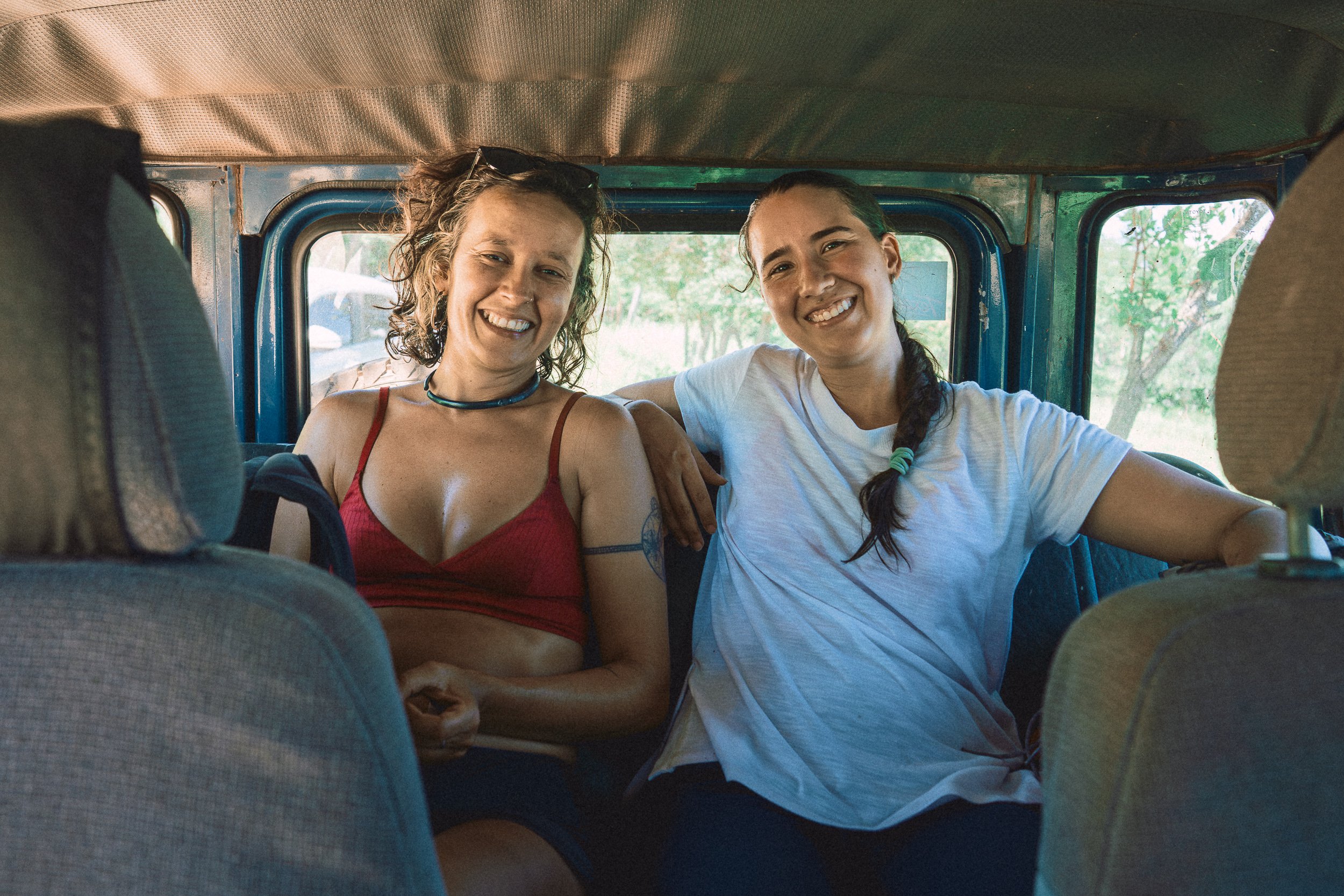
Waterfall day.
Curimataí, March
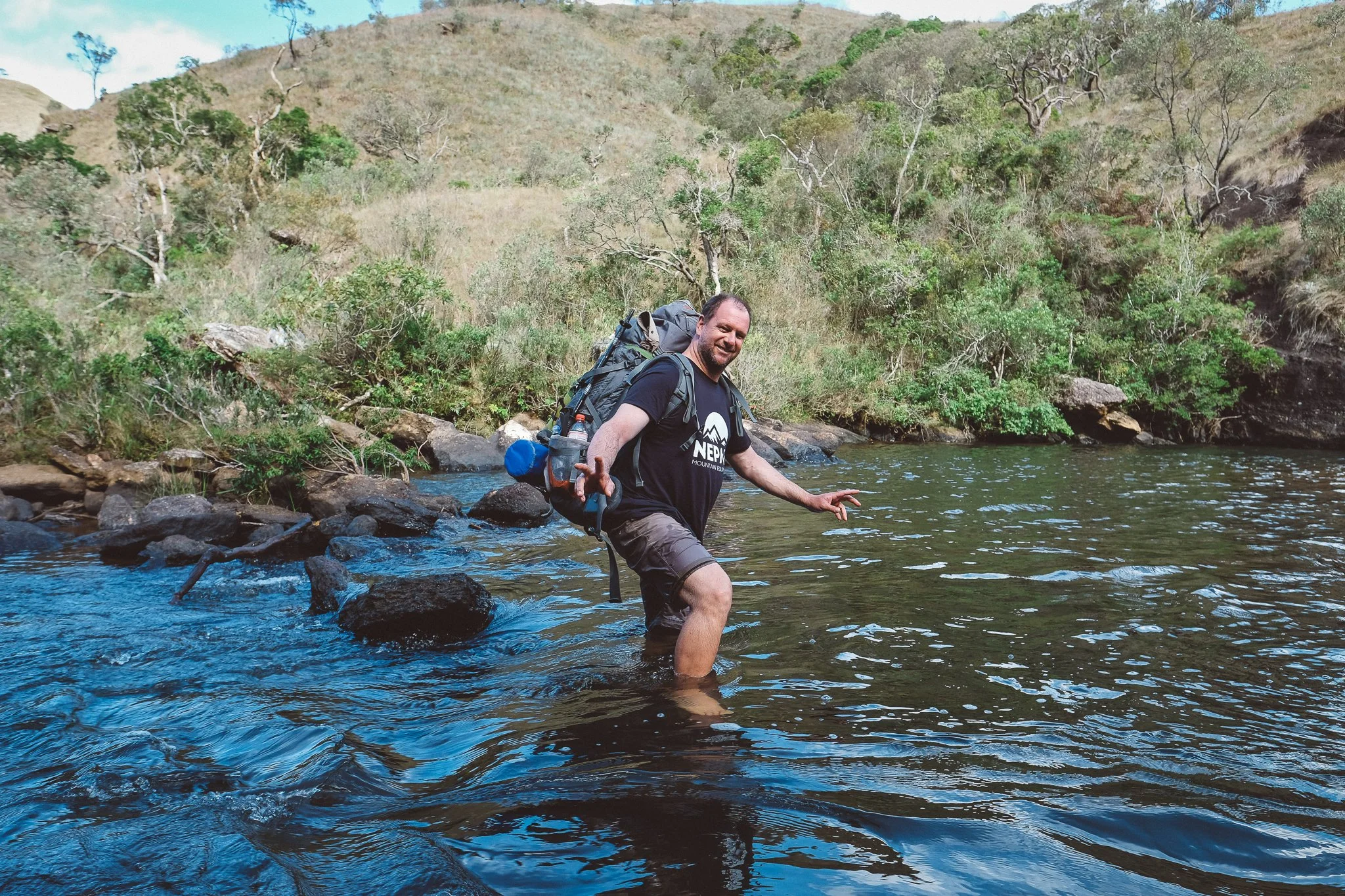
Crossing the Jequitinhonha.
Angu Duru, September
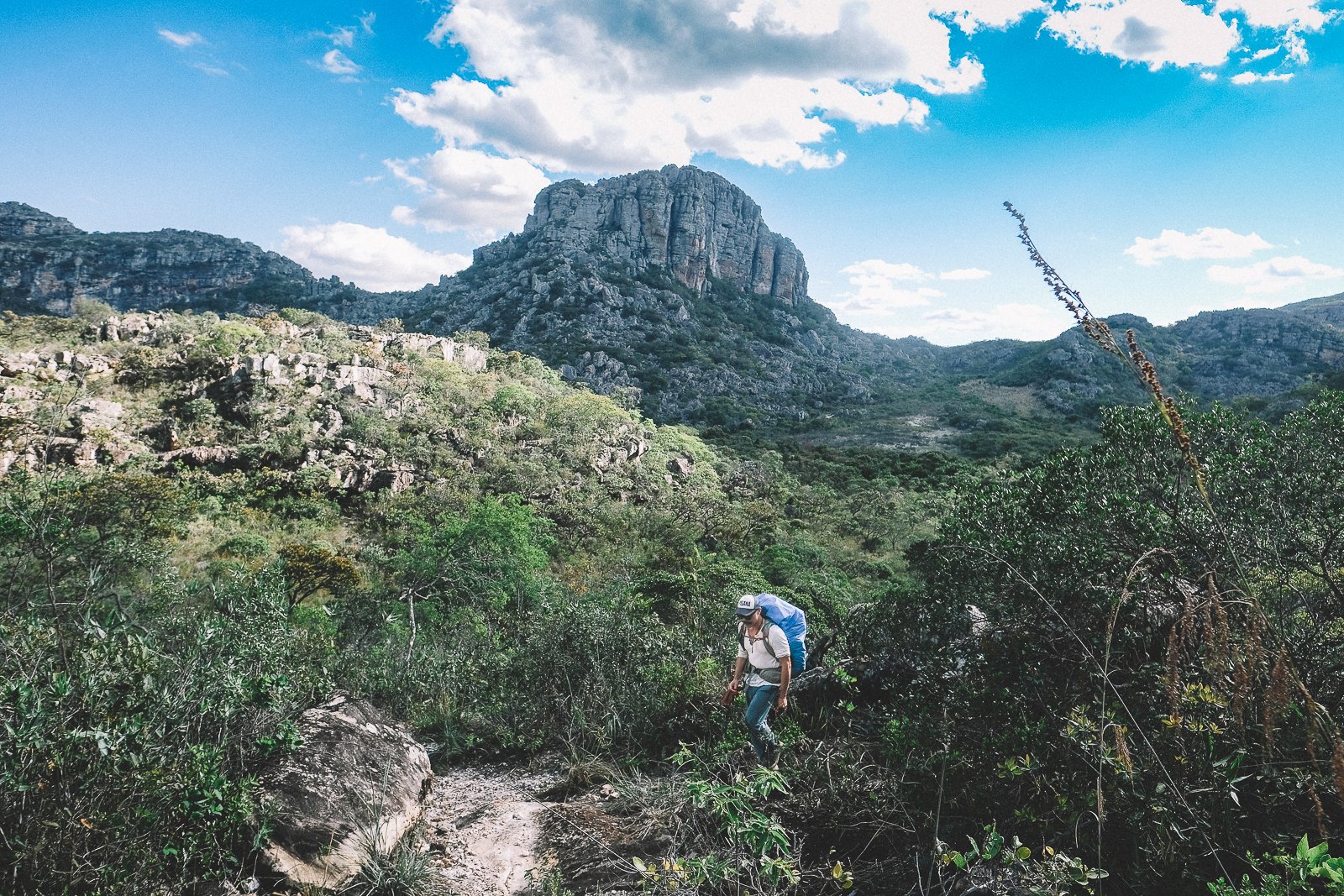
trail to Dorico’s house.
Vale do Rio Preto, October
Motion-filled days
If you’re here to get outside and actually experience the landscape, you’re in the right place. The Espinhaço rewards active travelers, and there’s no better way to experience it than by moving through it.
It’s not just that trekking, riding, overlanding, and paddling are some of the most fulfilling ways we know to move through a place—they’re often the only ways to get from point A to point B in the range.
Regardless of how you travel with us, you should expect long, active days—often with 15–25 km on foot or horseback and significant elevation change over varied mountain terrain.
Arriving in good physical condition is always a good idea, but you don’t need to be a seasoned trekker or elite athlete to be here. In our experience, the travelers who thrive are those willing to push through the miles for the sake of depth, who are drawn to continuity rather than highlights, and who enjoy living each day fully.
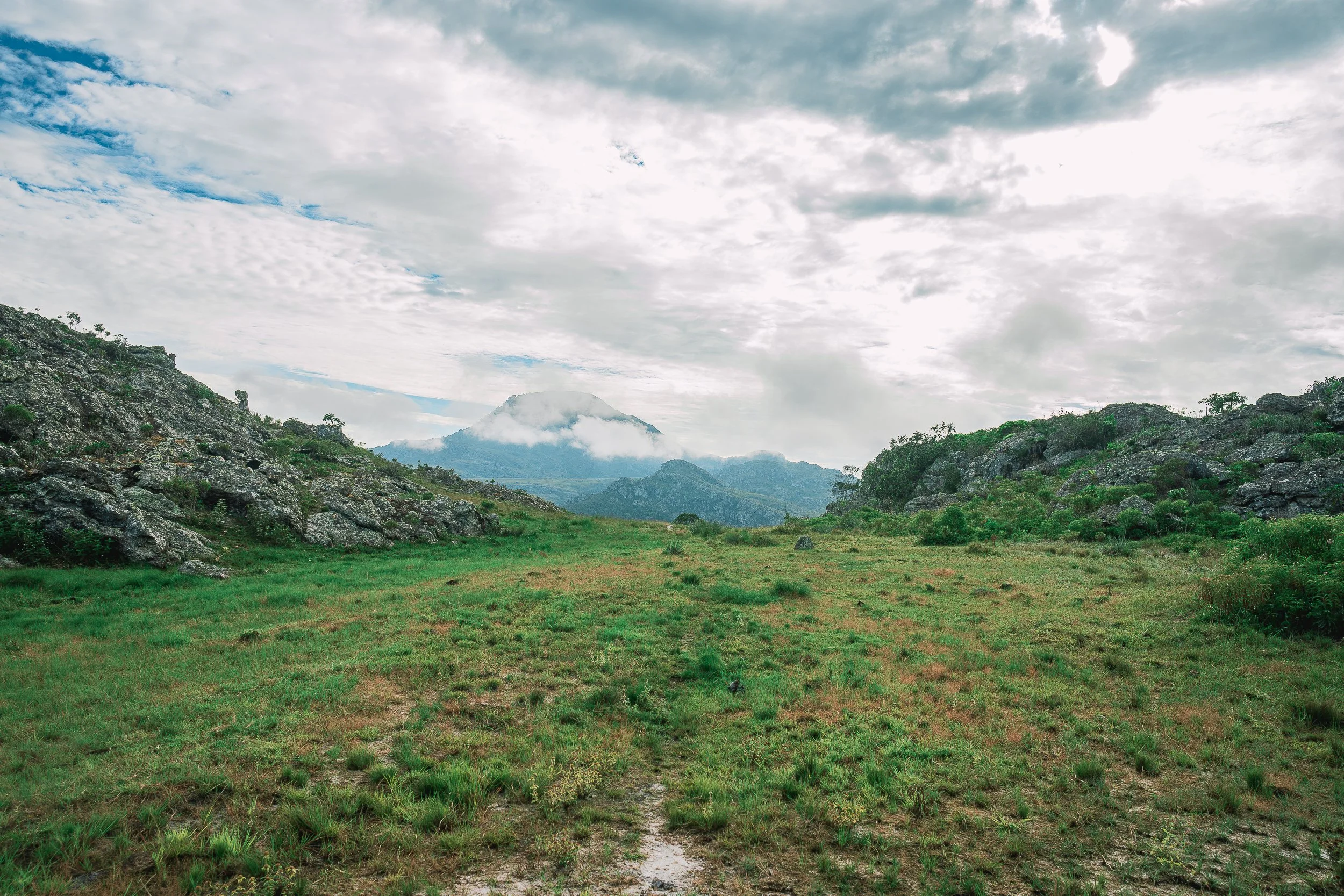
Trilha dos Tropeiros.
Capivarí, April
Empty trails
Three centuries of movement. Years of rediscovery.
The Espinhaço backcountry remains largely unseen, and its labyrinth of little-used trails is how we move through it. We’ve spent years exploring, documenting, and guiding along these paths, linking peaks, villages, waterfalls, and valleys. Most days we have them entirely to ourselves.
Outside a handful of state parks (which can fill up with locals on certain weekends and holidays), it’s rare to meet other folks on the trail.
Expect to spend long stretches on your own, moving through working landscapes that feel largely untouched.
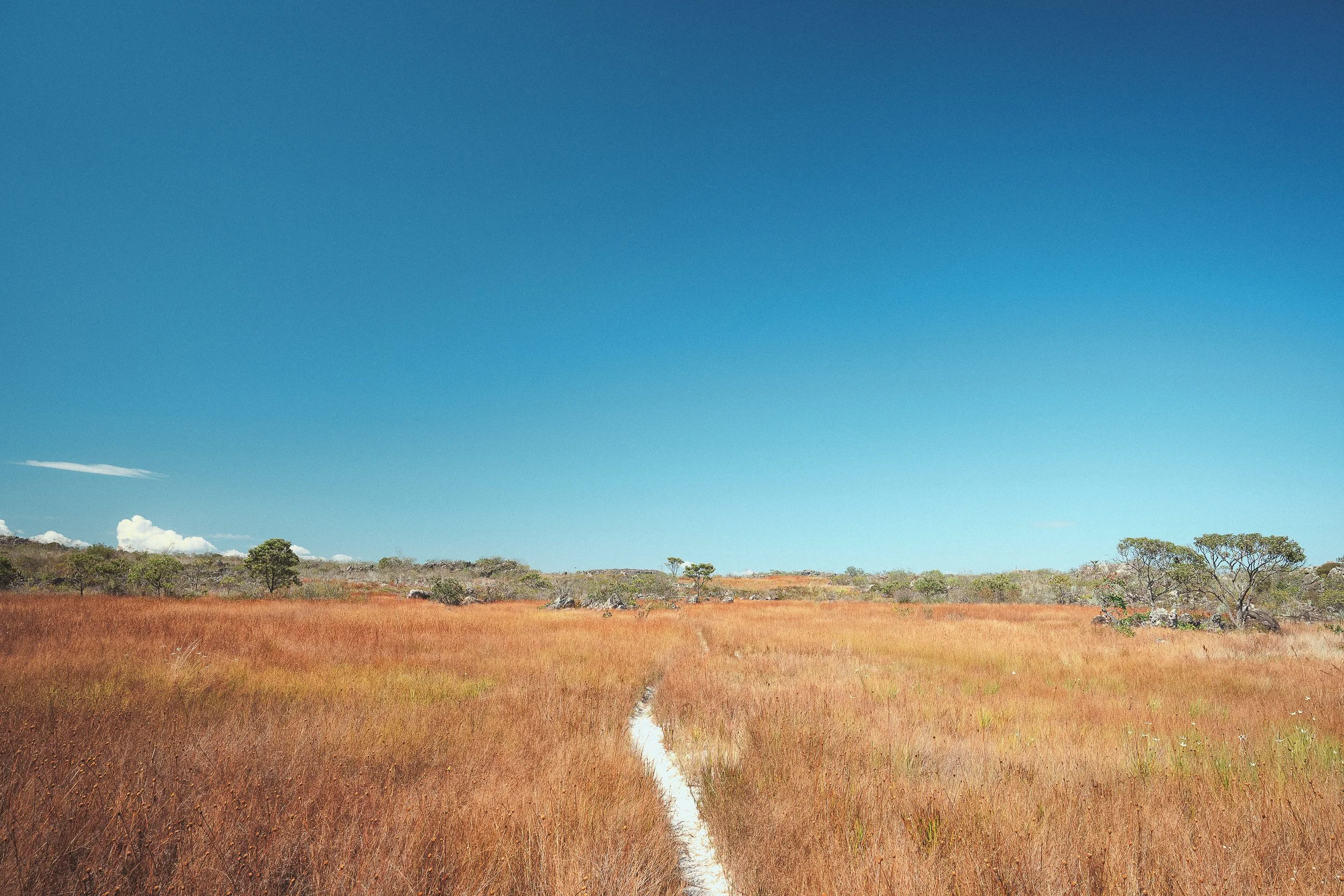
Flower-picker trail. As Formigas, September
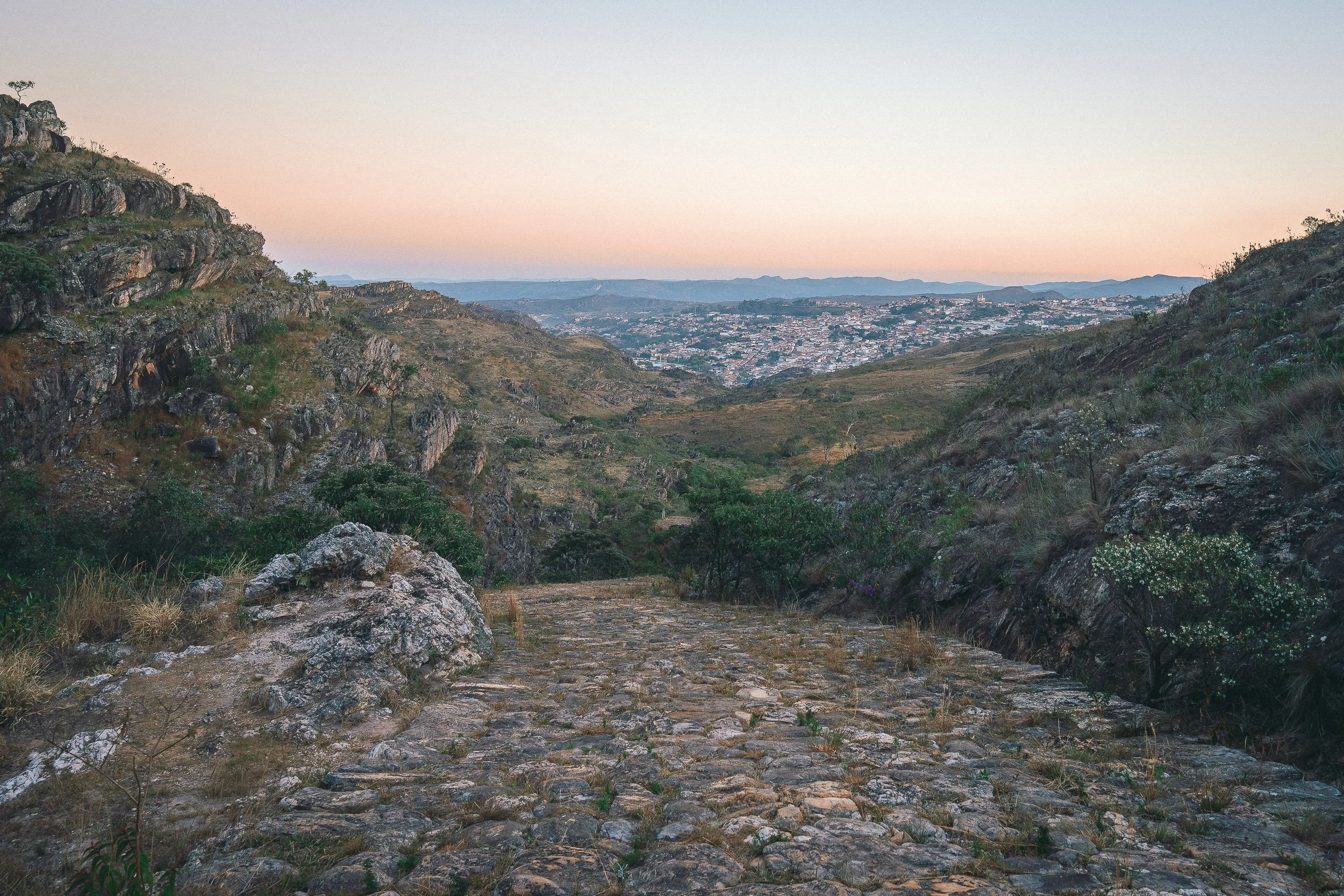
Caminho dos Escravos. Diamantina, July

All to ourselves.
Sempre Vivas, April
Few other international travelers
The Espinhaço has three overlapping UNESCO designations: the World Heritage city of Diamantina, the Serra do Espinhaço Biosphere Reserve, and a Globally Important Agricultural Heritage System recognition for sempre-vivas flower pickers.
Despite that, it remains virtually anonymous, even within Brazil.
Part of that anonymity comes from the fact that Brazil itself is dramatically under-visited, receiving fewer international visitors than you might expect for a country of its size.
Even within that context, the Espinhaço remains an outlier. Far from the country’s major cities and coastline, the range has always required a journey simply to reach, let alone explore.
It’s a privilege to experience it as it is, right now.

Midday Dip.
Cachoeira dos Crioulos, April
Waterfall baths
Take it from us: attempting to count the waterfalls of the Espinhaço is an exercise in futility.
Just as futile is trying to spend consecutive days on the trail without bathing in one.
We typically cross paths with at least on waterfall per day—and sometimes many more—from cola-colored cascades to white-sand-beach masterpieces, and everything in between.
Ice-cold has never felt so good.
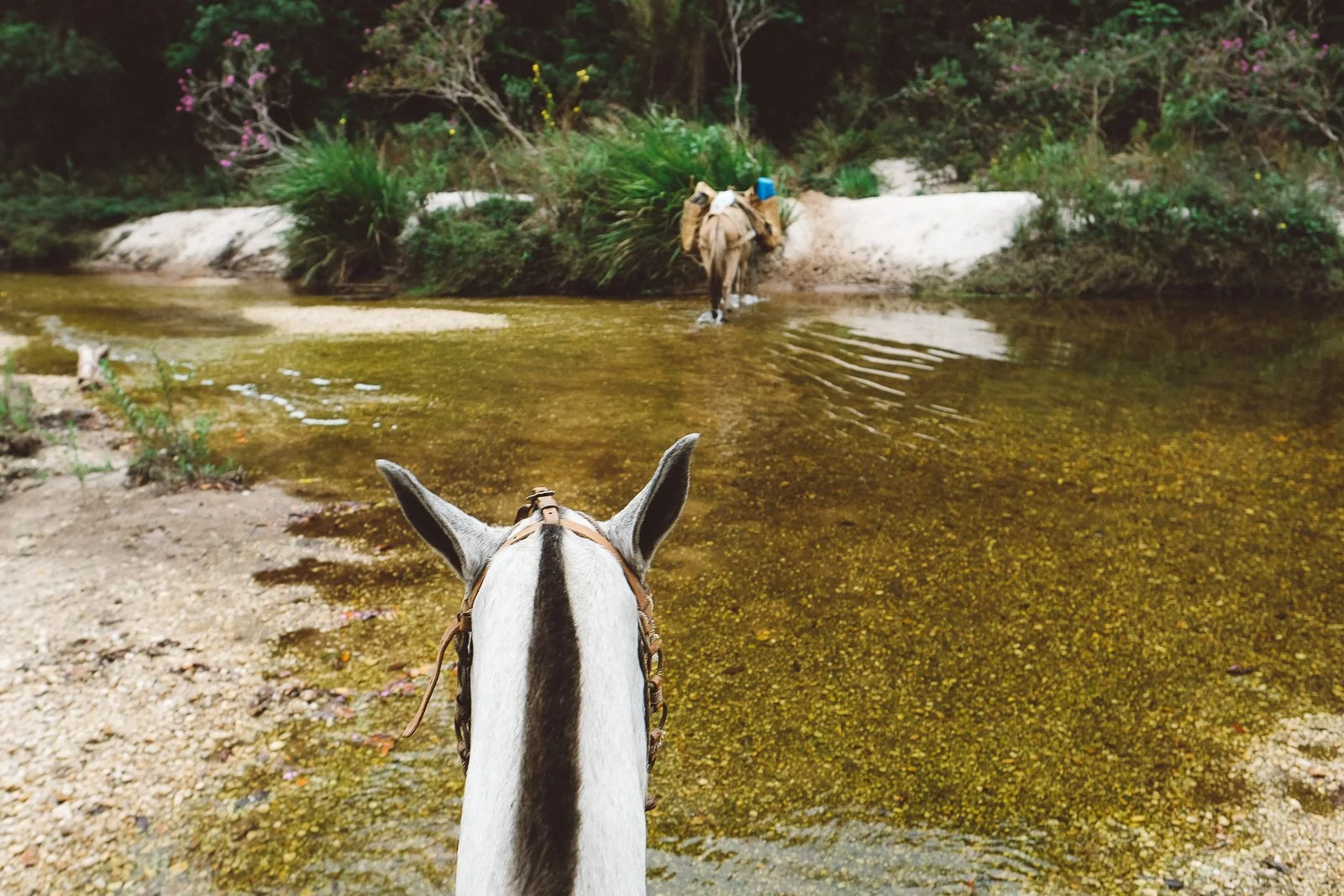
Crossing the Ribeirão Soberbo.
Mato dos Crioulos, September
Saddle time
A centuries-old way of moving through the range
Horses have been part of life in the Espinhaço for centuries, and they remain one of the most memorable—and sometimes practical—ways to move through the range.
The ridgelines southeast of Diamantina are welcoming even for first-time riders, while the river valleys and open roads of the Sertão and Berço offer more room to work for those with experience.
On most of our crossings, riding days are optional and often double as rest days. On Bespoke expeditions, they can be the backbone of the itinerary.

Bad road.
Sempre Vivas, April
Exhilarating backroads
Some crossings are best done on foot. Others demand wheels to connect distant communities, trail systems, and long stretches of road that would otherwise take days to link together.
Overlanding opens up different possibilities in the range: more landscapes, more communities, and—depending on the route—more time in each. On crossings that cover large distances in a relatively short amount of time, driving, riding, and trekking can often all be done in a single day.
Travel by vehicle here has its own edge. Rough roads, water crossings, and stretches where you’ll want to find something to hold onto are all part of the experience.
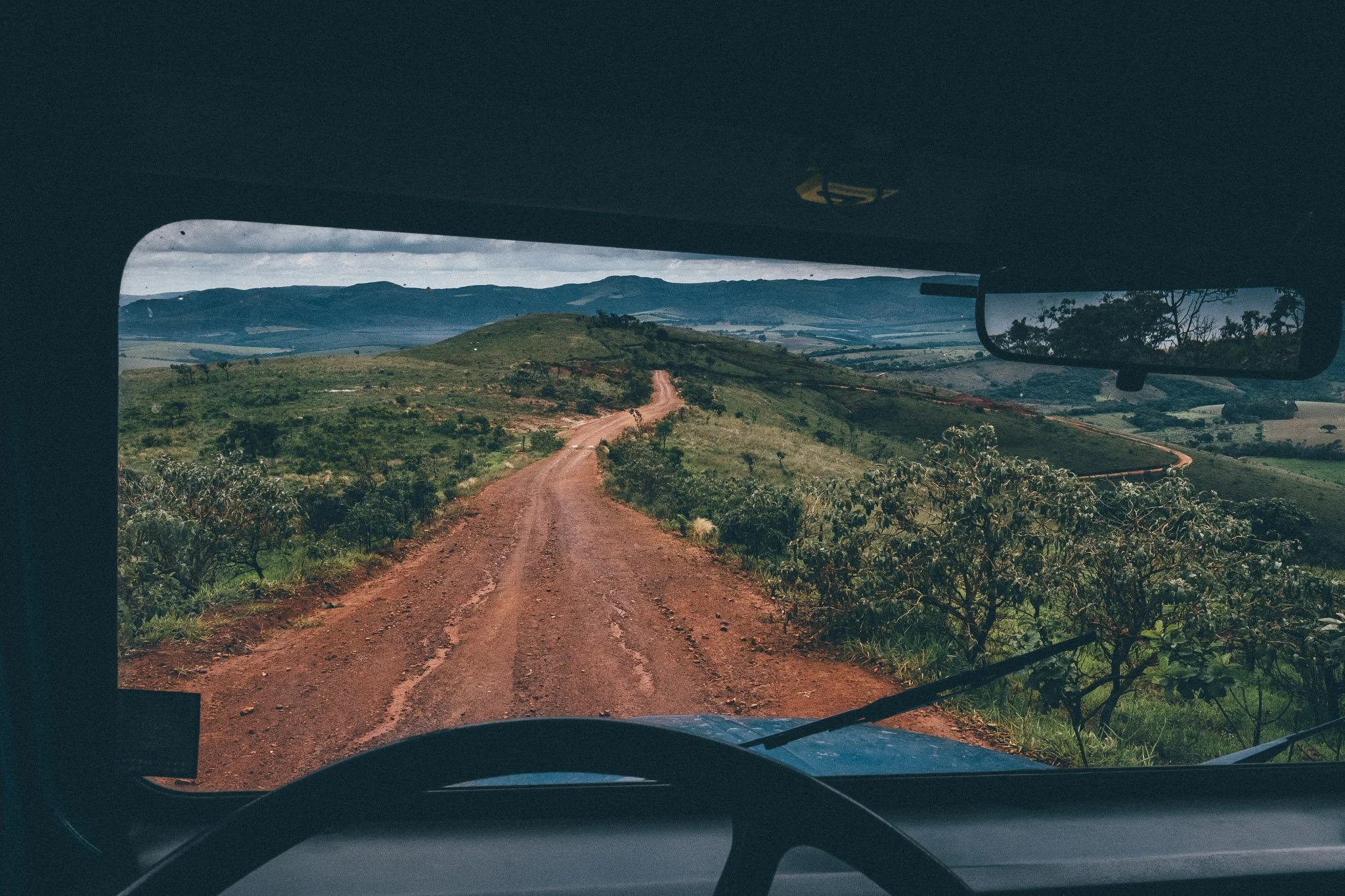
Road to Cemitêrio do Peixe.
Gouveia, August
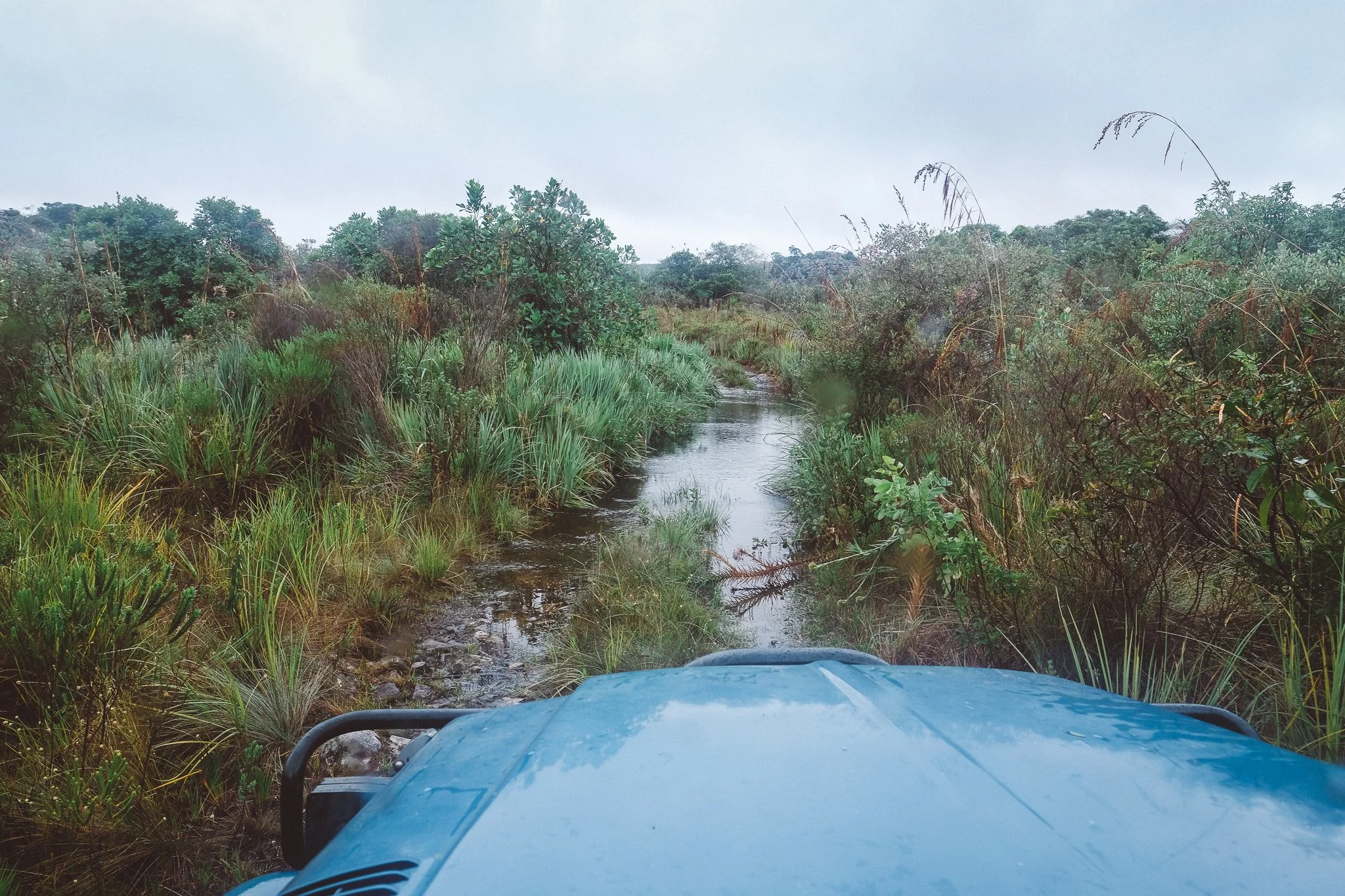
road to Levi’s house.
Taquaral, November
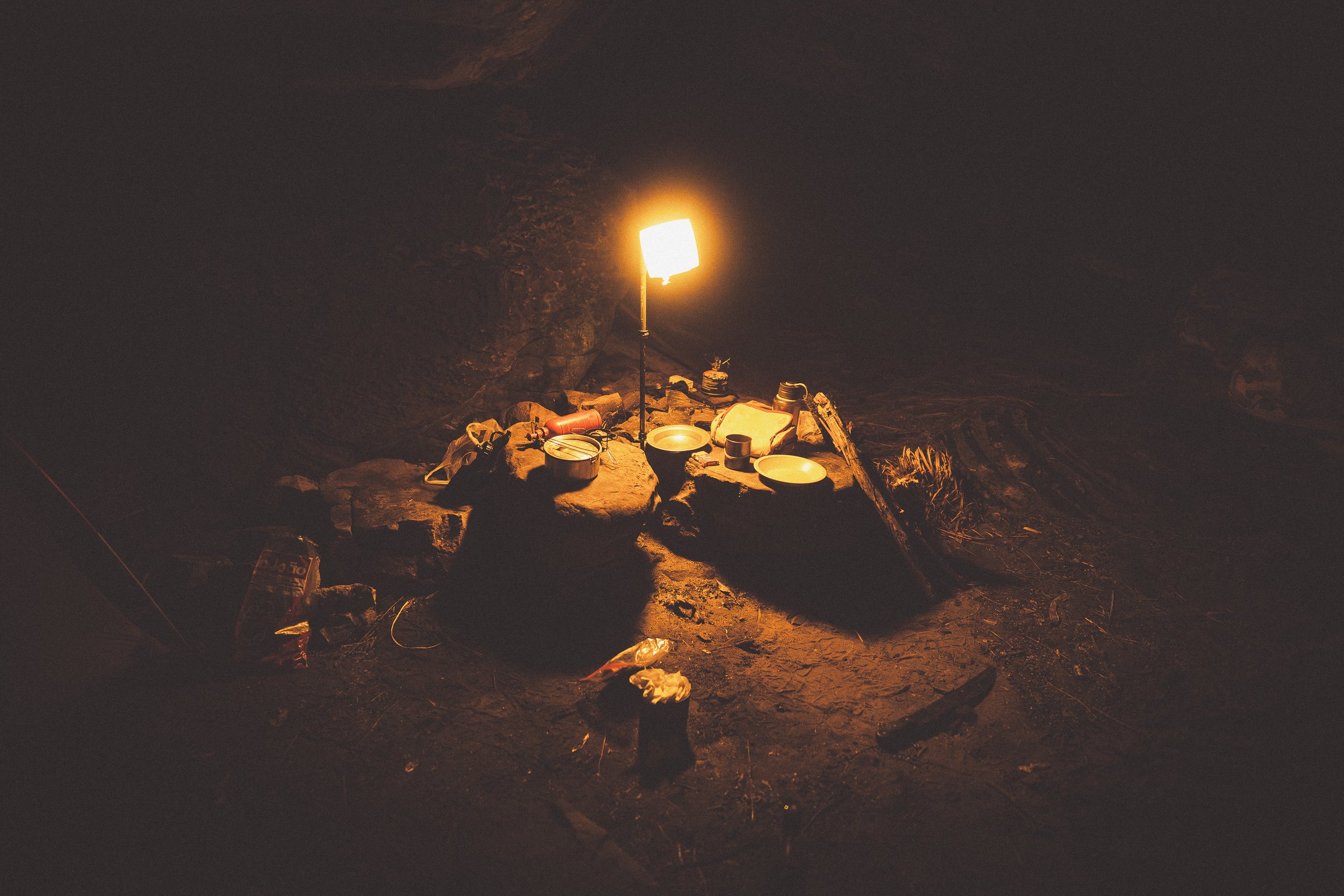
Cave Camping.
Sempre Vivas, October
Backcountry Nights
Pousadas and homestays connect us to the culture of the range, but sometimes the route calls for nights in between communities.
Simple wilderness campsites are often among the highlights of our crossings. We pitch tents under starlit skies, get a fire going, dry our boots nearby, and fall asleep to the sounds of the Cerrado at night.
If sleeping out in the elements isn’t your idea of a good time, the range’s wilderness refuges, remote village houses, and small inns still feel far removed from everyday life.
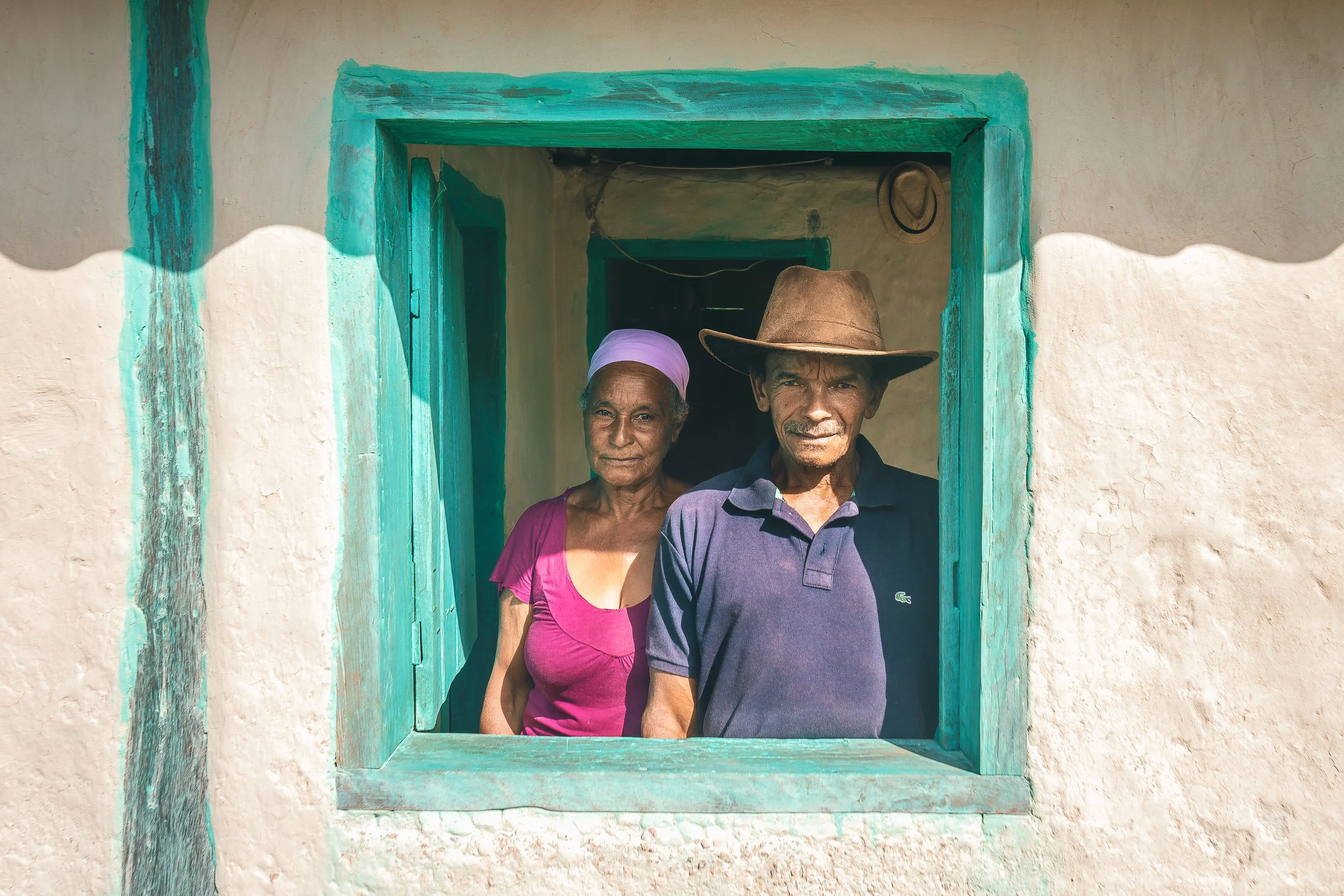
Maria & Santo’s House.
Bica d’Agua, April
Unforgettable homestays
Doorways into the world around us
The trails will challenge you, and the peaks and waterfalls will leave their mark, but in our experience it’s the time spent breaking bread with local families, often well into the night, that stays with us the longest.
Each house is unique, and each has its own way of doing things. If you’re here seeking real contact over polish, though, and want to connect with the people of the range, these are the nights that tend to stay with you.
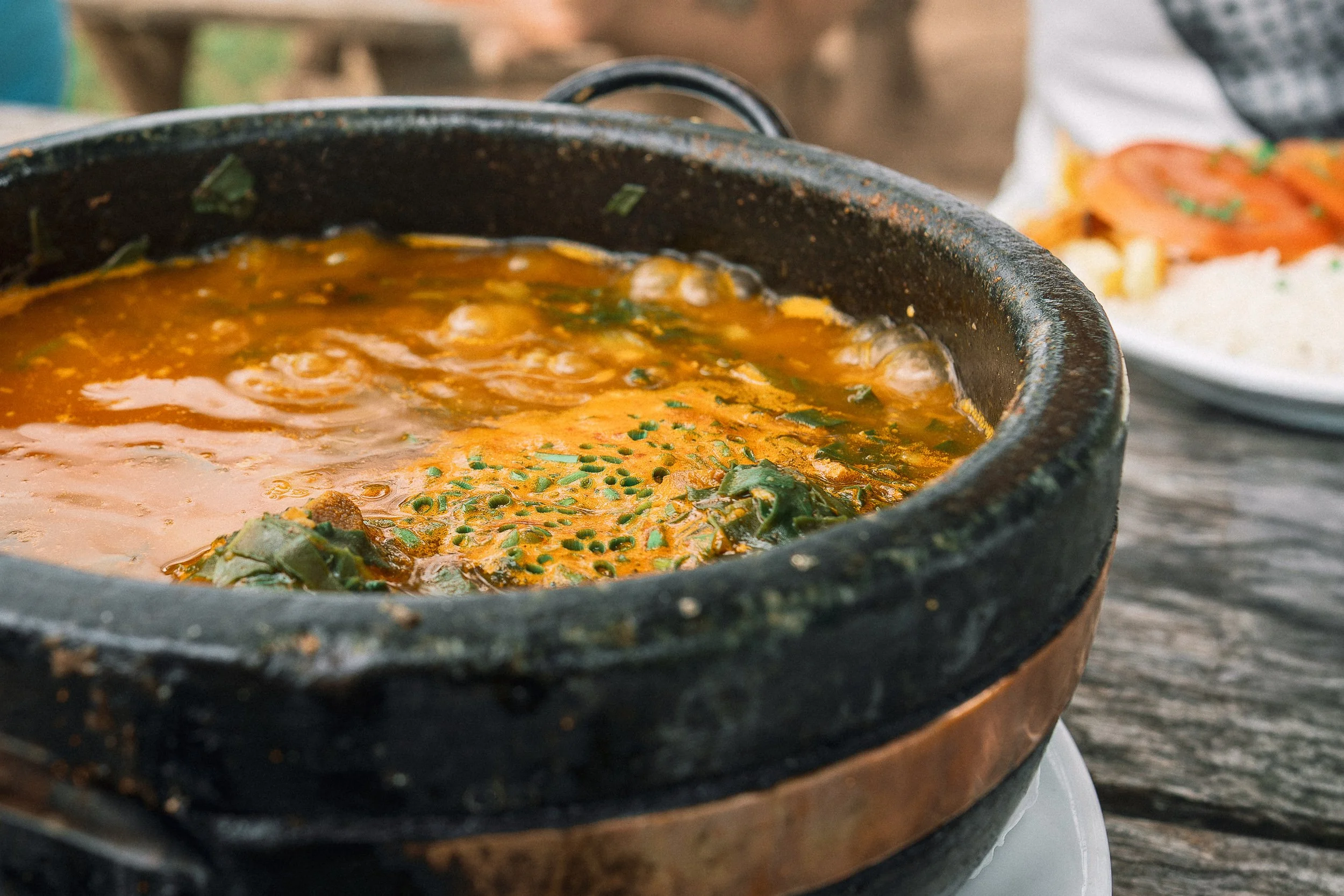
Costelinha com ora-pro-nobris.
Aroeira, March
Rustic wood-fired meals
Tropeiro. Torresmo. Frango com quiabo.
If you’re unfamiliar with comida mineira (the much-loved regional cuisine of Minas Gerais), you will be by the end of the trip—and Brazilians everywhere will be jealous.
In the Espinhaço, angu, freshly baked quitandas, and artisanal cheeses sit alongside Brazilian standards: rice, beans, locally grown fruits and vegetables, and locally raised meats.
Most meals happen in homes, pousadas, and small restaurants across the range, with occasional more refined meals in Diamantina and elsewhere along the way.
There are almost always ice-cold beers within reach, plus a splash of cachaça here and there “for digestion.”
Most of us abandon our weight-loss goals early on.
It’s worth it.

Luzimar. July
Welcoming people
Minas Gerais is Brazil’s heartland, and mineiros (the state’s residents) are its natural hosts.
Easy-going, down-to-earth, famously chatty, and never far from a good cup of coffee or cachaça, they set the tone for life here.
The Espinhaço is still-visited enough that the people you’ll meet here will likely be mineiros: farmers, flower pickers, entrepreneurs, cowboys, homestay hosts, and kids on their way to or from school.
It’s hard to find a more welcoming group anywhere in Brazil.
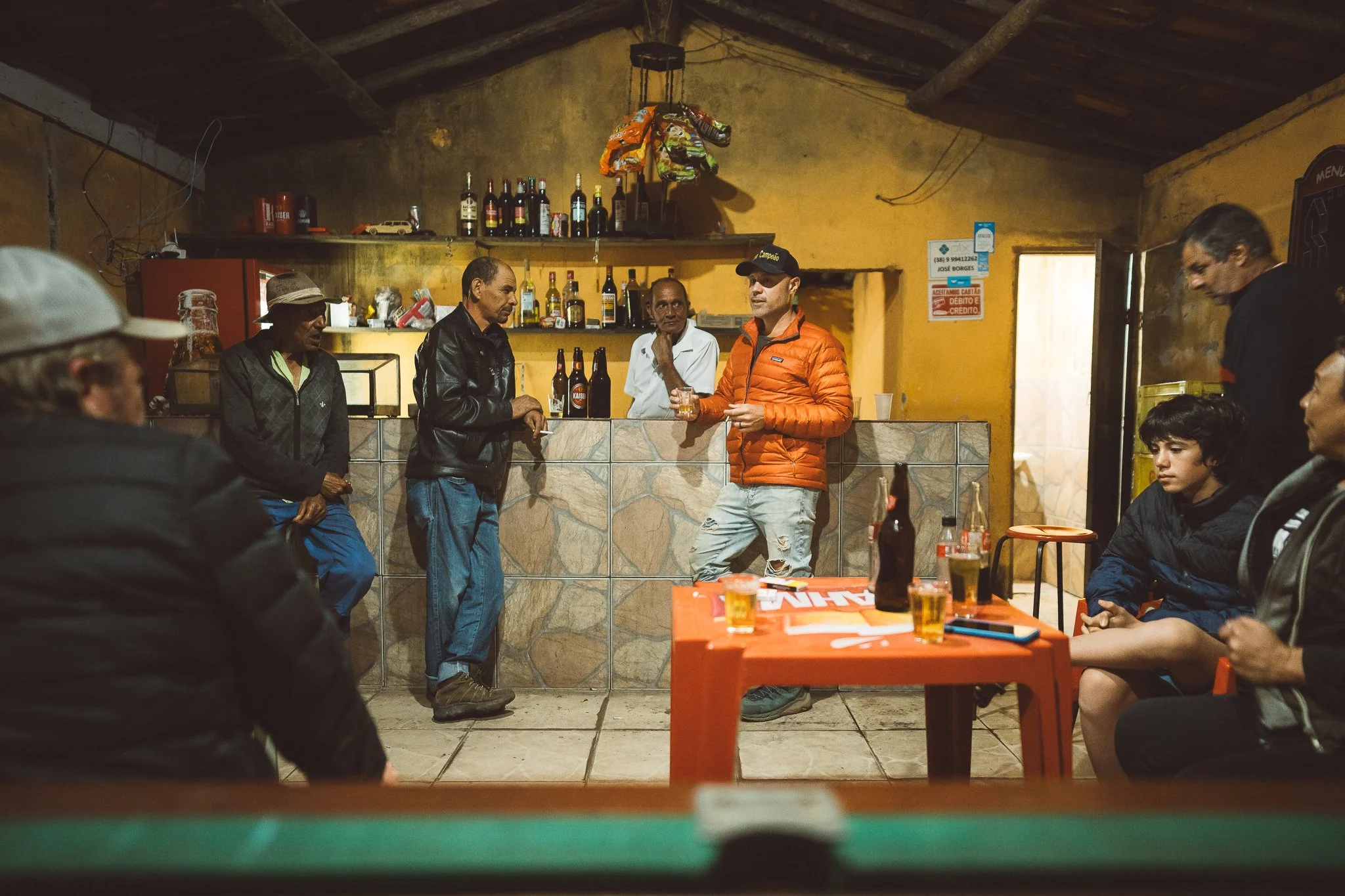
Bar dos Mestres.
Galheiros, July
Festive evenings
When days are as demanding as they often are on our crossings, a little celebration is usually in order. As a general rule, you won’t find a more willing group of celebrators than the residents of the range’s backcountry communities.
Even the smallest hamlets tend to have a buteco (or two), and community festas are their own high-spirited universe, should dates line up.
In our experience, though, few things are as satisfying as breaking bread, raising a glass, and sharing long conversations with the people who host us each night.
Here’s to the journey, and to life in the Serra do Espinhaço.
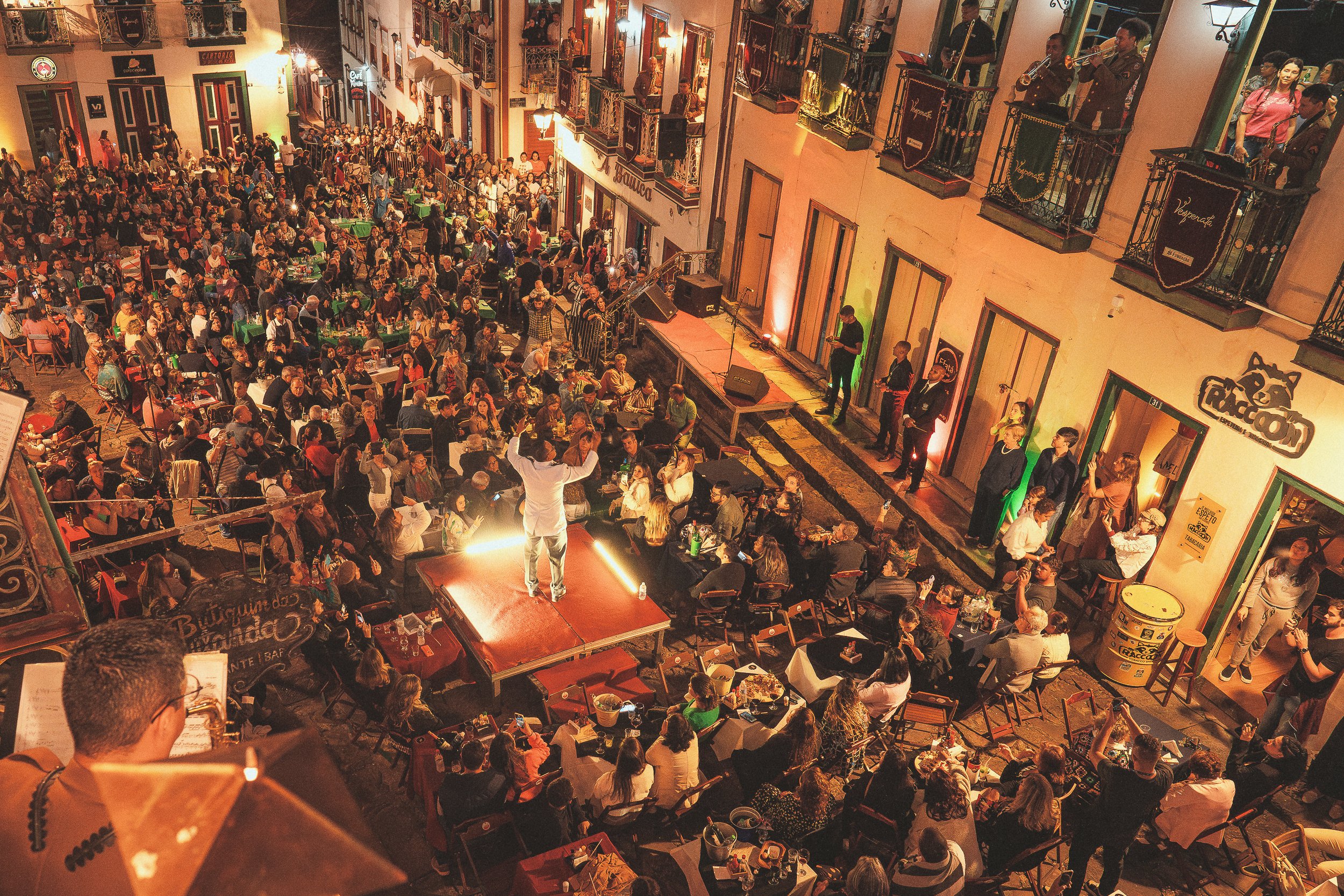
vesperata. Diamantina, April
A Vesperata
Every so often, the range reminds you that it isn’t all quiet trails and kitchen tables.
In Diamantina, that reminder has a name: Vesperata, a nighttime concert where cobblestone streets turn into an amphitheater and the hometown band serenades crowds from across Minas and beyond from the balconies above.
Samba, bossa nova, and Música Popular Brasileira (MPB) are staples, along with the occasional Beatles cover and sing-along Wedding Rock tune.
We can’t promise a Vesperata on every departure. The calendar belongs to the town, not to us. When it does line up, it’s one of the most memorable nights we know.
There isn’t a party on earth better suited for celebrating the final night of a trip.