

How We Go
Trekking, riding, and overlanding in Brazil’s Serra do Espinhaço
Few places reveal life in Brazil as vividly as the Serra do Espinhaço, where soaring peaks and river valleys, high savannah and Atlantic Forest, and colonial-era towns and rural villages are all linked by a dense network of historic trails, dirt roads, and riverways that still shape movement through the range today.
Trekking, riding, overlanding, and river travel all have their place here.
The method matters less than the time spent in the landscapes and communities around us.
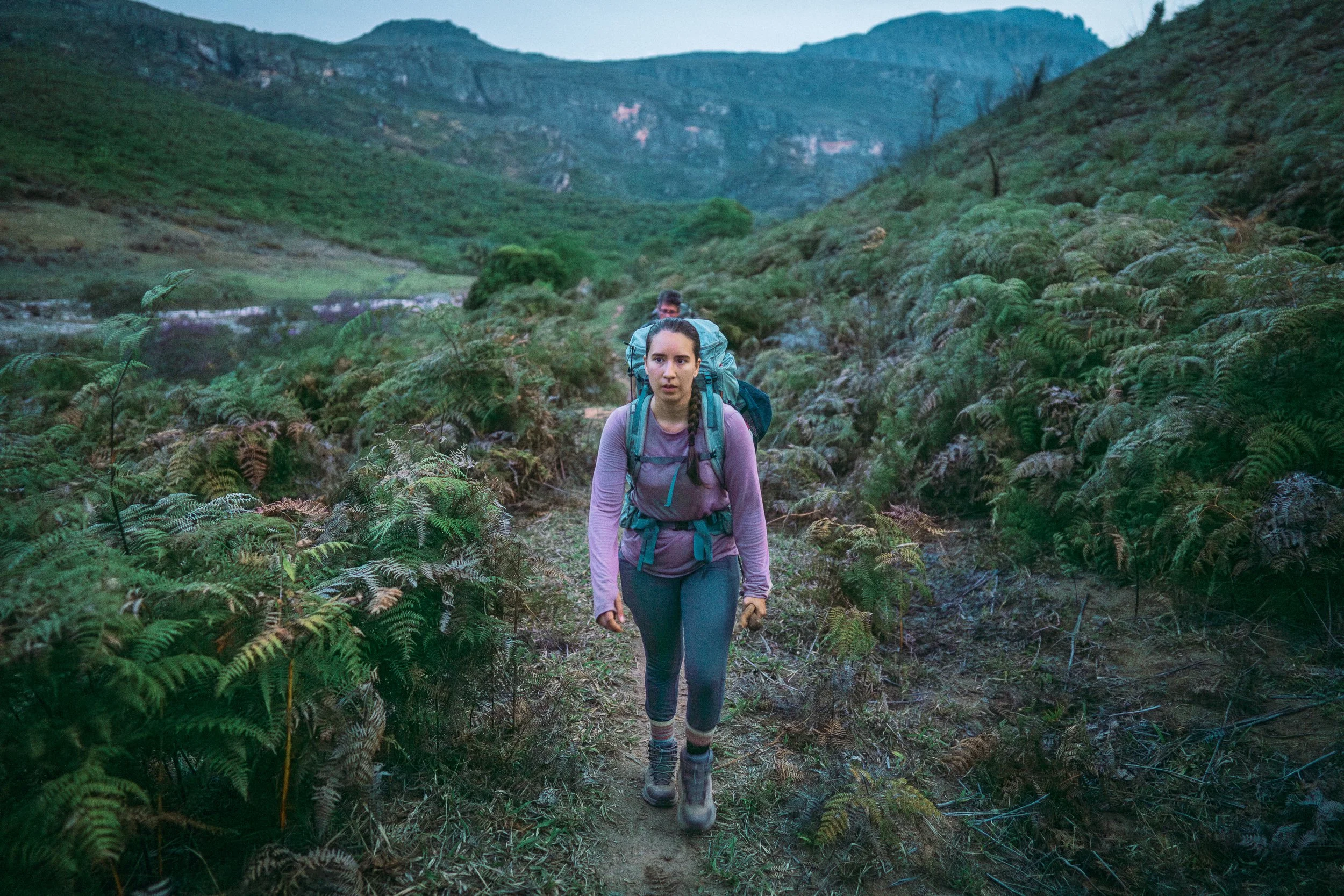
Trekking to Santo’s house.
Bica d’agua, October
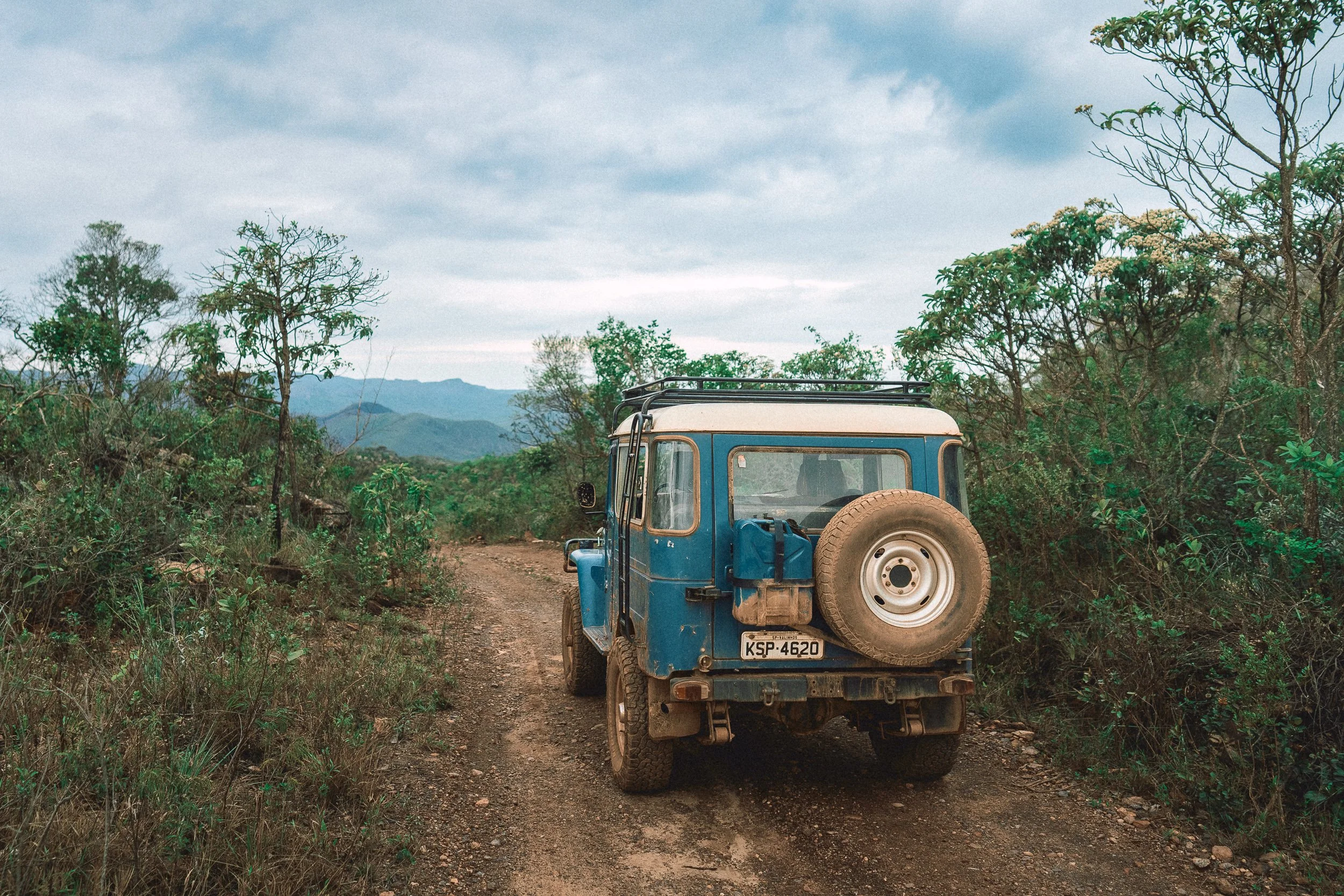
Driving to Macacos. November
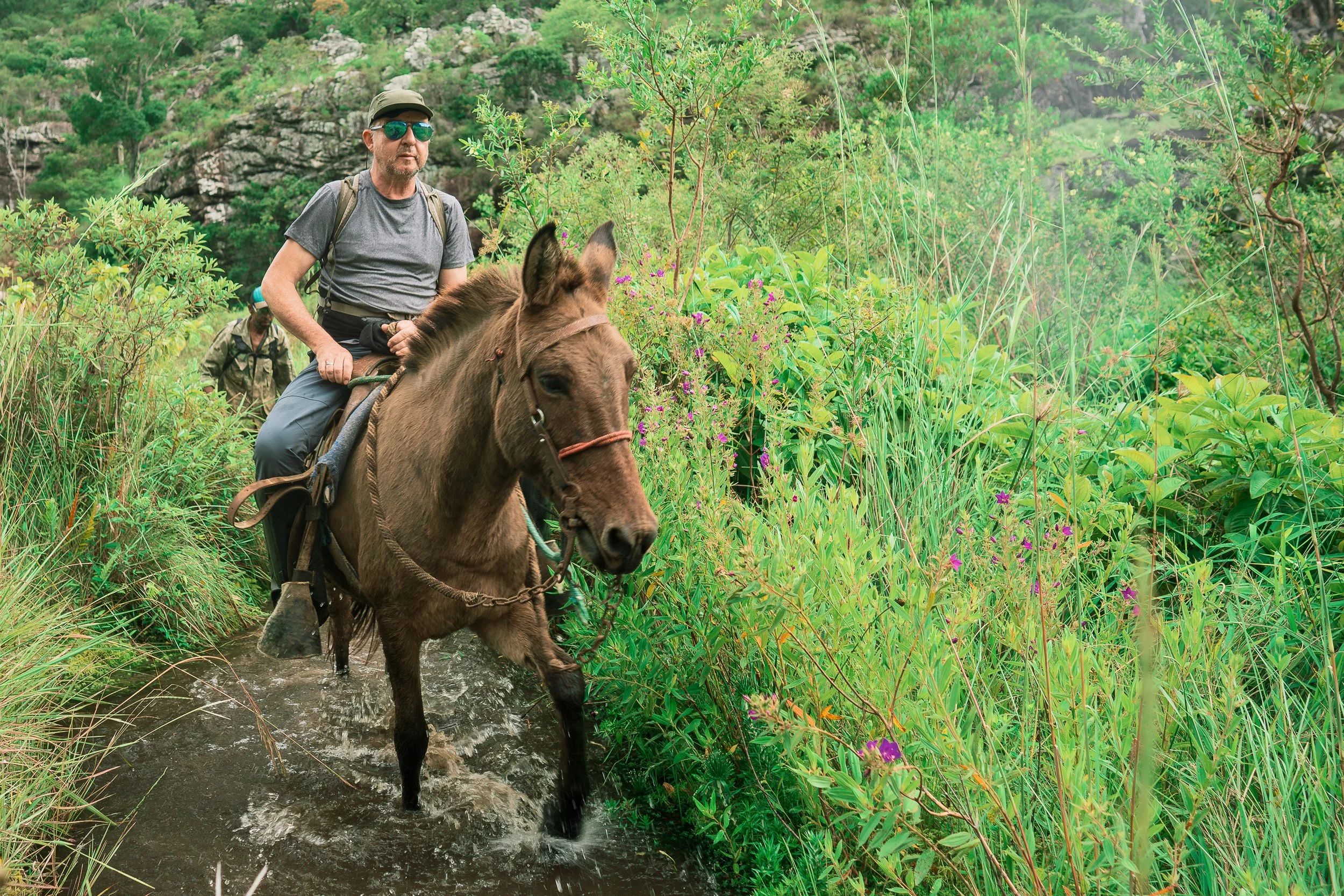
Riding in the Berço.
Vale do Rio Preto, April
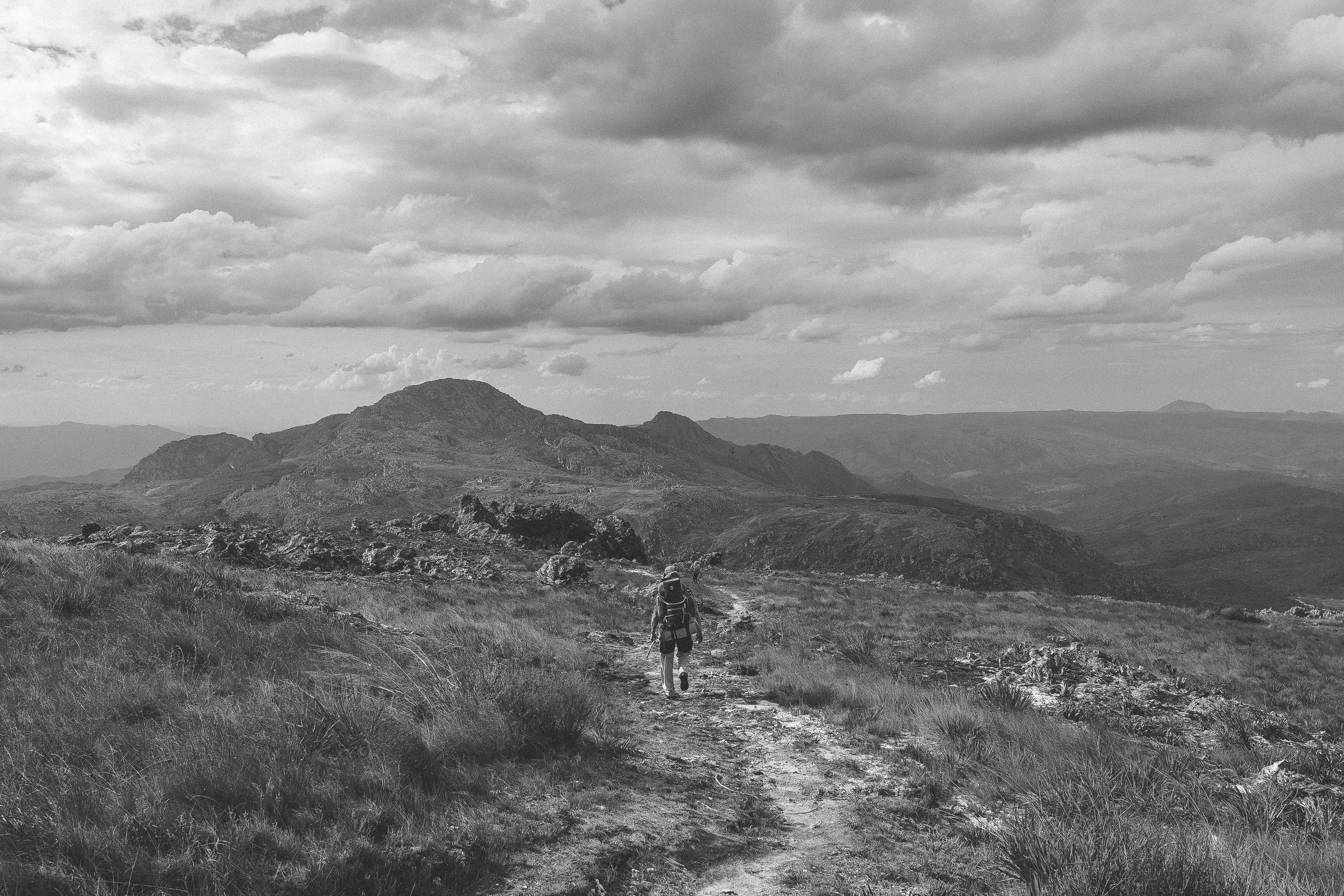
Descending Itambé. October
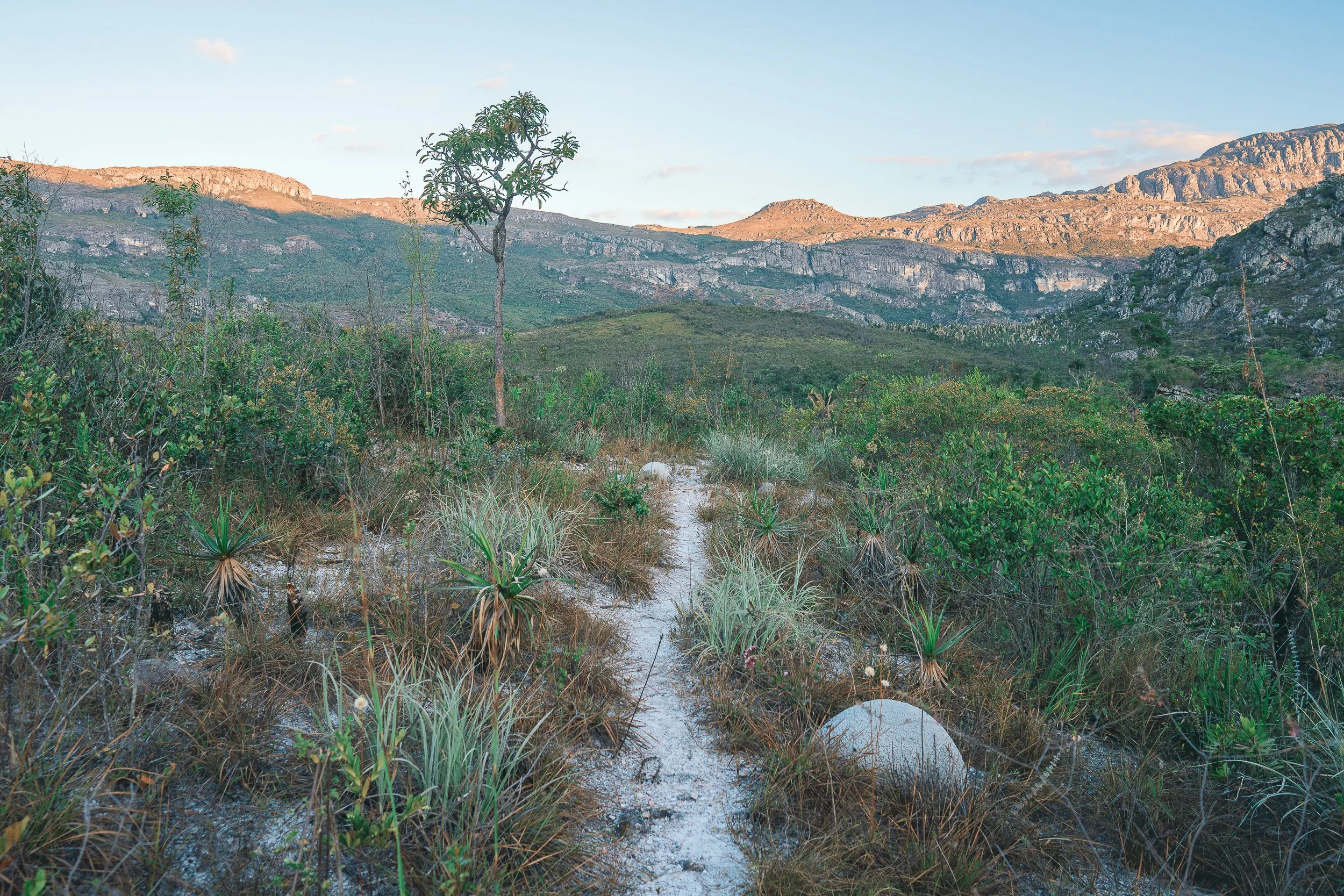
Tropeiro trail. Serra da Bicha, July
The Trails
Getting from Point A to Point B has always been a journey in the Espinhaço. Nowhere is that more evident than along its dense network of trails.
Game trails, former railways, little-traveled dirt roads, and other paths abound, but three types of historic trail form the backbone of most of our backcountry travel:
· Colonial stone paths, built by enslaved Africans to carry diamonds and gold along the
Estrada Real.
· Tropeiro trails, carved by mule drivers who moved goods and stories between towns well into
the 20th century.
· Smugglers’ descaminhos, once used to move contraband, and later walked and recorded by
European naturalists crossing the Cerrado.
Our crew has spent years exploring this network, walking alongside residents, and connecting routes that still remain.
It’s a pleasure to share it with travelers who want to feel the range, not just pass through.

Trekking to Mozart’s house.
Chapada do Couto, April
Trekking
The Espinhaço has always been crossed on foot, and it remains the most revealing way to travel through the range. In some places, it’s still the only way through.
Some regions of the Espinhaço are more demanding than others, and for different reasons. In the highlands southeast of Diamantina, former mule-driver paths and newer park-administered trails tend to be steep, but open (and sometimes even marked). In Sempre Vivas, lack of use and saturated ground result in trails that appear and disappear seasonally, and sometimes daily. In the Sertão, where communities sit further apart along open dirt roads, trekking takes on a slower, more meditative rhythm, while in the Berço both terrain and trail conditions vary widely.
What remains constant across the range is the beauty of the landscape, the sense of discovery, and the knowledge that you’re never the first person to have walked the ground beneath you.
We don’t require prior trekking experience to join us on crossings, and you don’t need to be an avid athlete to enjoy the trails. If you’re joining us on an Expedition or Journey, though, you should expect long, active days—typically 15–25 km on foot, with significant elevation gain and loss depending on the route.
If that sounds ambitious, Bespoke expeditions allow for shorter stretches of trail, more overlanding and time in communities and waterfalls, or extra rest days built in between.
Ultimately, any time on the trail here is time well spent.

Riding to Macacos.Sempre Vivas, April
Riding
Horses and pack animals have been part of life in the Espinhaço since diamonds were first discovered here in the early 18th century. They still play a vital role in local culture, work, and transport, and remain one of the most memorable—and sometimes practical—ways to travel through the range.
The riding experience in the Espinhaço varies with the terrain. The open plateaus and valleys southeast of Diamantina are generally welcoming even for first-time riders, as are the open dirt roads in the western lowlands. For those with experience, the overgrown river valleys and high water crossings of the Berço offer a more demanding ride.
On most of our crossings, riding days are optional and often double as rest days. On Bespoke expeditions, they can become the backbone of the itinerary.
If you decide to ride, we recommend you look up from the trail and take in the landscape around you. Tropeirismo and cavalgadas are still part of daily life here.
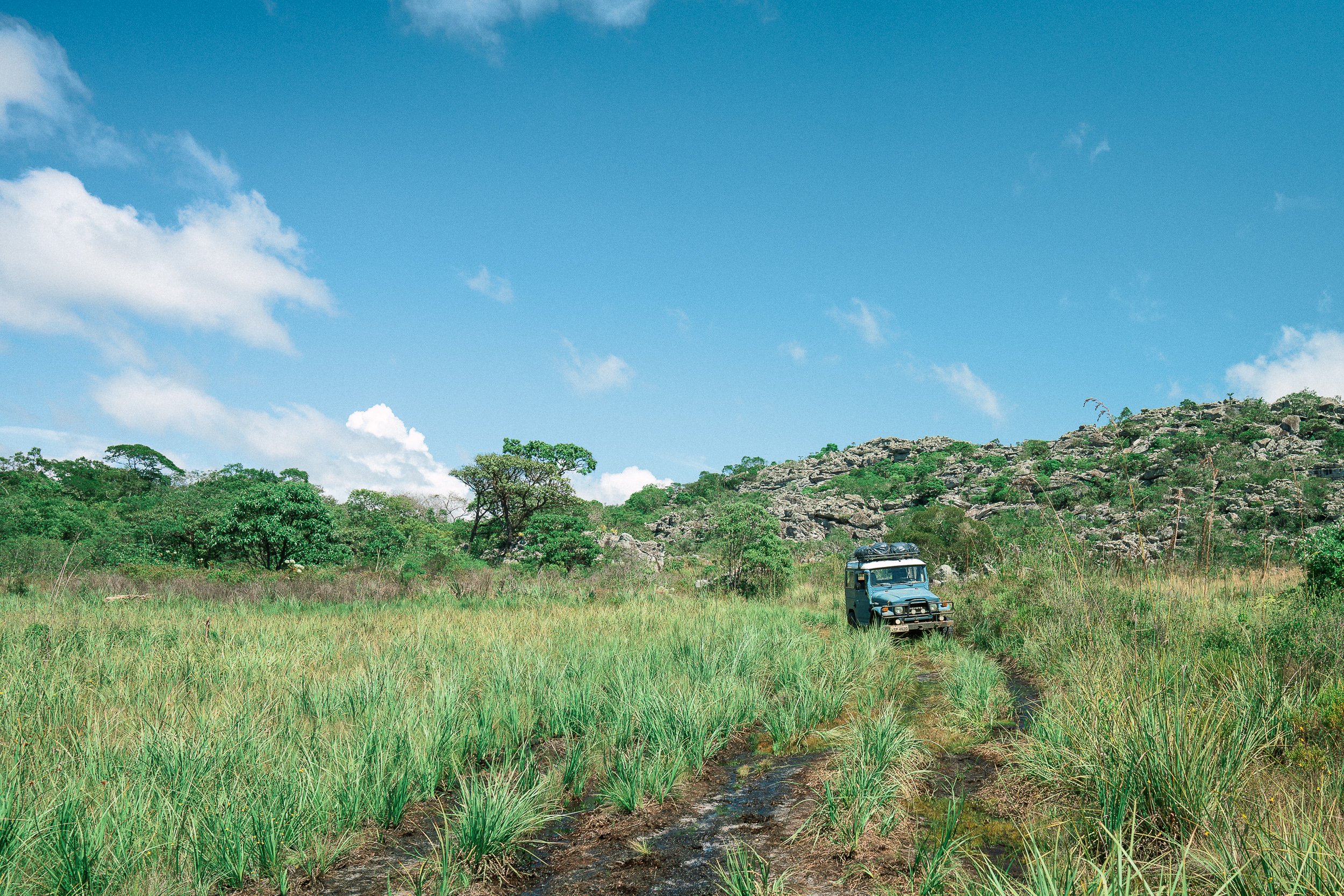
The Road to Taquaral.
Sempre vivas, March
Overlanding
Most of our earliest explorations of the Espinhaço were by vehicle. Prior to our first full crossing of the range on foot in September of 2021, Elisa and I traveled the region in a 1989 Toyota Bandeirante named Gaúcha, moving from one small community to the next along old mining tracks and little-used backroads.
Today, we know that while some crossings are best done on foot and horseback, others demand wheels to connect distant communities, trail systems, and long stretches of road that would otherwise take days to link together.
Overlanding opens up different possibilities in the range: more landscapes, more communities, and—depending on the route—more time in each. On crossings that cover large distances in a relatively short amount of time, driving, riding, and trekking can often all be done in a single day.
Travel by vehicle here has its own edge. Rough roads, water crossings, and stretches where you’ll want to find something to hold onto are all part of the experience.