

What We Eat
Food + Fire
An introduction to the food we eat during crossings
Wood-fired meals. Local ingredients. Cast iron and time.
From village kitchens to more refined plates in Diamantina, the food we eat on crossings reflects the range itself: generous, layered, and unpretentious.
Most of us abandon our weight-loss goals early on.
It’s worth it.

Even in a country and state renowned for bohemian culture, Diamantina manages to shine as an outpost of pub, grub, and pub grub. Here, portions of meat- and cheese-filled pastéis and savory canapés make for ideal bites alongside an ice-cold lager brewed on site.

It doesn’t get much more Espinhaço than a cast-iron pot of “tropeiro” (literally, mule-driver)—beans, toasted manioc flour, garlic, onion, eggs, bacon, collard greens, and pork cracklings—cooked by a real-life mule driver in a wilderness refuge historically used by mule-drivers. It may not look like much, but if Minas had a state dish, tropeiro would be a strong contender.

Pão de Queijo. Conselheiro Mata
Comida Mineira
If you’re unfamiliar with comida mineira, you will be by the end of the trip—and Brazilians everywhere will be jealous.
While still relatively unknown abroad, the cuisine of Minas Gerais is beloved throughout Brazil, known for its timeless preparation methods and deep ties to rural life. Wood-fired stoves, clay and cast-iron cookware, locally grown fruits and vegetables, local cheeses and dairy, and farm-raised pork and chicken form the backbone of many meals.
Mineiros are famous for their love of café and copper pot–distilled cachaça, but no ingredient is more woven into daily life than cheese. Artisanal cheeses from Minas Gerais—including many of the ones eaten daily in the Espinhaço—have recently been recognized by UNESCO as part of the world’s intangible cultural heritage.

Examining the fogão a lenha at Zé’s house in the quilombola community of Covão. Still a fixture in many rural homes in the Espinhaço, these wood-fired stoves cook meals and heat water for baths year-round, and warm the house through the winter.

Small farmsteads have been producing high-quality cheese in Minas Gerais for centuries. Until recently, though, very few people outside Brazil had tasted them. In 2022, queijo Canastra—a creamy raw-milk cheese from southwestern Minas—briefly stole the spotlight, but queijo de Serro, requeijão, and even humble mussarela (pictured here) all have long, storied traditions in the state.

Feijão & Cast iron. Couto de Magalhães
The Cuisine of the Espinhaço
In the Espinhaço itself, the kitchen follows the land.
Steep mountains, patchy soils, and long distances between towns shape what grows, what’s raised, and how food is prepared. Meals tend to revolve around starches—potatoes, yams, pasta, farofa, and angu—alongside vegetables like collard greens, okra, taioba, and ora-pro-nobis, and usually a home-raised chicken or pork dish.
Arroz e feijão (rice and beans) are always close by.
It’s simple food, cooked with time and care.
Portions rarely disappoint.
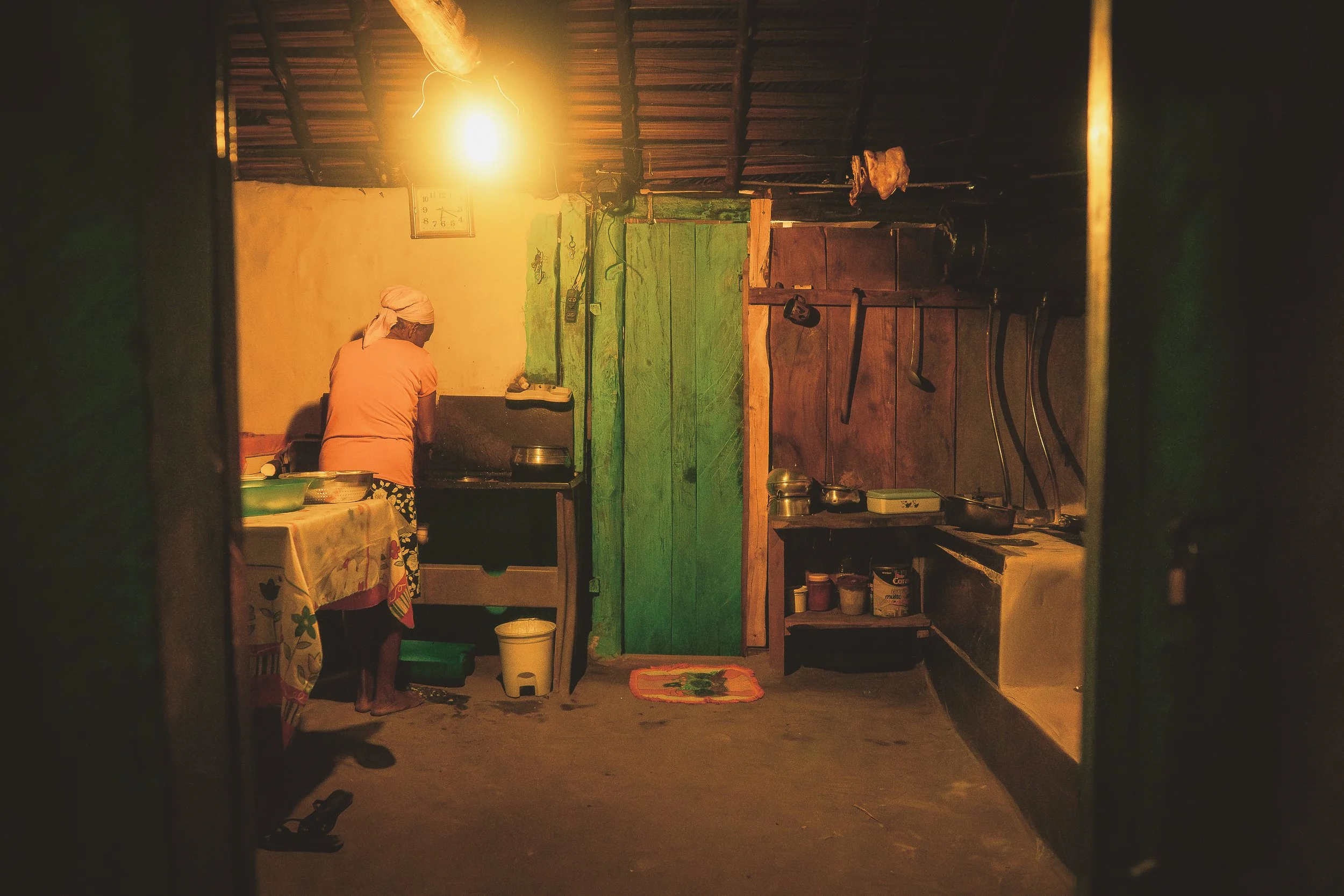
Dona Maria tidying up her kitchen after supper in the quilombola community of Bica d’Água. Despite living at the end of a dirt road 50 mountain kilometers from Diamantina, her cooking is legendary. There are few meals we look forward to more.

Frango com quiabo (home-raised stewed chicken and okra), rice, beans, fried potatoes, leafy salad, and ice-cold beer round out a feast fit for weary travelers in the quilombola community of Quartéis do Indaiá.

Queijo caseiro. Covão

Supper at Sinara’s house in Quartéis do Indaiá is always a treat. On this night, it was generous plates of beef-and-potato stew, rice, beans, farofa, angu, and collard greens. After 31 kilometers of hard-fought trekking, we left feeling exactly as we hoped to: wrecked and very happy.

An unexpected dessert of fresh maracujá (passionfruit) pudding. A quiet, perfect ending to a long day and a very long meal.
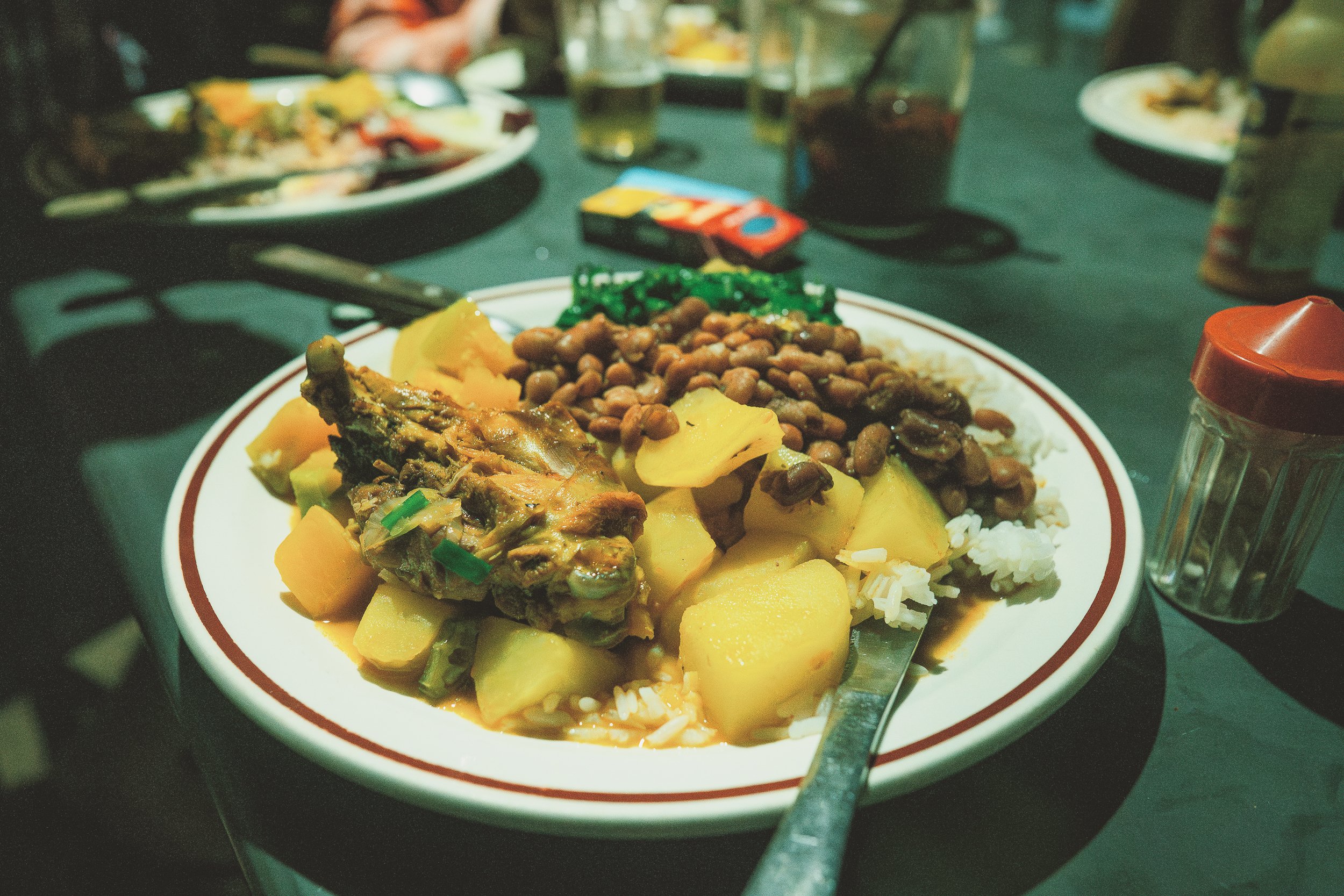
Janta! Couto de Magalhães
At the Table
Most of our meals in the range happen in homes, small restaurants, and family-run pousadas.
Portion sizes aside, we tend to avoid special requests. We want people to cook what they know, and what they’d prepare whether we were there or not.
In many places along our routes, receiving travelers at the table is still relatively uncommon, and hospitality is treated with real care and seriousness.
We consider it a privilege to break bread with them.
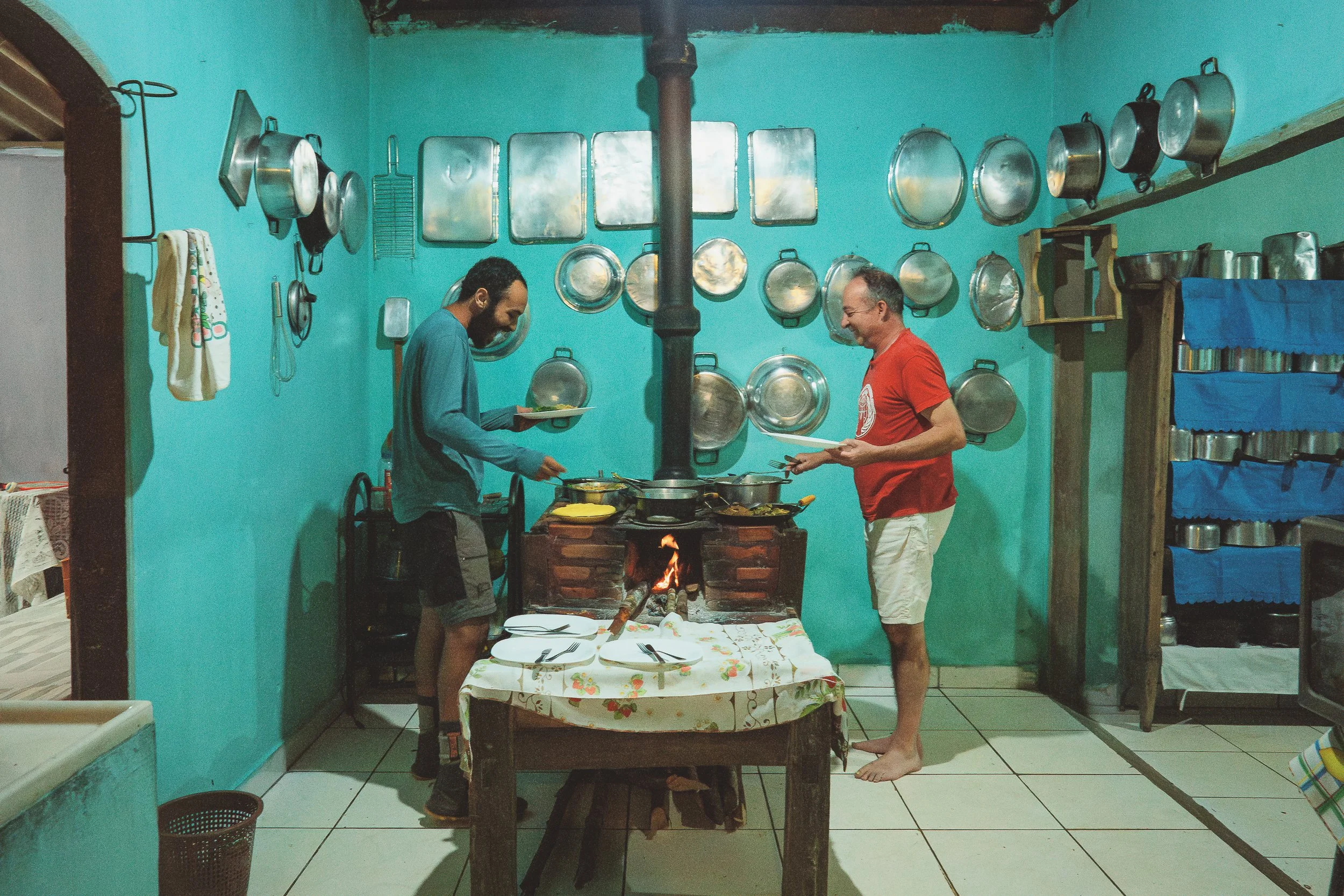
Júlio (left) and Paul helping themselves to a wood-fired feast at Noêmia’s house in the quilombola community of Capivarí. Self-service buffets are the norm in Minas Gerais—even at home.

Portions tend to be generous (there were just four of us on this particular evening) and heavy on carbohydrates, vegetables, and protein. Which is ideal, because we usually show up hungry.

Cafe da Manha. São Gonçalo do rio das Pedras
Café da Manhã
Breakfast matters across the range, even if it looks very different from place to place.
Some mornings begin with long tables of cakes, breads, fruit, cheese, yogurt, and strong coffee. Others are much simpler: crackers, bananas, leftover food from the night before, or coffee poured from a thermos in a kitchen before the day begins.
Quitandas (small hand-woven pastries traditionally carried by mule-drivers across the range) and pão de queijo are common. So are local cheeses and whatever fruit is in season.
During crossings, we usually supplement lighter breakfasts with additional trail food and snacks to prepare for long days on foot.

Café da Manha. Curimataí

Café da Manha. Quarteis

Café da Manha. Sempre Vivas

Café da Manha. Diamantina

Café da Manha. Santa Maria

Café da Manha. Santa Bárbara

An award-winning take on Carne de Lata (Canned Meat). Diamantina, April
Other Meals
Comida mineira anchors most of what we eat, but the range has its contrasts.
In Diamantina, meals tend to be more polished, with small bars, brewpubs, and restaurants offering everything from twists on carne de lata to burgers and craft beer. One night you’re eating off a chipped plate while a TV hums in the corner; the next you’re sharing dishes that wouldn’t feel out of place in São Paulo.
In other corners of the range, we occasionally lean into finer fare: generous buffets at rural retreats, refined takes on comida mineira, Brazilian-style pizza, or the occasional pasta or fish dinner after days deeper in the backcountry.
Other times, when the moment is right, we cook for ourselves. Churrasco. Fire. Cold beer.

deserts. Santa Bárbara

Meat curing in a rock shelter used by local flower pickers. We didn’t eat this particular batch—we were just stopping by to see who was camped in the cave—but carne de sol and its lesser-known sibling, carne serenata, are both regional staples with deep roots in backcountry cooking.

We might be in the Serra do Espinhaço, but a plate like this could be almost anywhere in Brazil: a kaleidoscope of farm-fresh vegetables and lightly seasoned proteins framing a generous portion of rice, beans, and farofa. Bom apetite!

Churrcaso. Rio Preto
Drinks & Company
By and large, mineiros enjoy a drink or two, especially in good company.
Beer and cachaça tend to be the staples, with Minas Gerais at the heart of Brazil’s artisanal production. Wine exists, but play a far smaller role in everyday life here.
Whatever your tipple, drinking in Minas is usually social and unhurried. The phrase vamo tomar uma (literally, “let’s drink one”) is understood by all involved to mean “let’s drink more than one.”
On most evenings during crossings, something cold (or fiery) will be within reach. On the rare occasion it isn’t, there’s always café, juice, and good company.
If you feel like painting the town red, you won’t be alone. If you don’t, you won’t be out of place.
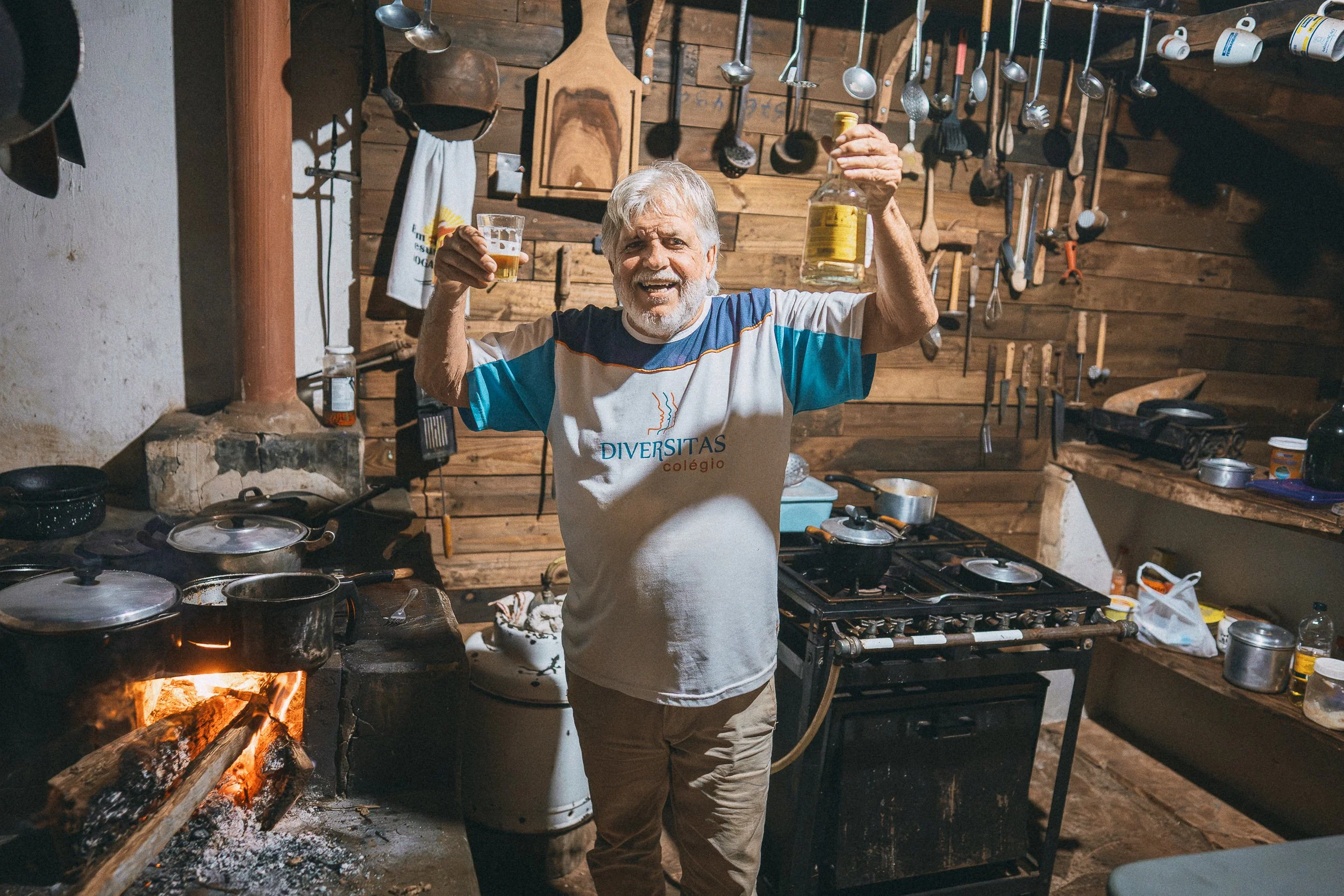
Saúde! Deco’s house, July
If the Espinhaço is calling, we're happy to talk it through.