

The Garden Circuit
North of Diamantina, the range closes in.
The ridgelines soften, the views shorten, and the ground begins to hold water. What were once open paths become overgrown—fading into grass, slipping into wet ground, reappearing further on.
Movement slows. Distances stretch. The sense of direction comes less from what can be seen and more from what can be followed: a line of palms, a change in soil, the sound of water somewhere ahead.
The Garden is our circuit through this part of the Espinhaço—a wide, high plateau anchored by Sempre Vivas and extending into the river valleys along its eastern edge. It’s a landscape of saturation and interruption, where routes are built as much from returning to them as from what remains on the ground.
There are no clear thresholds. You don’t arrive so much as find yourself inside it.
At a Glance
The Garden sits across the northern plateau of the Serra do Espinhaço, centered on Sempre Vivas National Park and extending outward along its eastern and western edges.
The terrain is open but enclosing—broad fields broken by wetlands, low escarpments, and long stretches where water defines the ground. Trails exist, but not always where they’re expected. Some continue for days. Others disappear into grass or give way to marsh and river.
Movement here is shaped by interruption:
· stretches of faint or overgrown trail linking higher ground
· detours around saturated fields, bogs, and seasonal water
· river crossings and, at times, travel along the water itself
Places to stay are sparse and irregular—rock shelters, abandoned structures, occasional houses along the edges, and camps set where the ground allows. Continuity comes less from infrastructure and more from knowing where it’s possible to stop.
The Garden borders each of the other circuits but belongs fully to none of them. It’s most often crossed in stages—entered, moved through, and left again—rather than held in place.
For those moving across the Espinhaço, it changes the pace.
And, at times, the direction.


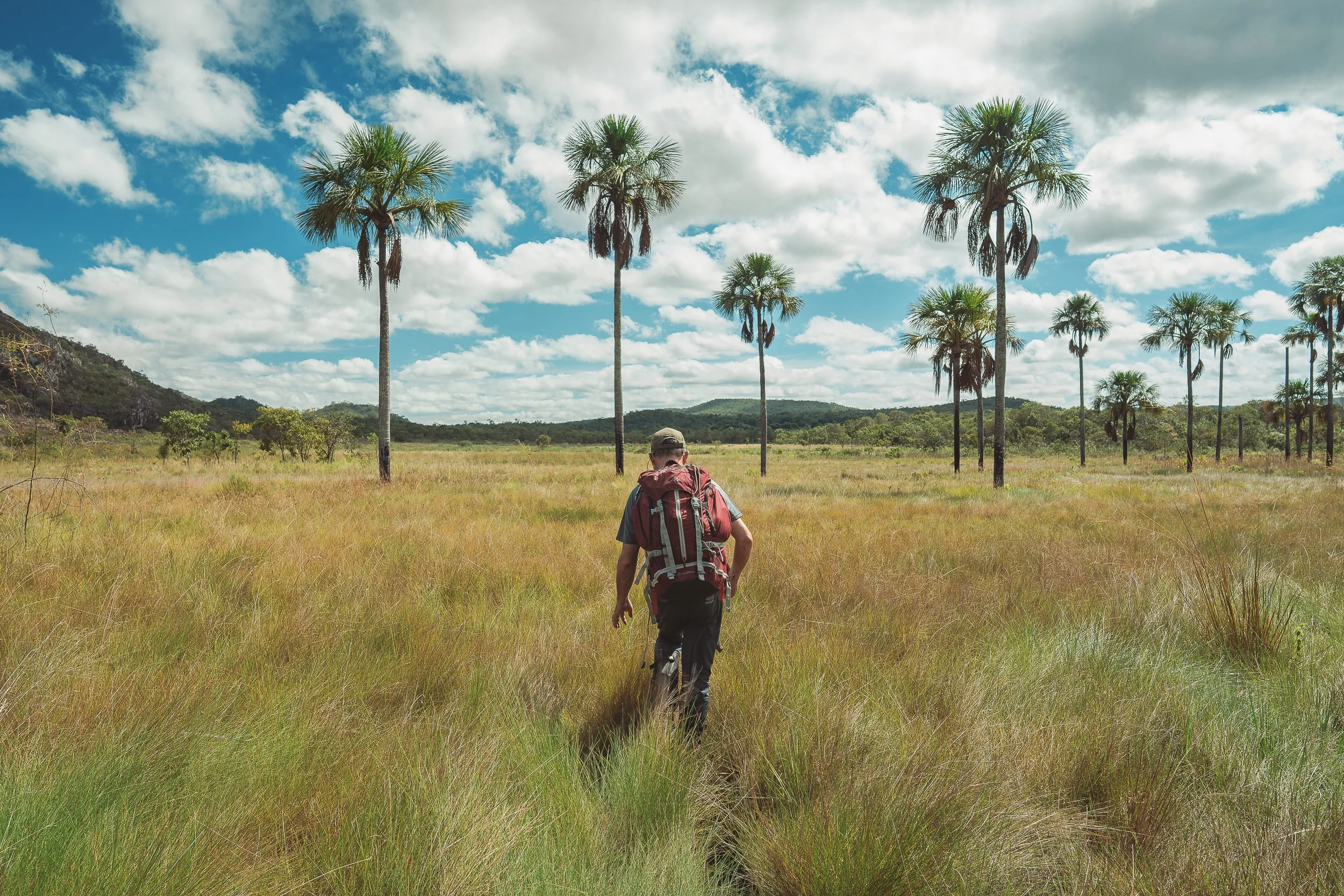


Trail Conditions (November )
Highlight: Exploring Sempre Vivas National Park
There’s a saying among garimpeiros in the Espinhaço that “all stones look like diamonds, but diamonds don’t look like any other stone”. The same might be said about Sempre Vivas National Park, a vast expanse of pristine high-altitude savannah that certainly doesn’t feel like any other stretch of Cerrado in the region.
Spanning 1,241 km2, with just a dwindling handful of full-time inhabitants, thousands of endemic species, and no tourist infrastructure to speak of, the Park is the deep outback of a region that could itself justifiably be described as the outback.
For the right traveler, it’s a privilege to spend full, long days trekking, canoeing, and bushwhacking across its expanse, from the lush veredas of its eastern border to the wind-swept campos of the west, taking refuge in art-adorned rock shelters, dilapidated flower-picker shacks, and hauntingly isolated ranches along the way. Razor-sharp grasses, dust speck-sized ticks, snakes (including several deadly species), and lack of shade are harsh realities of the trail here—as are large felines.
Untamed, controversial, and spectacular, the Park remains a true undiscovered gem—it’s genuinely shocking how few visitors from Brazil and abroad make their way here. Don’t expect to see anyone else.

LEvi’s House, TAquaral
Highlight: TAquaral
No place embodies the deeply paradoxical existence of Sempre Vivas National Park better than the decadent main residence of Fazenda Arrenegado (literally, Forsaken Ranch). Cast away in one of the most inhospitable stretches of the Park, and camouflaged by the surrounding rocks & vegetation, “Taquaral” has become synonymous with the untamed wilderness, land disputes, and predatory fauna that the Park is known—or rather, unknown—for. Its lone inhabitant & caretaker during the past 2 decades, Sr. Levi, recently departed the ranch, but remains a living legend around these parts, and for good reason: if you find yourself here, we’ll be about an 8-hour bushwhack & trek away from the next closest human.
The ranch house (not pictured) could use a good cleaning, but we think it’s best appreciated in its natural state. If you’ve never bathed in a horse trough, now’s your chance.

Corral, Taquaral

Trail Lunch, Taquaral

Canoeing on the Inhacicão, Sempre Vivas National Park
Highlight: The Inhacicão
So much about Sempre Vivas is about the journey, the feeling, and the remoteness. It’s fitting, then, that even the journey to get there is spectacular. If we’re approaching from the west, this often means a long & winding drive along pot-holed dirt roads, followed by a gorgeous wetlands hike and a canoe ride up one of the Jequitinhonha River’s most pristine tributaries.
While there are technically multiple points of entry (and no official entrance) to the Park, none is more dramatic than the Inhacica Grande River, whose nutrient-rich waters & powder-sand shores comprise the Park’s wild eastern border. Here, amidst the rocks & palms, white sand & birdsong, even Diamantina (a measly—but brutal—3 hours away overland) feels a world away. And yet this is just the starting point for what is often one of the most epic stretch of any trip in the Espinhaço: a multi-day crossing of Sempre Vivas.
We like to pitch our tents on soft white sand, next to the fire, whenever we find ourselves in the area. There are few places where we’d rather be at any time.

Dawn on the Inhacicão (April)

Canoeing on the Inhacicào (March)

Confluence (January)

River-Bound (April)

Boquet, Sempre Vivas NAtional Park (April)
HIghlight: Flower-spotting
Eriocaulaceae, the family of flowering plants from which Sempre Vivas National Park derives its name, is as inextricably linked to the history, economy, and identity of the Serra do Espinhaço as the diamonds that sustained the region before it. Sixty of the estimated 100 species in existence have been documented within the Park’s borders—eight of which are found no place else on earth.
With enchanting shapes that range from tiny buttons & stars to tree-like stalks with giant globes, “flower-spotting” has a way of making even the most arduous days on the trail joyous. We dare you not to get excited each time we pass one up close.

Papaelanthus (April)

Wildflowers (October)
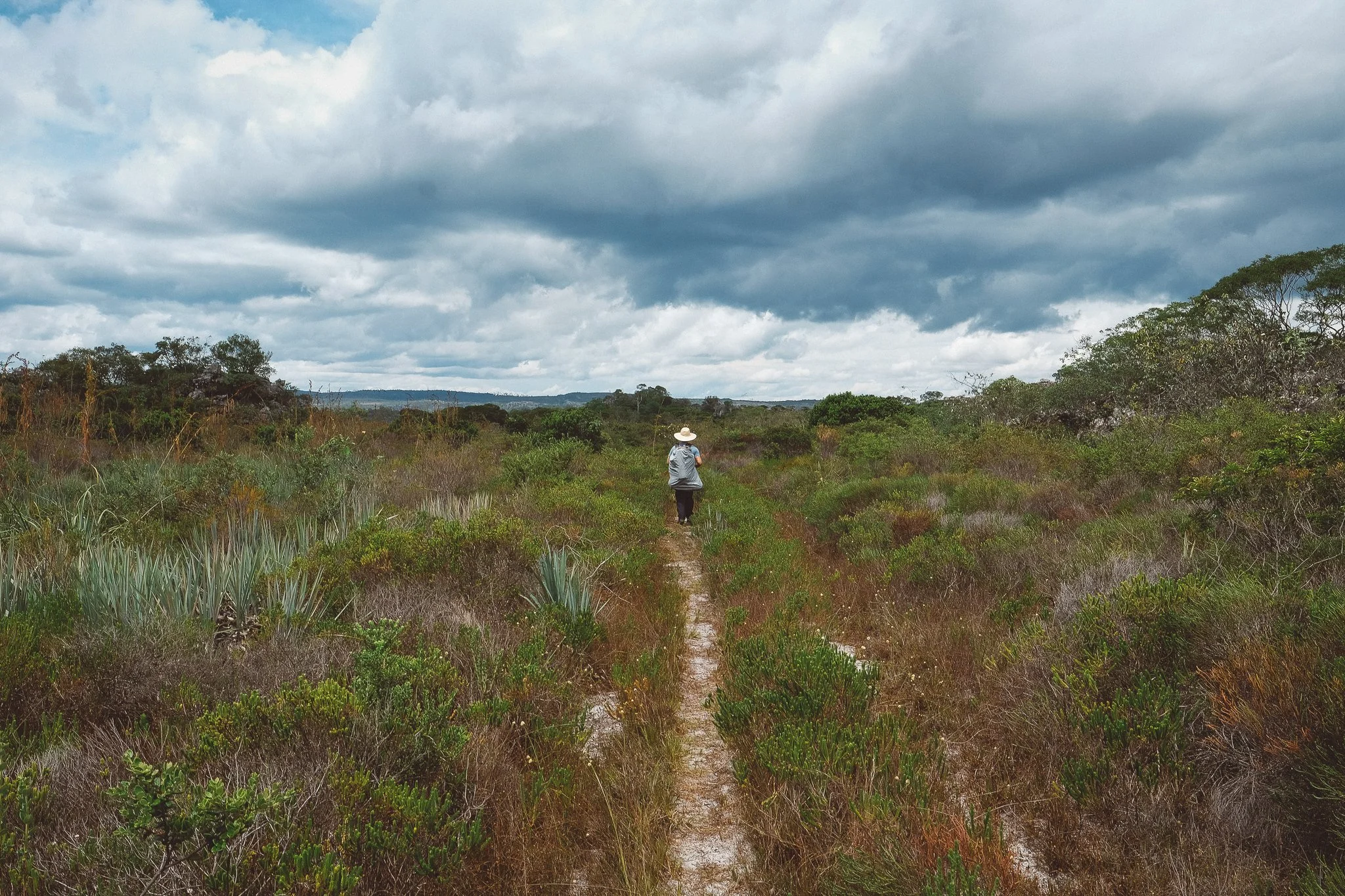
CAmpo (November)
Highlight: The Campos
There is something profoundly captivating about a place so controversial, so feared, and so remote being able to spring forth so much life with such ease. Yet this is precisely what the Park does, and its many glorious high campos (fields) are the epicenter of that activity.
Hidden between peaks atop a vast high plateau, and strewn with flowers & grasses of all heights & dimensions, the campos dominate the central regions of Sempre Vivas. Much of the Epinhaço’s water springs forth here, saturating the ground and creating marshes, streams, and tiny forest islands. Later, these waters will meet & cascade down the eastern & western escarpments of the plateau, nurturing a pair of Brazil’s most prolific rivers.
The campos are meditative to gaze upon—always a foreground, a middle ground, and a background—but a true delight to experience up close. As trekkers, there’s nothing quite like immersing in their depths, and in the possibilities of what we may see. Tapirs, deer, and giant anteaters roam freely (but are rarely seen by visitors); insects, birds, and amphibians abound; and (depending on the season) flower-pickers work the fields using traditional methods. Most of all, wilderness, timelessness & placelessness are omnipresent.
A lack of shade, snakes (including several species of viper, as well as rattlers, corals, and boas), bogs, head-high stalks, and prickly grasses make for arduous days, but the reward is worth it: a chance to experience one of the most pristine stretches of high savannah in Brazil.
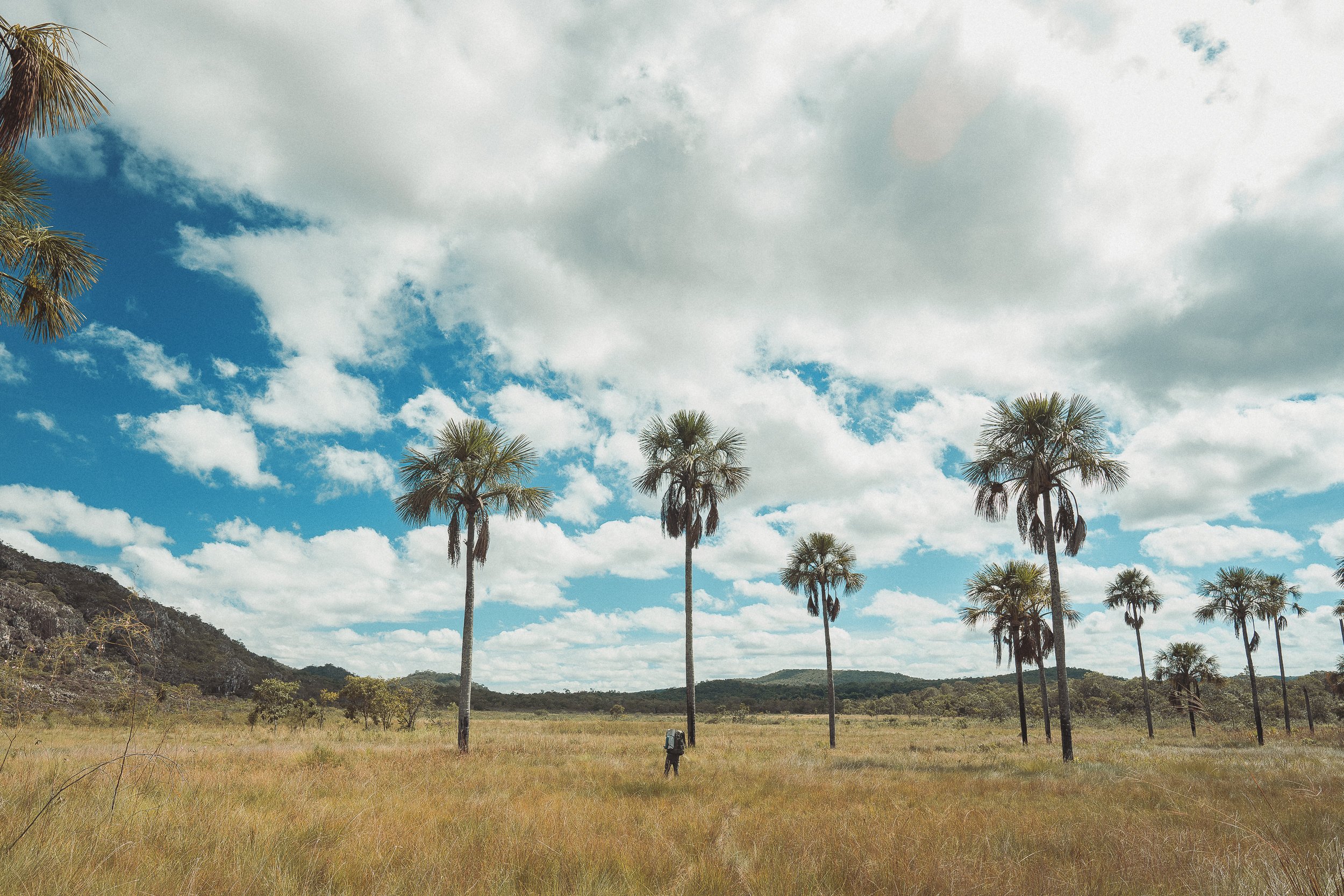
Vereda, Sempre Vivas National Park (April)
Highlight: Veredas
The word vereda translates literally to “way” in Portuguese, and to “stream” in certain parts of Brazil, but around these parts it’s used nearly exclusively in reference to a particularly verdant patch of cerrado—one in close proximity to a running body of water, with white sand, seasonal marshes, and expansive, gorgeous groves of the iconic buriti palm tree (Mauritia flexuosa, or moriche palm in English).
While veredas are fairly standard fare across much of the (relatively flat) Brazilian Midwest, they’re notably less prevalent in the Espinhaço, where the mountain backdrops make them a surreal sight to behold. Two distinct & thriving groves are found within Sempre Vivas’s borders: one seated upon the western escarpment of the Espinhaço, high above the dusty Sertão, and the other straddling the Inhacicão River in the eastern lowlands. Walking amongst these towering palms is always a feast for the senses.
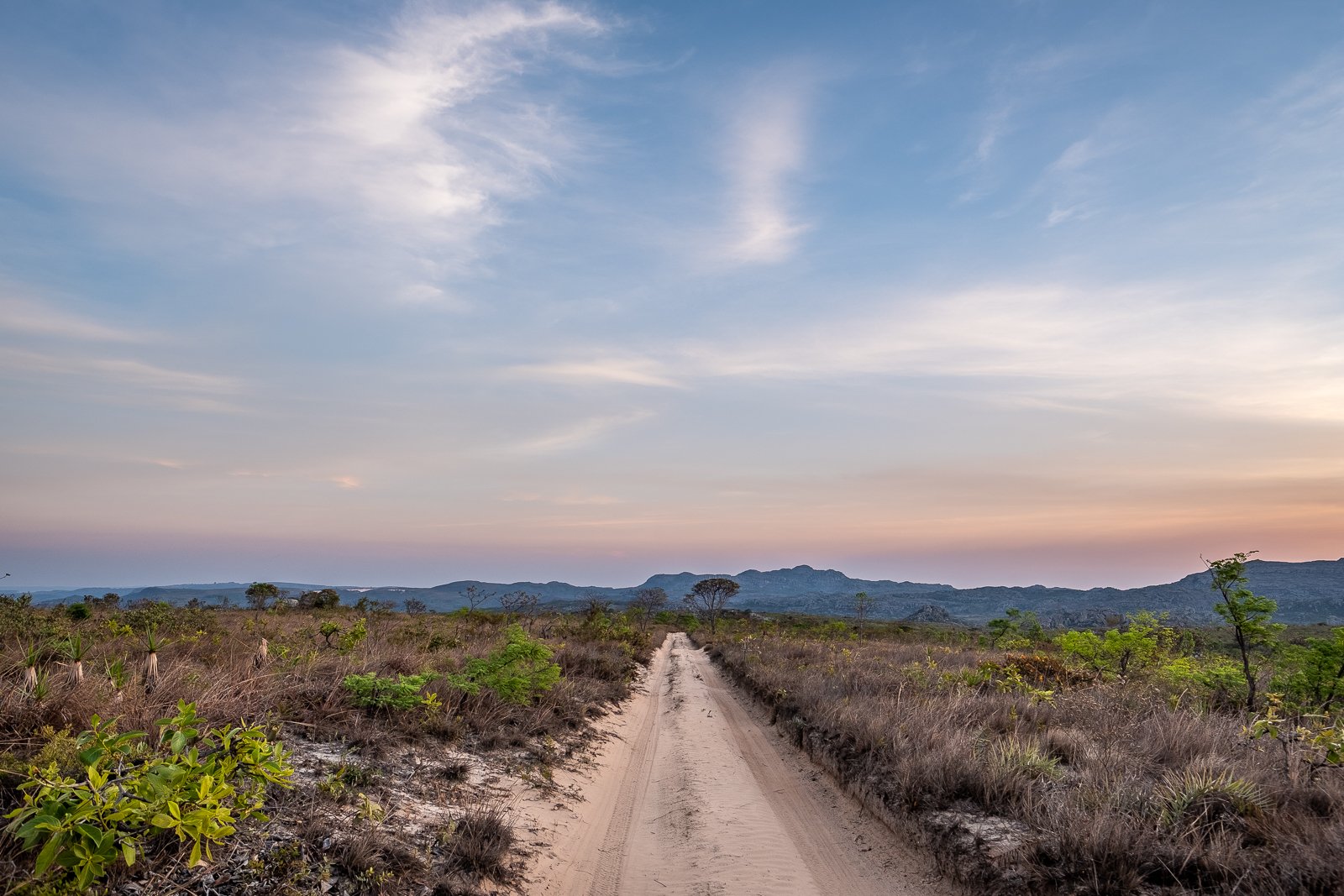
Park Road (August)
Highlight: Overlanding in Sempre Vivas NP
There is “off-roading”, and then there is navigating the surreal backroads of Sempre Vivas National Park, where jagged rocks, forest-shrouded mud pits, deep seasonal marshes, harrowing craters, and white sand trails are all just part of the commute.
Our vehicle of choice? The legendary Toyota Bandeirante (of course), a robust variant of Toyota’s beloved J40 series produced exclusively in Brazil from 1962 - 2001. As your captain speaking, we recommend you relax & enjoy the ride.

Road Conditions, November
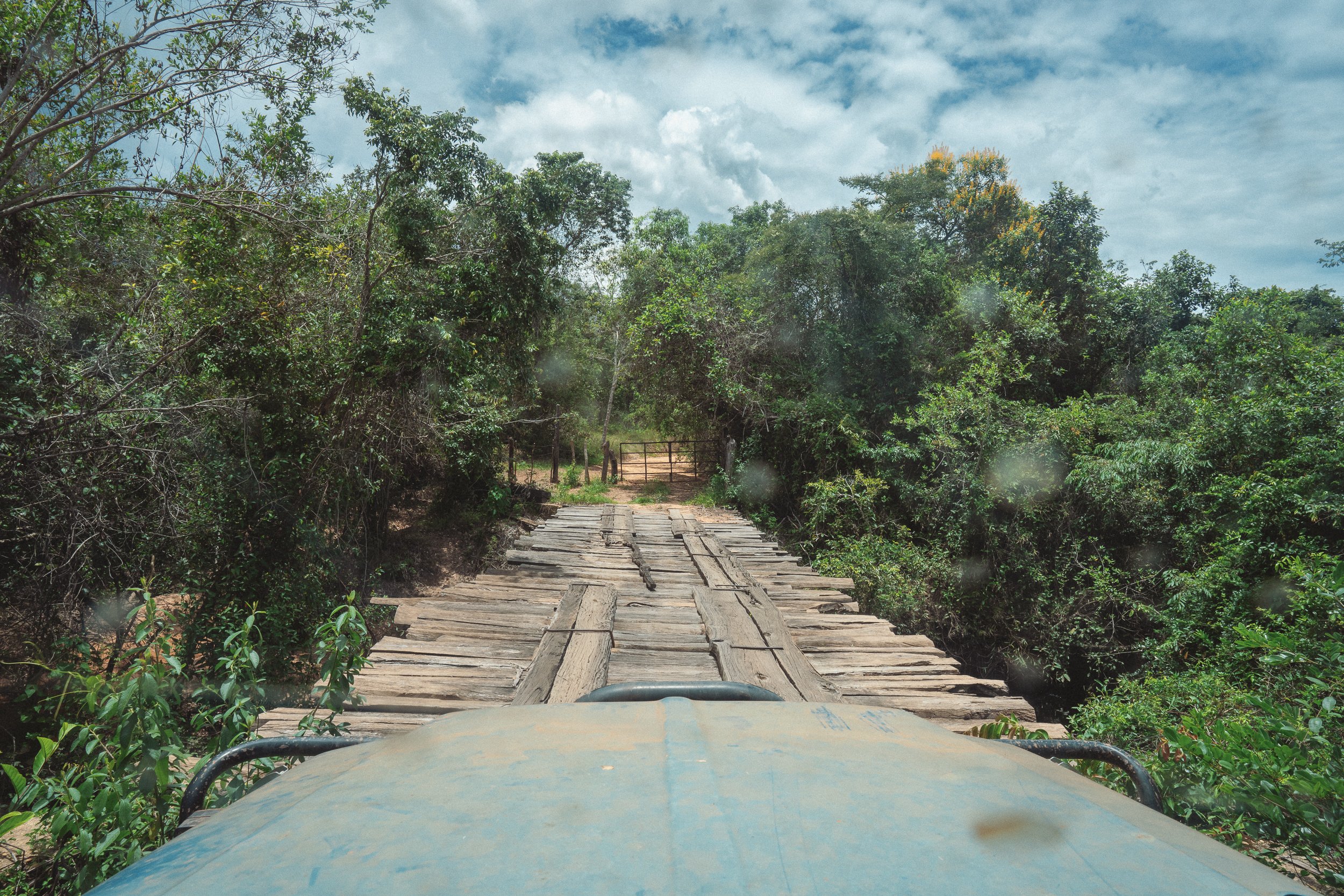
Road Conditions, January
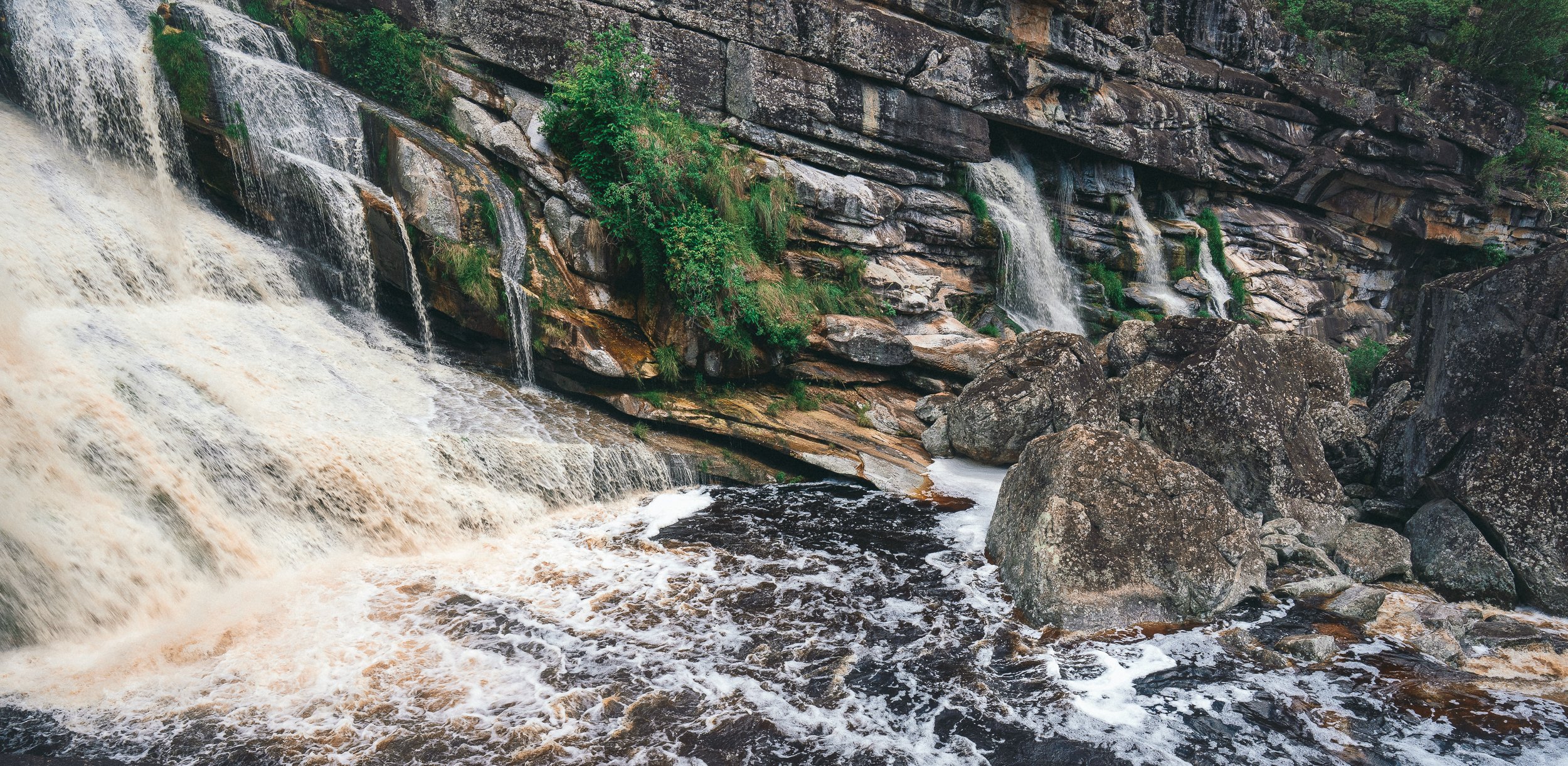
Cachoeira do Fundão (January)
Sempre Vivas: WAterfalls & Swimming Holes
Sempre Vivas isn’t where the water falls in the Espinhaço; its where its born. While the Park is literally surrounded by waterfalls (including some of the Espinhaço’s most beautiful & voluminous examples), and there are several nameless falls within the Park itself, the circuit is more defined by bogs, marshes, streams, tributaries, and pitch black swimming holes than picture-perfect cascades…

Water level (January)

Water Level (April)

Water level (August)

Backcountry CampSite, Inhacicão
Sempre Vivas: WHere We Sleep
In our minds, the most enriching accommodations are paradoxical in their offerings, providing us with both a safe haven from the strange world outside our door and an intimate glimpse into that very world. In Sempre Vivas, those accommodations include rock shelters (think: caves, but shallower), seasonal flower-picker shacks, abandoned ranches, and (of course) our tents.
If you’ve read this far, we think you’ll love it…
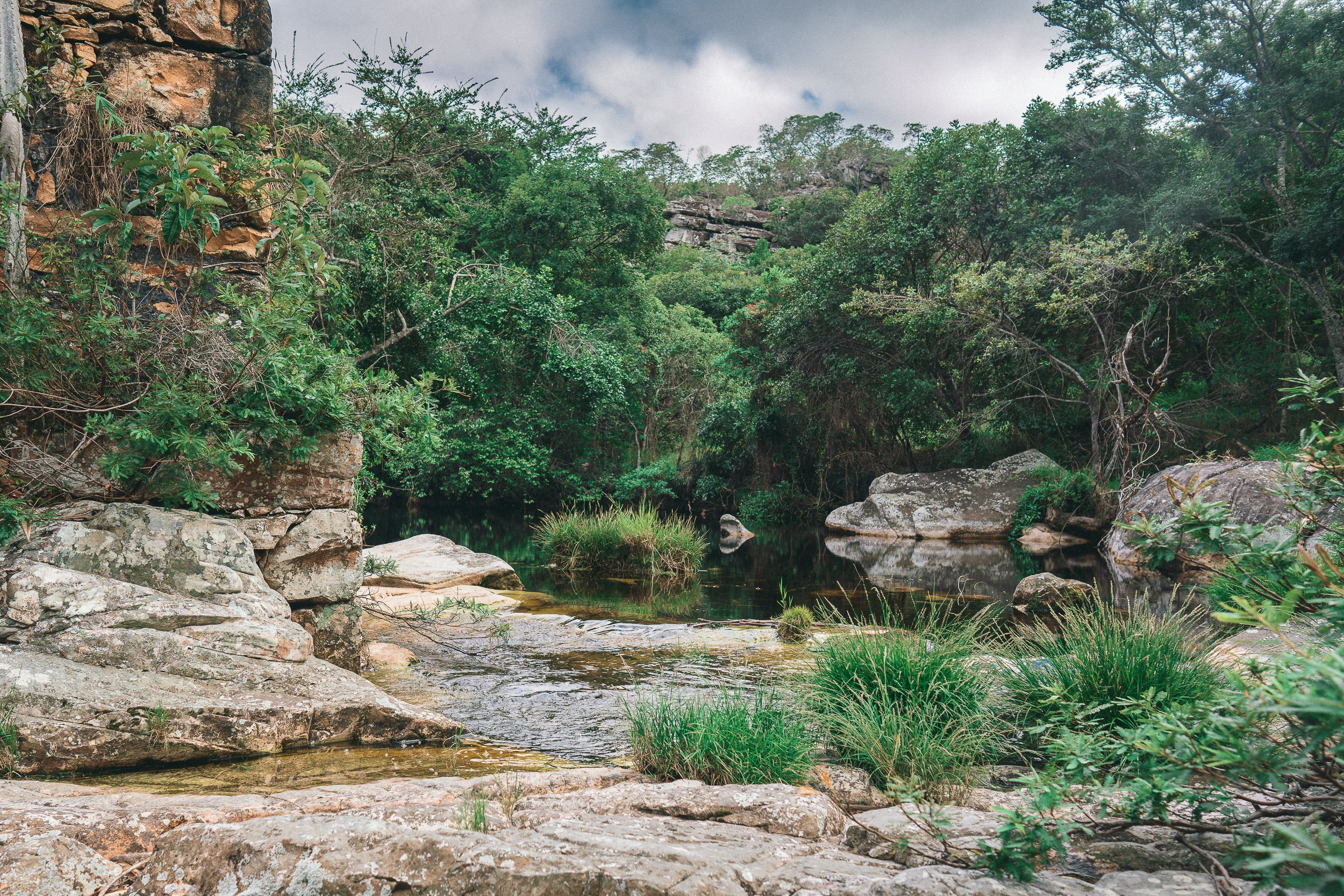
Wilderness Campsite, Fundão

Rock Shelter, Campos São Domingos

Abandoned Ranch, Taquaral

Lu’s Ranch, Vale do Rio Preto
