
The Serra
Bespoke Treks, Rides & Overland Tours in the Southeastern Range of the Serra do Espinhaço Meridional
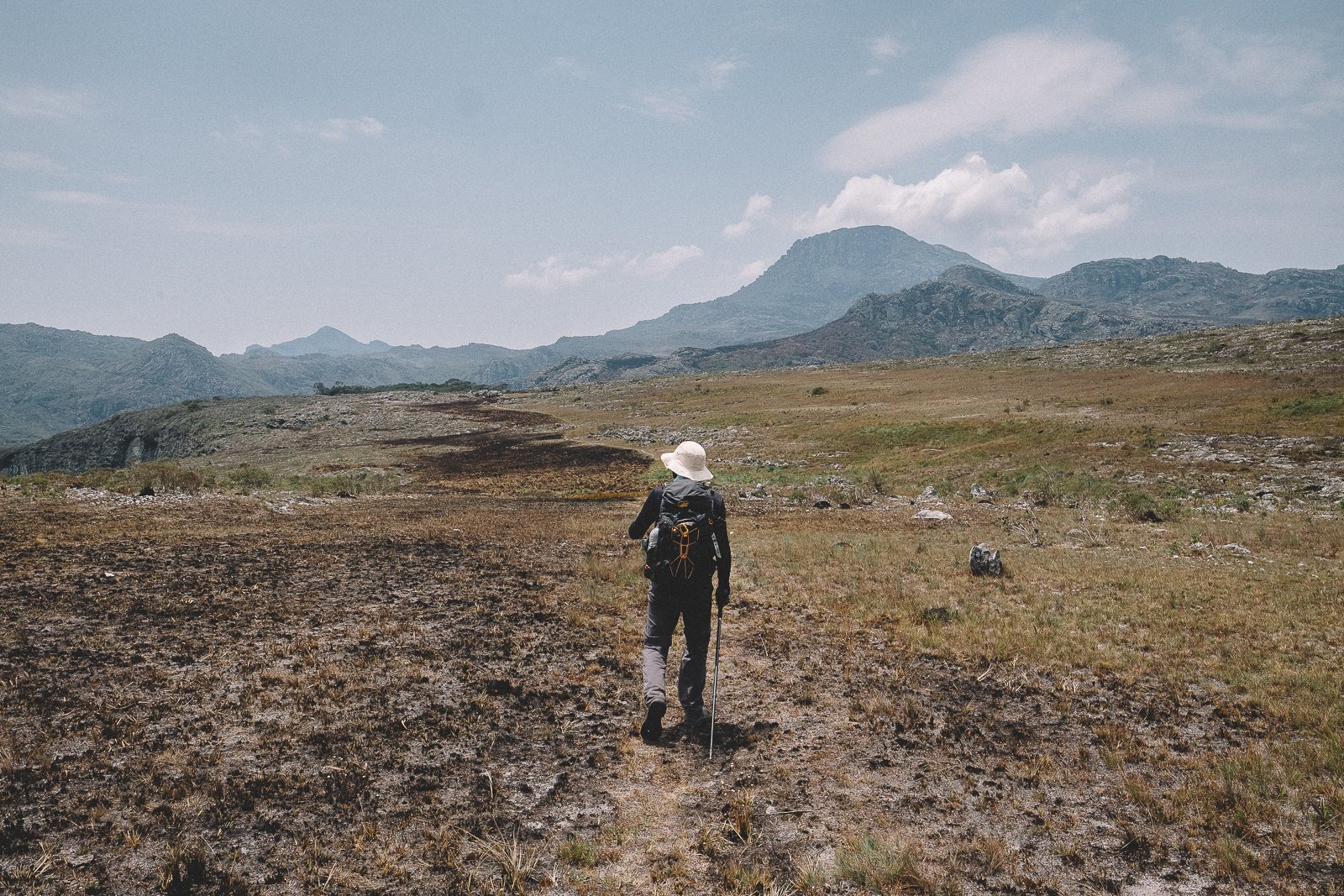
Towering peaks, white-sand waterfalls, historic trails, and some of the finest expressions of campos rupestres in the Espinhaço.
The Serra is our circuit through the southeastern portion of the range—a region of high ridgelines, open plateaus, and deeply cut valleys where trails and dirt roads have linked highland villages for centuries.
It’s the circuit we return to most often, and the one that offers the most immediate, visually arresting introduction to the range.

At a Glance
The Serra is our most accessible and visually arresting circuit, linking little-traveled historic routes and wide-open mountain views with small highland communities.
The terrain is mountainous but navigable, with a dense network of historic trails, dirt roads, and footpaths linking ridgelines, valleys, and small communities.
It supports multiple ways of moving through the landscape:
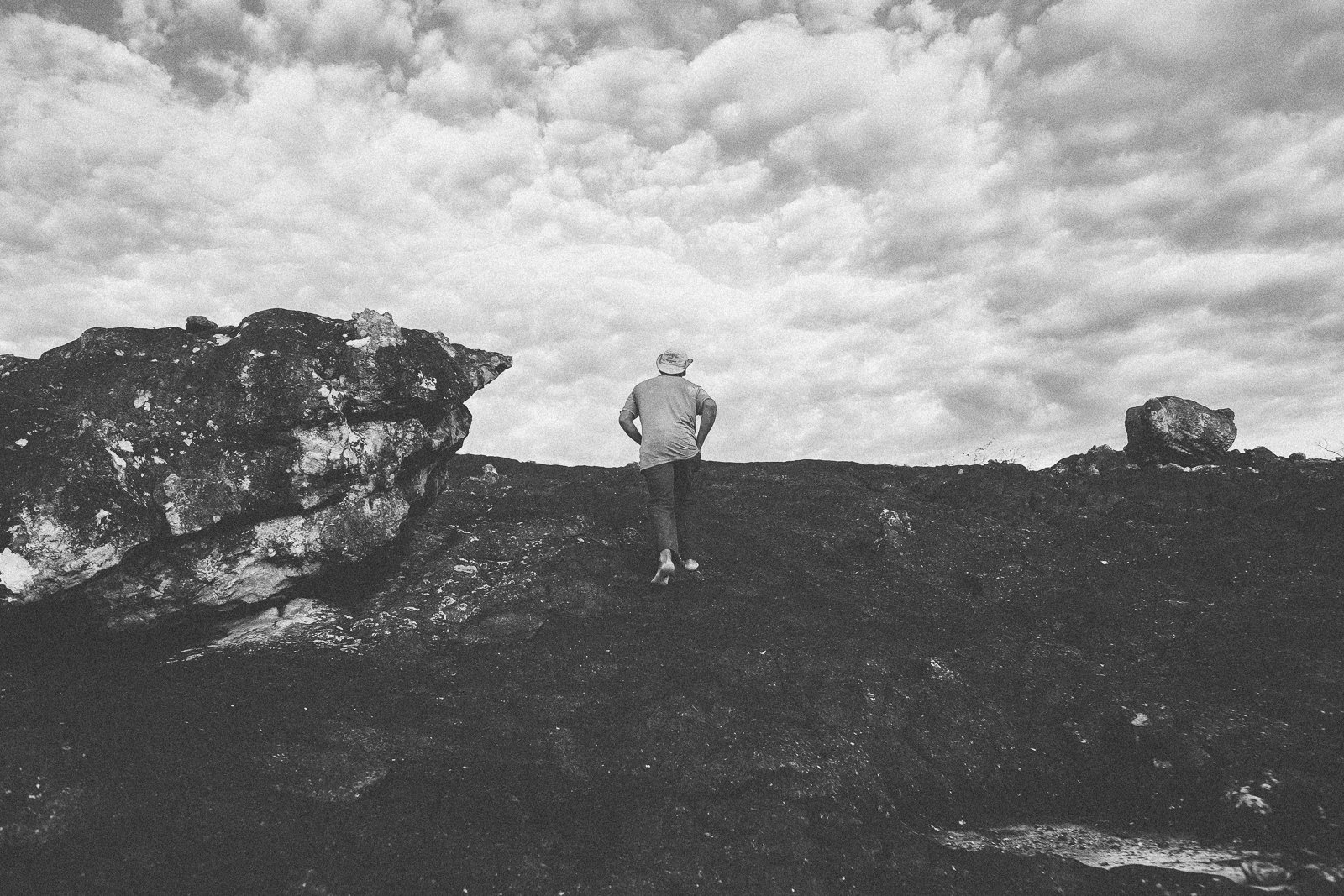
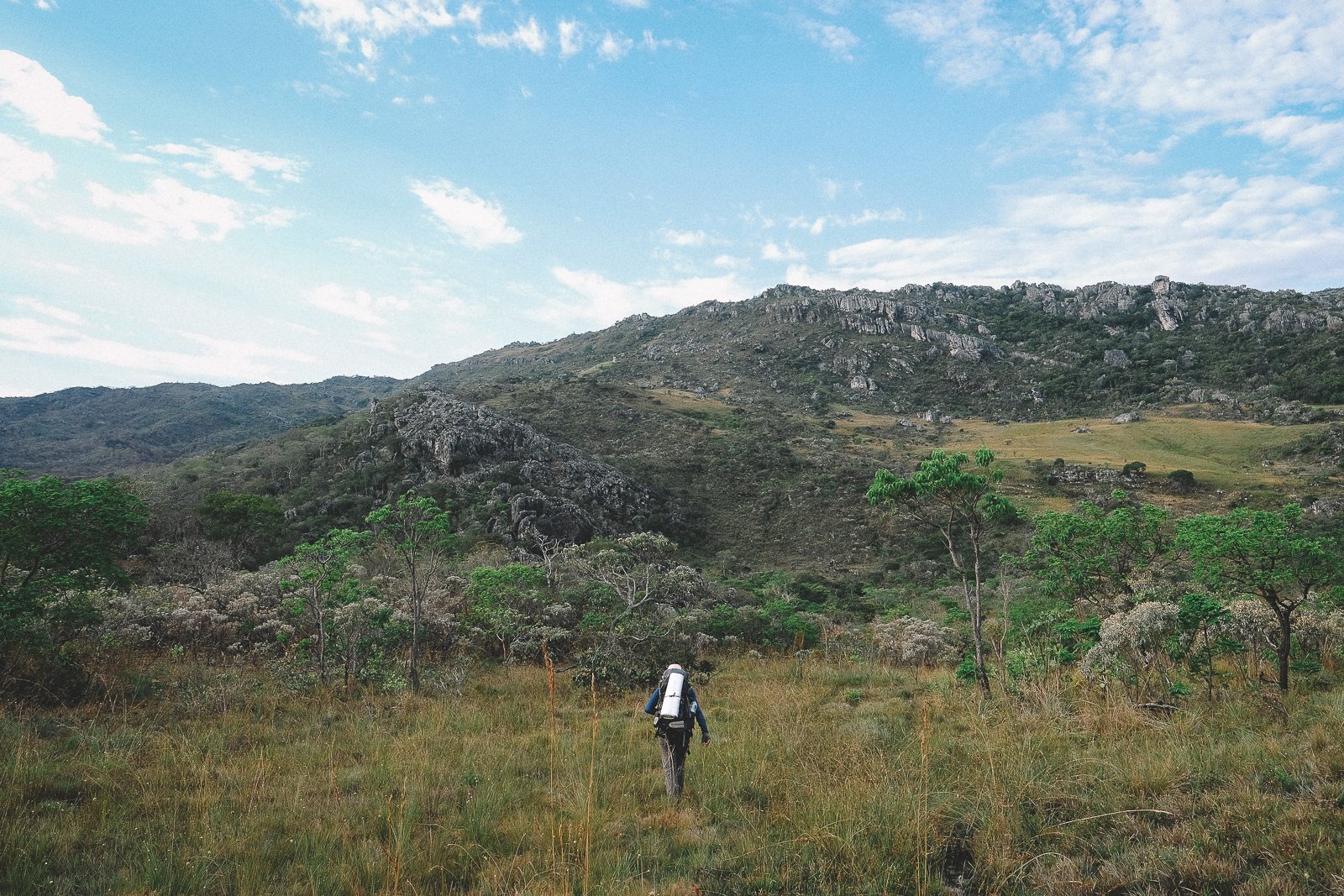
– trekking across long, continuous stretches of trail and little-used dirt roads
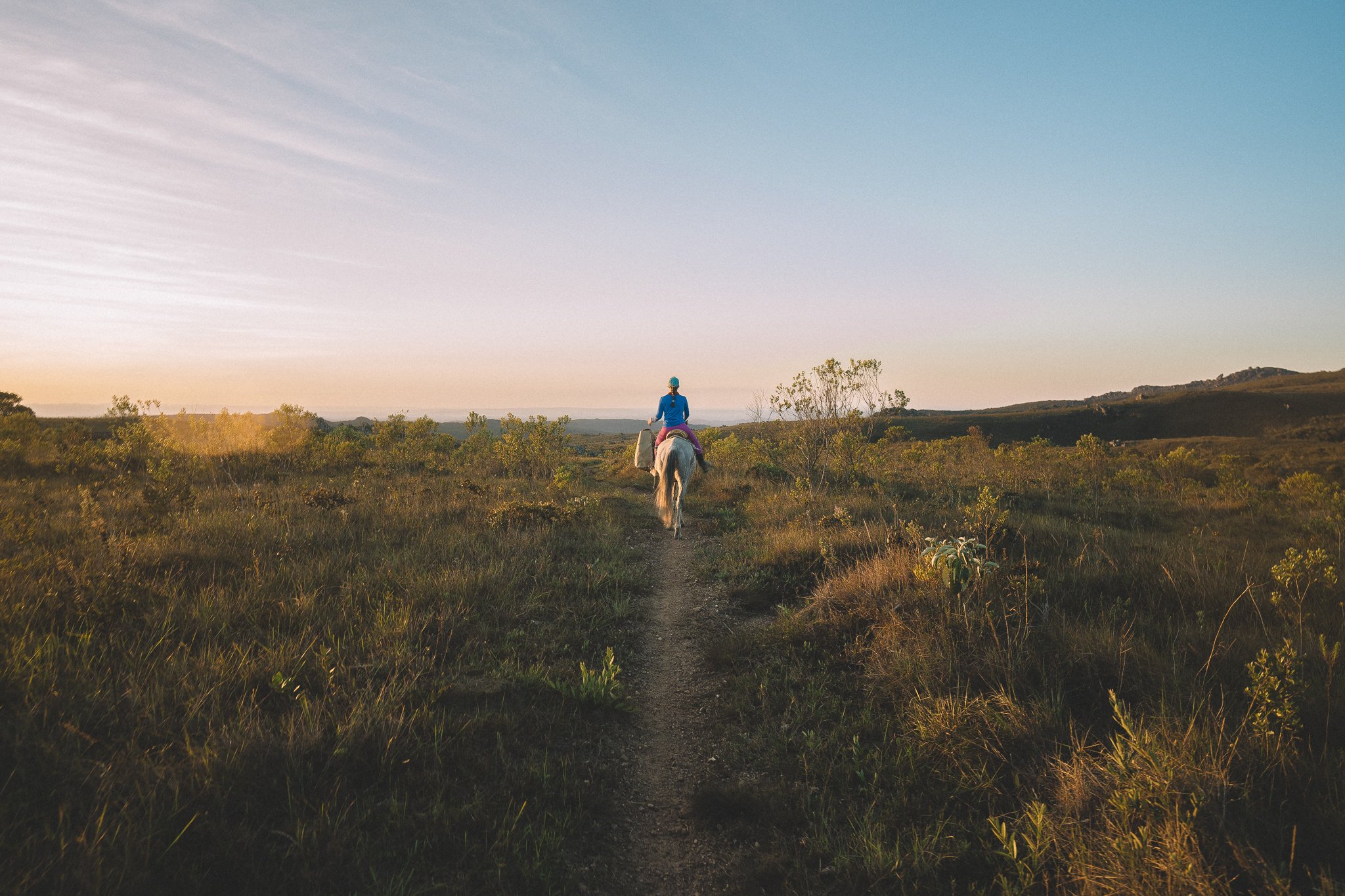
– riding through valleys, plateaus, and backcountry routes
– overland travel with daily walks to waterfalls and villages
Accommodations range widely—homestays, pousadas, wilderness refuges, and more refined options—making it possible to build routes that balance movement, rest, and immersion.
The Serra sees more regional visitation than other parts of the Espinhaço, though most trails remain empty. Its proximity to Diamantina and the presence of established parks make it a natural entry point into the range.
For a first journey into the Espinhaço, we find it’s often the right place to begin.
For a longer one, it becomes the foundation.
Who This Circuit Suits
The Serra tends to suit travelers who want to move steadily through the landscape—long days on foot or horseback, with a sense of progression from one valley to the next.
It’s one of the more welcoming parts of the Espinhaço, but the effort is real. Trail days are often long and vertical, and even shorter stretches can leave people feeling it the next morning.
That said, the presence of roads, horses, and nearby communities gives us flexibility. We can adjust as needed, without breaking the continuity of the route.
For travelers looking for something slower or less demanding—or, conversely, something more remote and self-contained—other parts of the range may be a better fit.
Protected Landscapes
The Serra is home to some of the most established conservation areas in the Espinhaço.
Itambé State Park, Rio Preto State Park, and the surrounding protected areas form a patchwork of preserved terrain—high plateaus, river systems, and steep escarpments that shape how the region is experienced on the ground.
The parks aren’t isolated destinations. They’re part of a larger landscape, connected by trails, roads, and communities that extend well beyond their boundaries.
Moving through them is less about entering a protected area than about passing through one layer of a much broader system.

Mule-driver trail (November)
Highlight: The Trails
Centuries of mule-driving, flower-picking, and mining for diamonds in the most remote nooks & crannies of the mountainous region southeast of Diamantina has blessed the region with an embarrassment of spectacular—and virtually empty—historic trails.
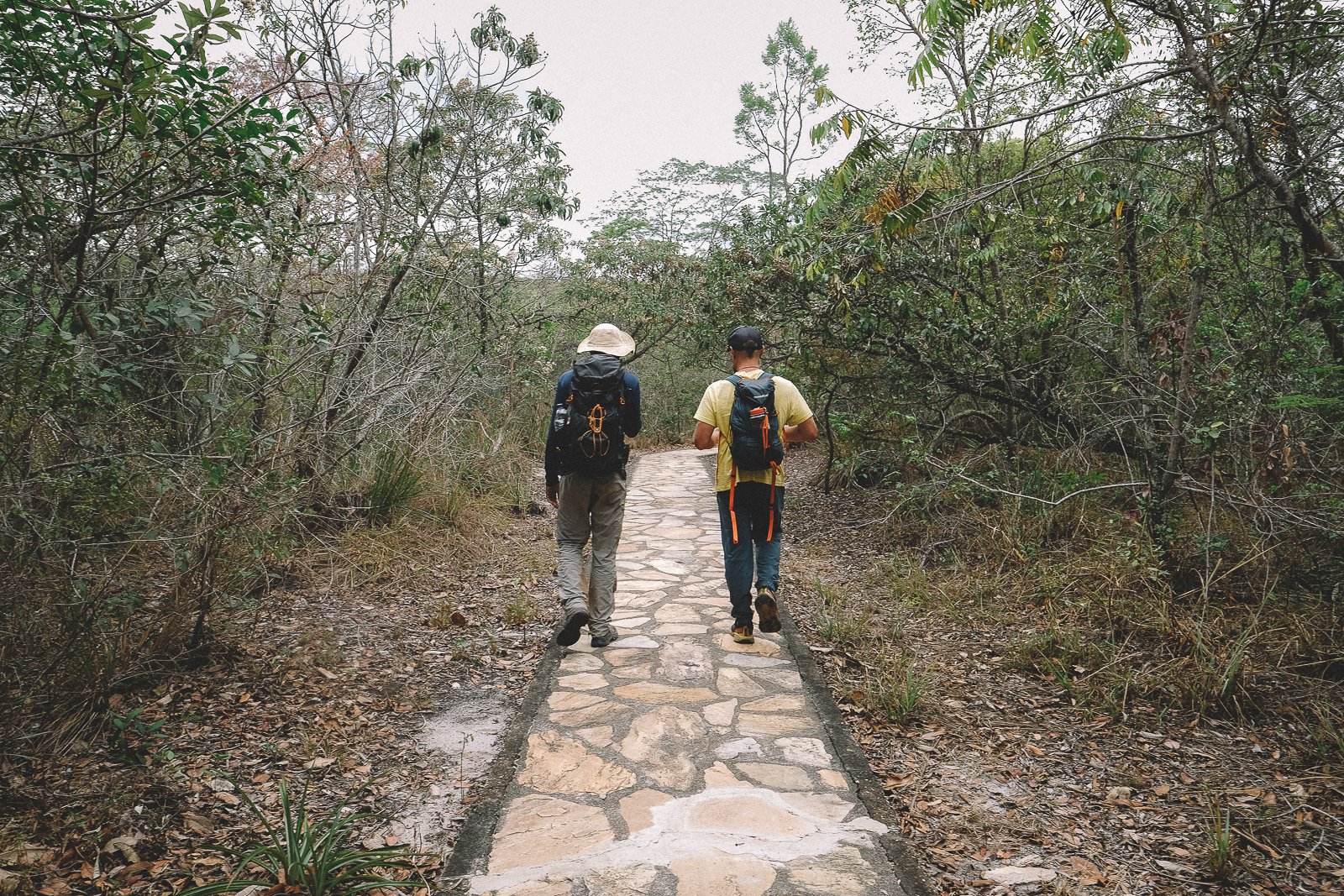
The Serra doesn’t just boast historic trails, though. Urban footpaths, nature trails (administered by two of Minas Gerais’s most exemplary State Parks), and bucolic, little-used backroads criss-cross the landscape in between waterfalls & communities, creating endless route possibilities.

Descending Pico do Itambé (November)
Highlight: Pico do Itambé
The Espinhaço’s unrivaled natural icon, Pico do Itambé (elev. 2,052 m) towers over the region like a citadel, living up to its billing as “the roof of the Espinhaço”. Protruding 1,102 m over the surrounding peaks, it draws a hard line between the Rio Jequitinhonha & Rio Doce basins, and a soft line between the Atlantic Rainforest & Cerrado biomes.
Taking in the 360-degree views after a challenging climb is one of the most satisfying & memorable moments of any journey in the Espinhaço, as is a golden hour descent.

Summitting Pico do Raio (April)
Highlight: Pico do Raio
The irony of summiting mighty Itambé is that the view on top (while undeniably epic) lacks Itambé itself. Meanwhile, just some 20 km away, the much smaller & more approachable Pico do Raio (Lightning Peak; elev. 1,387 m) presents an unbeatable view of not only Itambé, but of the nearby colonial hamlets of São Gonçalo do Rio das Pedras, Milho Verde, and Capivarí.
When you consider that the climb begins along one of the most gorgeous stretches of historic trail in the region and lends itself to a post-climb pitstop at a perfect patch of white sand-beach (replete with gently flowing cascade & natural infinity pool)… well, it could at least be argued that the experience gives Itambé a run for its money.

Descending into Mata dos Criolos (April)
Highlight: MatA dos Crioulos
The first time we visited this tiny quilombola enclave, set in a days-long valley between green peaks & pulsating with mountain springs, it redefined our idea of paradise. Delightfully hidden, full of lush vegetation, breezy palms & fruit trees, with drinkable cola-tinged waterfalls spilling gently around each bend, and sparsely populated by welcoming folks with tiny adobe homes featuring cast-iron chimneys piping smoke from wood-fired stoves, it’s the kind of place that makes you excited to be alive.
In a 100-km stretch of the Espinhaço in which each day seems impossible to top, Mata dos Crioulos might be unbeatable. There are few places on earth that we enjoy traveling through—or arriving at—more. If you should be so lucky as to find yourself there, we think you’ll agree.

Ze’s house, Mata dos Crioulos

Riding through Mata dos Crioulos (September)
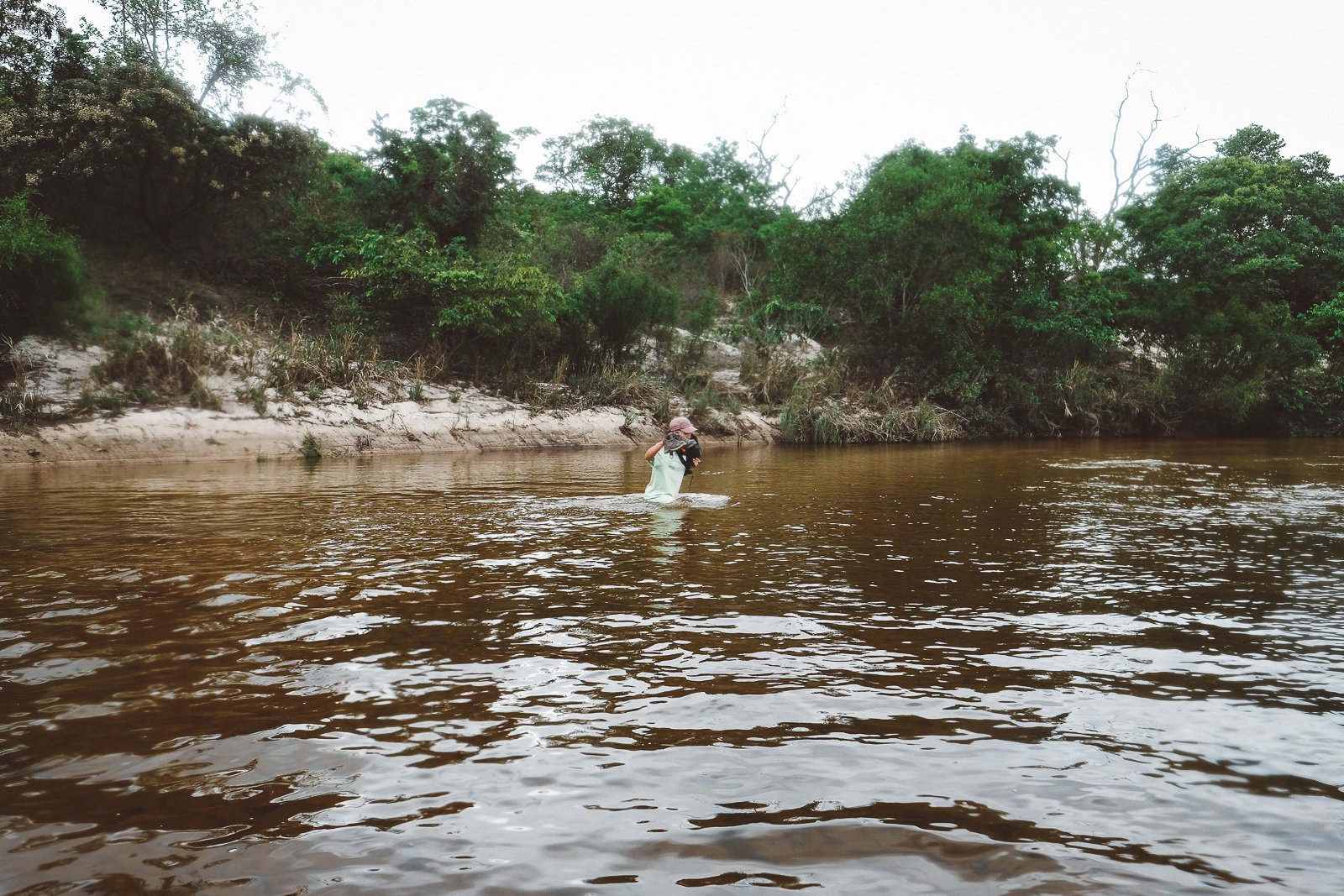
Crossing The Jequitinhonha (September)
Highlight: Crossing the Jequitinhonha River
The peaks & Parks get more glory, but nothing shaped this region or brought more fortune & glory more than the rivers that run through it, and none more so than the Jequitinhonha. Solemn yet dignified even after centuries of callous abuse, the river’s crystalline waters once ran rich enough with gemstones to both buoy a distant Empire and cradle a young nation. Today, irreparably scarred & forgotten, it remains forgiving enough to provide an economic lifeline for 500,000 Brazilians living downstream.
In theory, we’ll cross enough rivers, creeks, and streams during our trek for it to “get old”, but there’s something about gazing on the Jequitinhonha from its banks, then stepping into it, that will always be special.

Water Crossing Near Bica d’Agua (September)
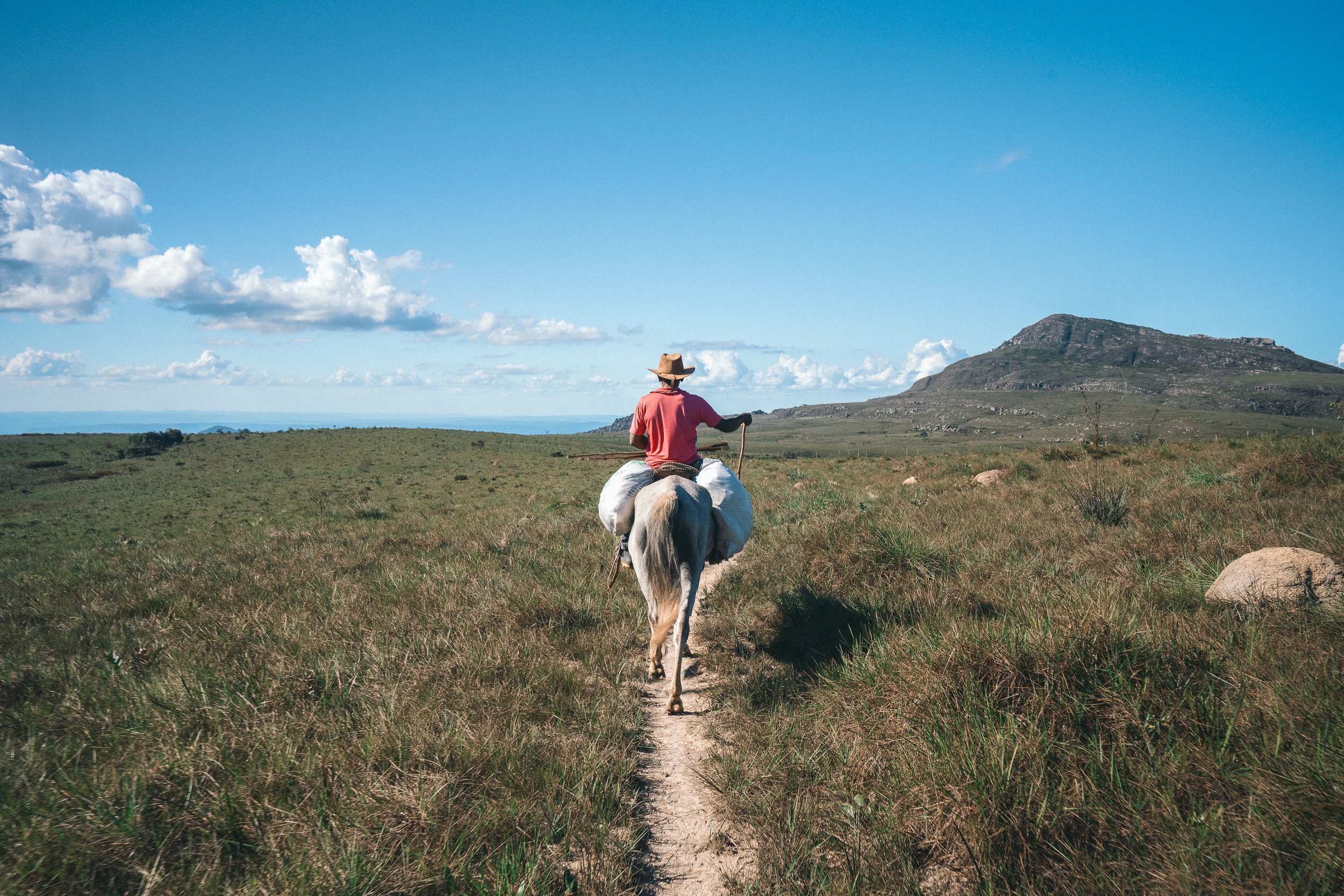
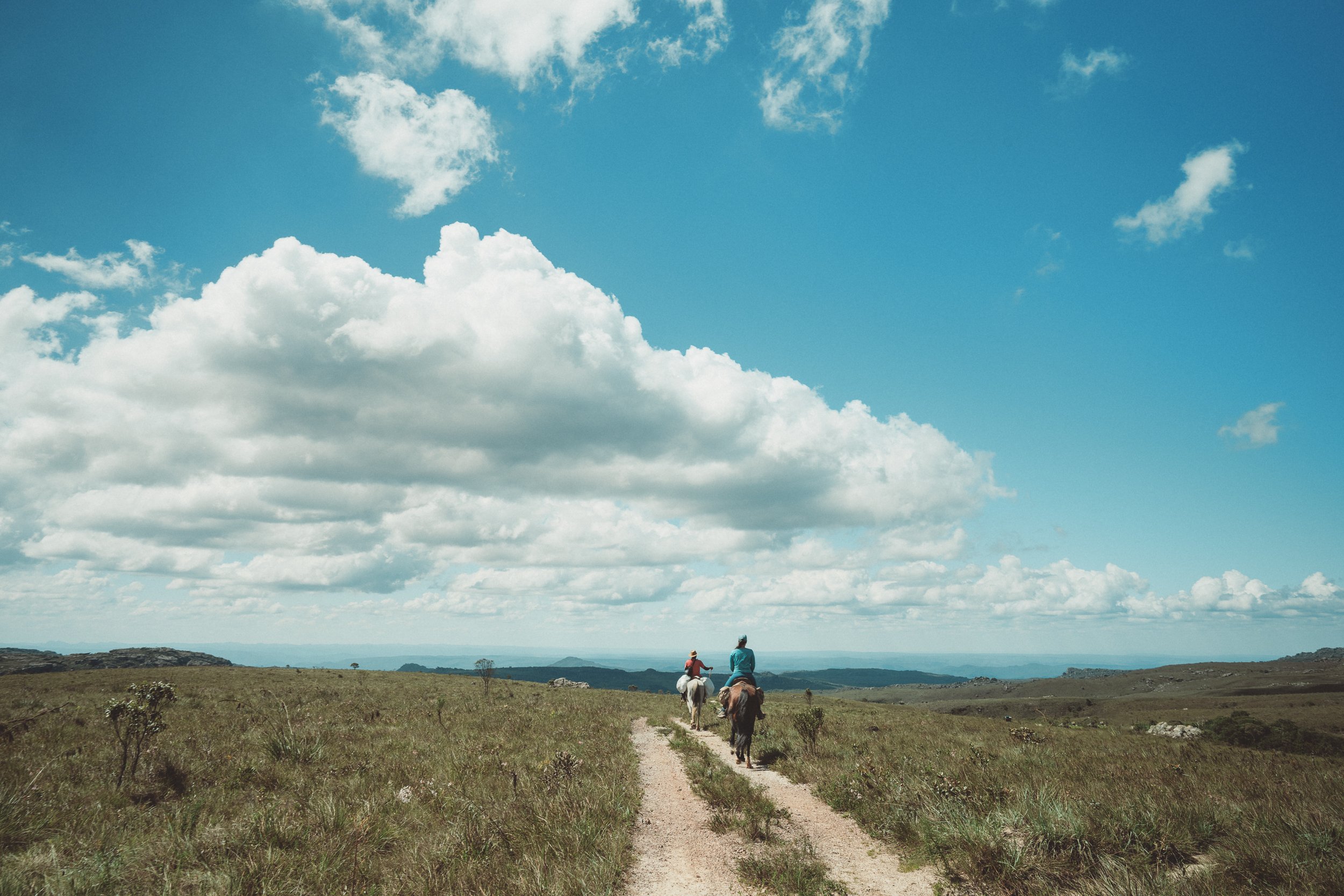
Highlight: Riding Through the Hinterlands
If you’ve ever dreamed of steadying a sturdy steed through the brush, streams, and rocky mountain passes of the Brazilian hinterlands, now’s your chance: an epic traverse of the steep & spectacular Mato dos Crioulos region, followed by a long golden hour ride along the windswept high plains of Chapada do Couto, beckons.
Regardless of whose hoofs are moving, we recommend you catch your breath, take in the scenery, and immerse in the region’s long & storied tradition of tropeirismo.


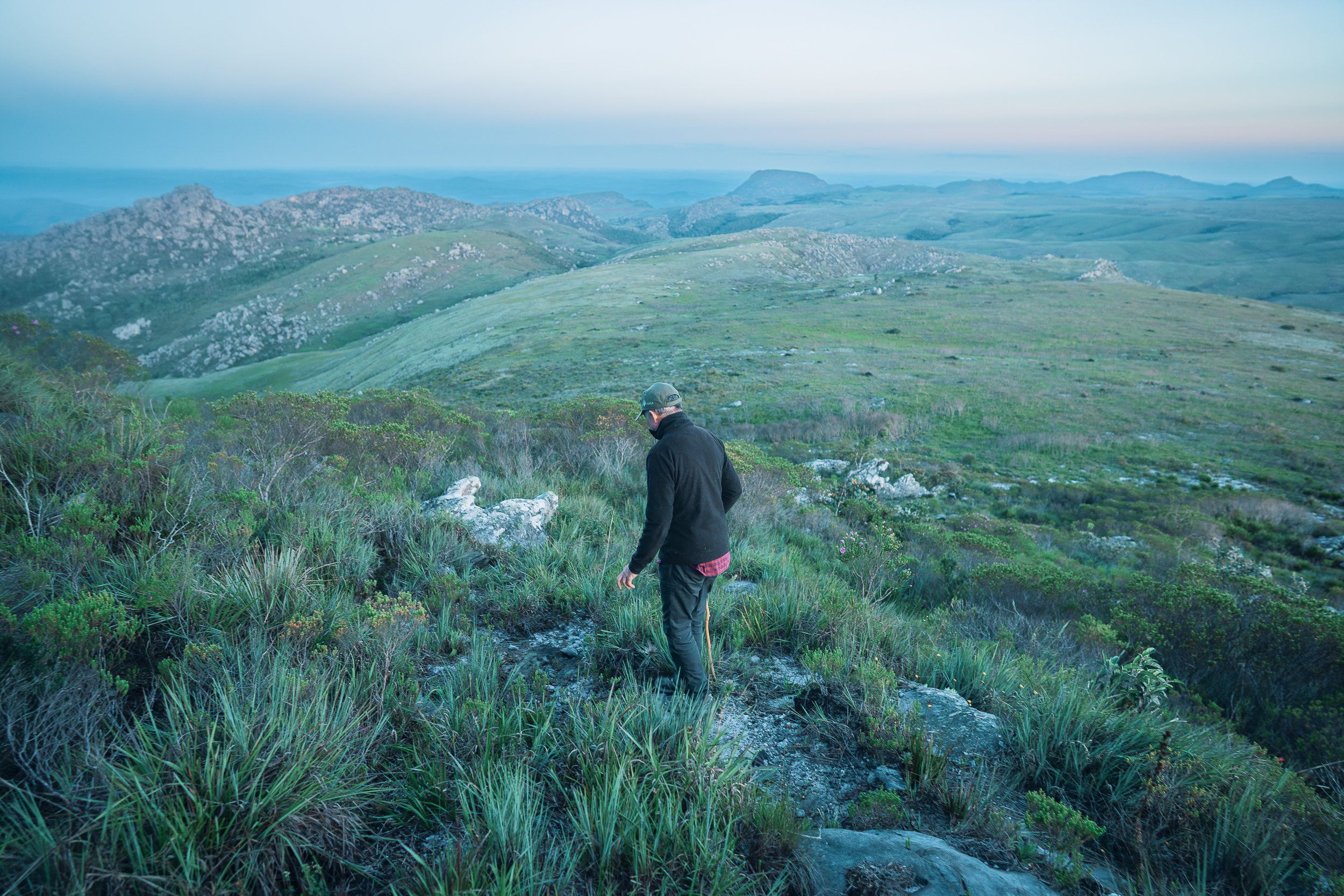
Descending Pico Dois Irmãos (April)
Highlight: Pico dois Irmãos
Twin peaks, attached at the hip, tower over the wind-swept high plateau of the Chapada do Couto, dividing the Black and Araçuai River Basins in the process. Known for centuries by locals as Serra Grande (Big Mountain; residents from the valley below could only see the taller of the twins), “Two Brothers Peak” (1,825 m) is not only the 3rd highest in the Espinhaço Meridional, it is a true pleasure to summit, with a long and gradual approach that gives way to a refreshingly short ascent. The stunning 360-degree view atop more than makes up for the effort, especially during Golden Hour. Here’s hoping your Journey passes this way.
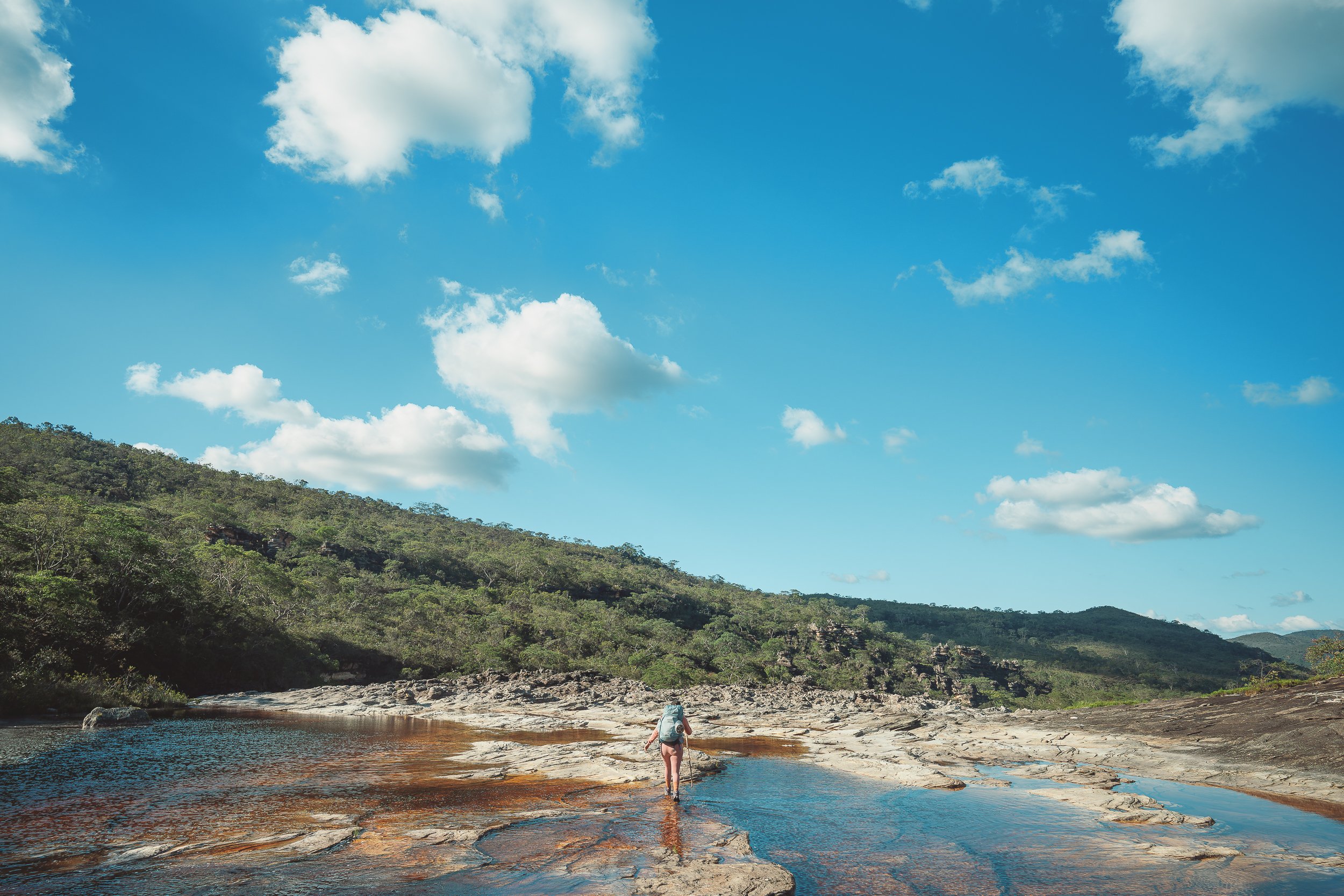
River Road, Rio Preto (April)
Highlight: Rio Preto State Park
The region’s first & most celebrated conservation unit, Rio Preto State Park harbors over 26,000 acres of immaculate cerrado, including a pristine stretch of its namesake river & a pair of striking waterfalls. We often spend days traversing the Park, from its hauntingly beautiful & little-visited southern reaches to its spectacular, water-blessed north, passing through sweeping canyons, steep escarpments, and fast-moving rivers, and alongside funky hoodoos and all manner of rocky outcrops along the way.
If it weren’t for the flowing fields of campo limpo and sparkling groves of sempre-vivas, you might swear we were in the U.S. Southwest. It’s a feast for the senses, and a fitting finale to any journey through the southeastern portion of the range.



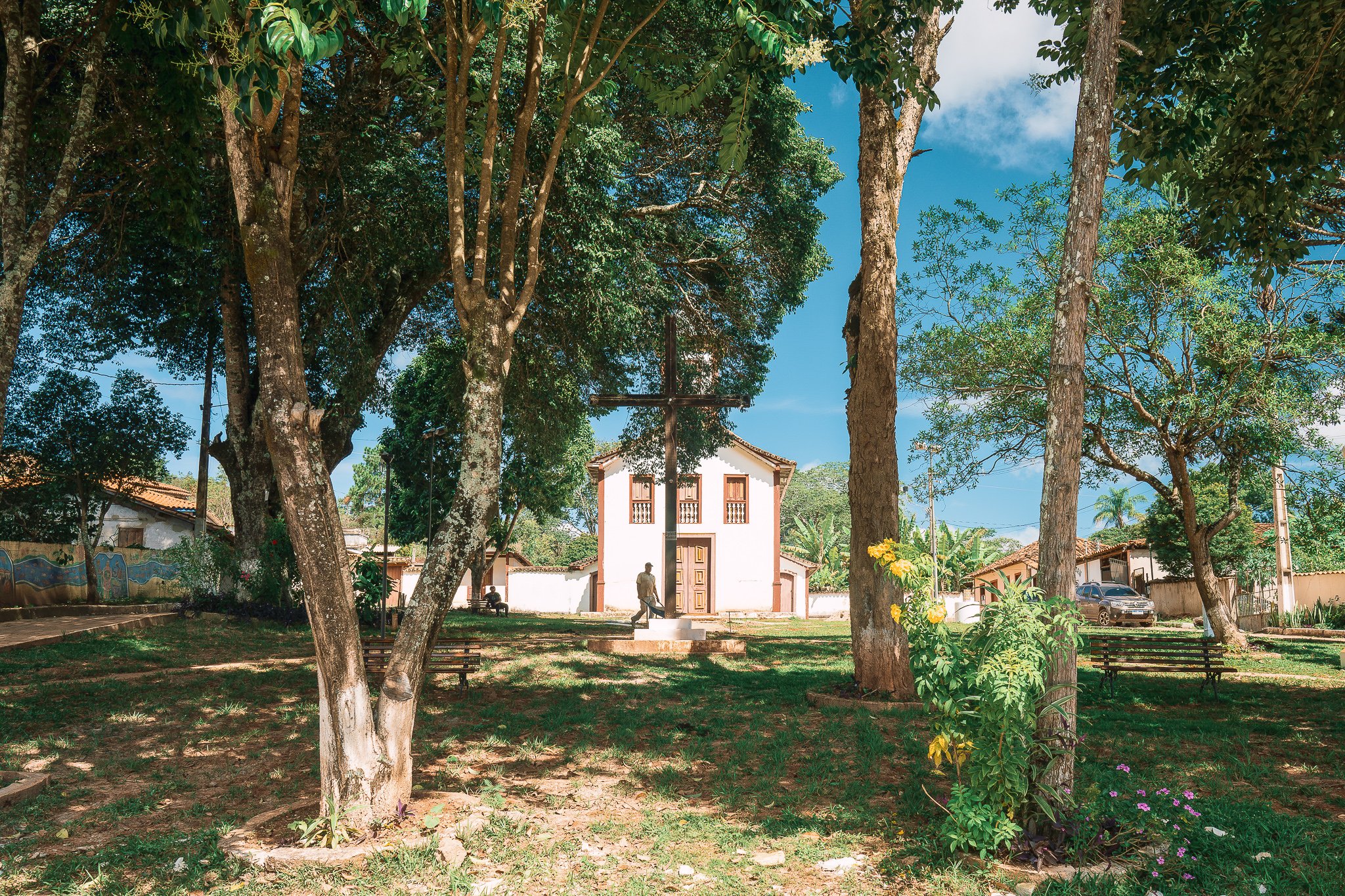
Highlight: São Gonçalo do rio das Pedras
Even in a region brimming with charming colonial-era towns, São Gonçalo do Rio das Pedras manages to feel special. Serro’s largest district is rustic, yet elegant; simple, yet mysterious; with a tranquility that lends itself to restful healing and a vibrance that beckons further exploration. There is magic in the air here, and its residents know it.
Arriving to a piping hot, all-you-can-eat wood-fired feast at the local pub after nightfall is, quite literally, the perfect ending to a long day on the trail. You may arrive exhausted, but if you’re anything like us, you’ll rarely have felt so alive.

Highlight: Serra da Maravilha
It doesn’t matter how you get there or from which direction you come, Serra da Maravilha (literally, Marvelous Mountain) is a sight to behold. Strikingly similar to Rio’s Sugarloaf Mountain—but with 1,000,000 less tourists per year—the postcard-perfect mountain and tiny hamlet of the same name (pop. < 10) are a well-kept secret even in the immediate region.
It’s a rest stop with a view, and should we decide to trek this particular stretch of trail during your Journey, we’ll have the privilege of taking in that view from a variety of angles.

Cachoeira do Tempo Perdido (July)
The Serra: Waterfalls & Water Attractions
Centuries of relentless mining along the waterways southeast of Diamantina have resulted in some of the Espinhaço’s most profoundly beautiful scenes. Exuberant Atlantic Rainforest vegetation, shimmering white sand beaches, cola-colored rivers, and pristine, gentle cascades conspire to provide the perfect swimming holes to compliment long days on the road & trail…

Cachoeira in June

Cachoeira In January
The Serra: WHere We Sleep
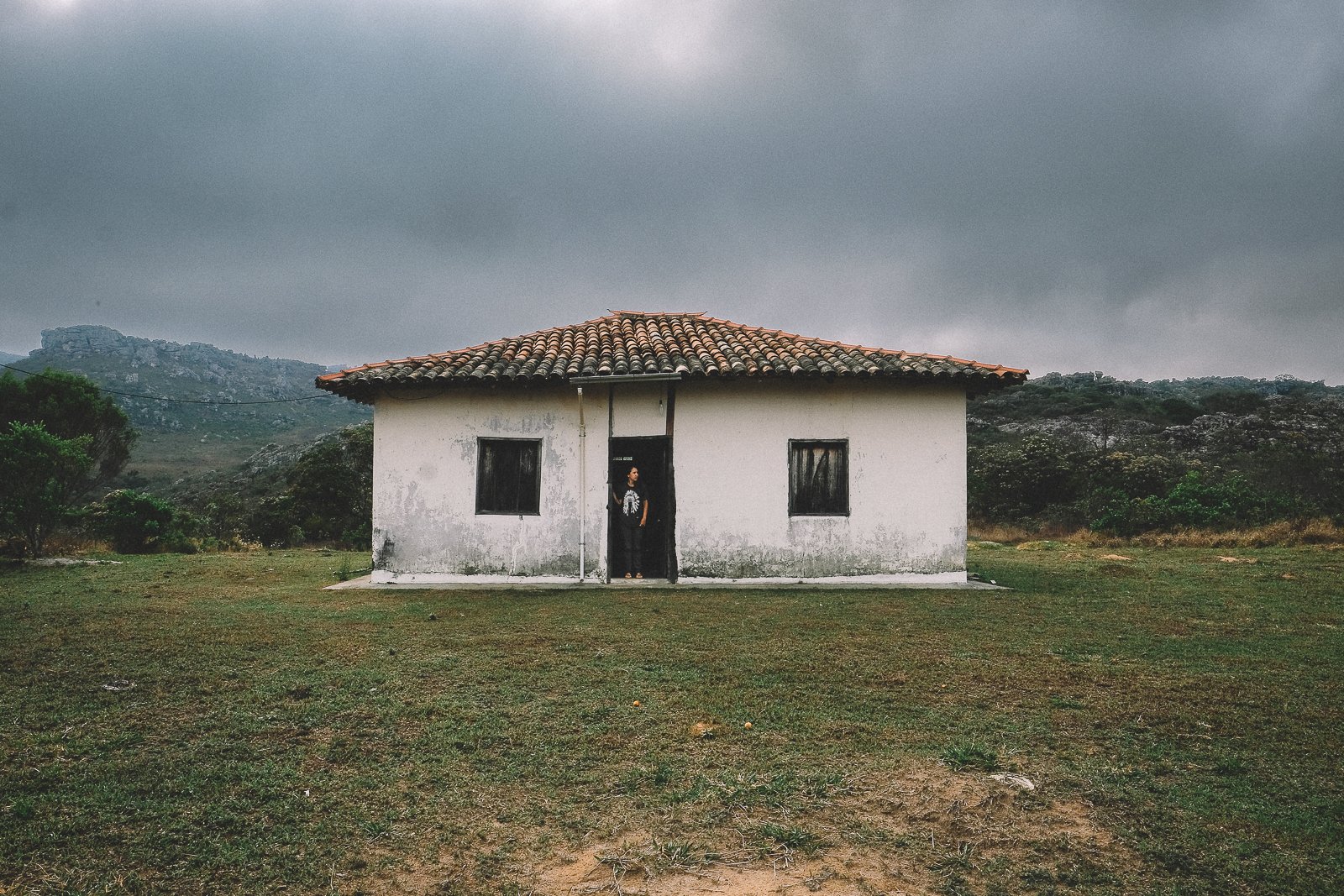
It wouldn’t be the quintessential Espinhaço circuit if it didn’t showcase the region’s diverse accommodations options. Luckily, with a diverse array of classy pousadas, welcoming homestays, scenic wilderness refuges, historic family-run hotels, and even a tidy Park campground (or chalet) or two, the Serra has it all…


