

What are the world’s hardest treks?
We asked. The answer might surprise you, though.
Part 1 in an investigative series about our Expeditions.
If you want to see our charts and findings now, scroll towards the bottom of the page.
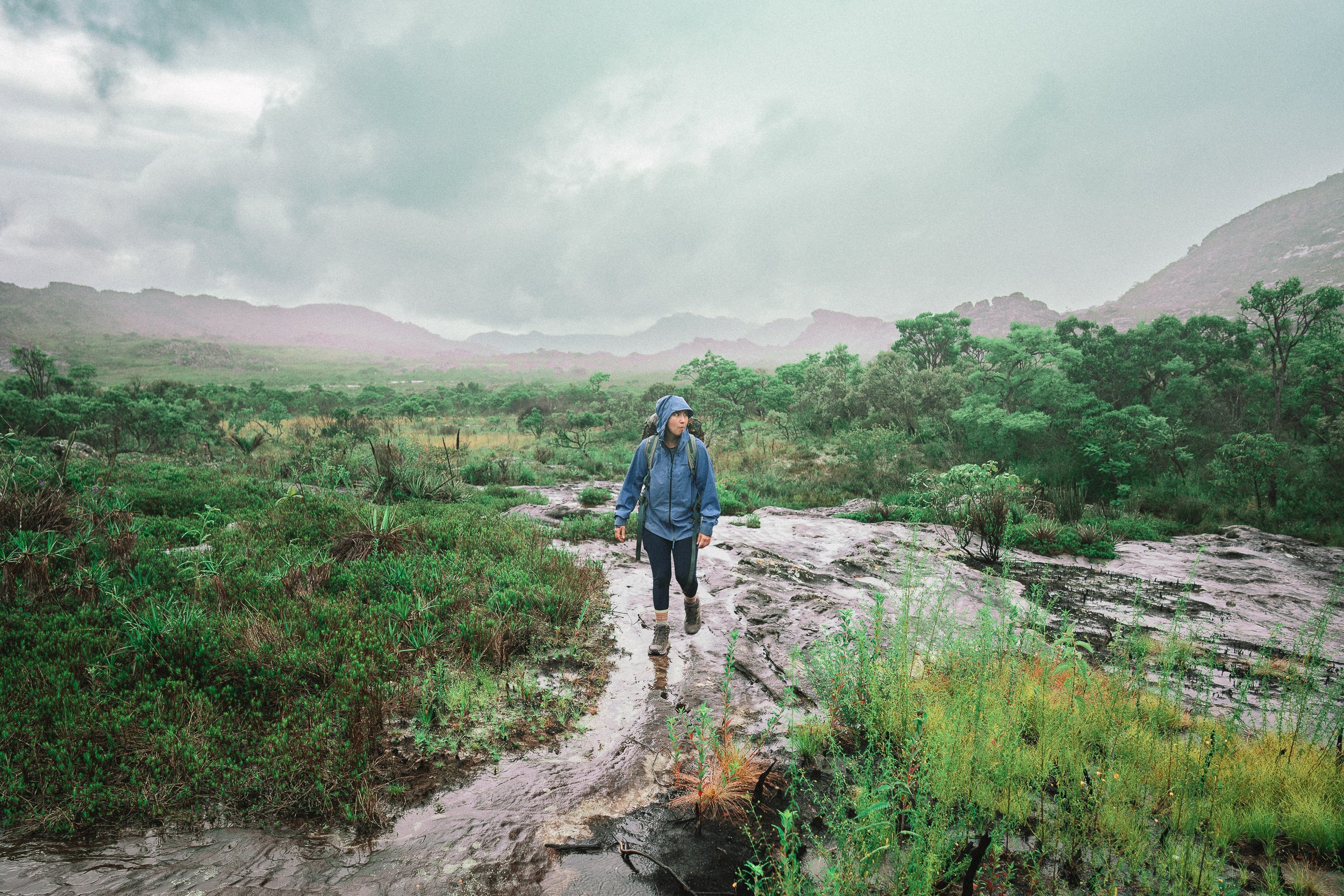
Vargem. São Gonçalo do Rio das PEdras, March
I. A Very Quick Disclaimer
In October of 2024, after our tenth crossing from Santo’s house in the quilombola hamlet of Bica d’Agua up to Mozart’s house on the Chapada do Couto plateau had left yet another traveler unable to continue with the itinerary as planned, it had me thinking: how difficult are these treks really?
Elisa and I had guided six travelers on that trail to that point, and all of them had suffered greatly—from “I can’t walk anymore (because I feel completely destroyed)” to “I actually can’t walk anymore (because my knees are completely swollen and I might need to be evacuated). Two of them. One of them couldn’t continue.
And that’s to say nothing of that day. Three of them had to continue on horseback that day. Only two of them had completed the summit.
I knew the trips were demaning, but were they really as hard as these experiences were making them seem? Had we become densistized to how difficult they were? Or were the travelers we were guiding simply not arriving in ideal physical condition?
I wanted to investigate. Both to understand our trips better, and to be able to contextualize them properly within the travel industry.
I. A Very Quick Disclaimer
First, a disclaimer: Elisa and I didn’t start Gift of Go to create the world’s hardest treks. We created it to bring seasoned, culturally curious travelers into what we call the “living stories” of places—the communities, landscapes, and traditional ways of life that define a given region. Places that she and I believed were overlooked—not just by travelers, but by society—and had something to teach us, and that we had made deep connections with during our own life experiences.
Brazil was always going to be the first story we shared. (One day I’ll write about it. And when I do, I’ll link it here.)
In the Espinhaço, we found everything we could possibly have asked for in a setting.

Bushwhacking. Sempre Vivas, april
II. A Slightly longer Background
From 2018–21, Elisa and I explored the Espinhaço primarily overland. First by 2012 Honda Fit. Later by 1989 Toyota Bandeirante (a diesel variant of the FJ40 and BJ40 Land Cruisers produced solely in Brazil from 1964–2001; I later built a website that became the global reference for the Bandeirantes, began receiving phone calls from aspiring owners around the world, and eventually started a company, The Bandy Co, to restore and export them to demanding drivers around the world; TLDR: I’m a big fan of “Bandies”).
I spent around half the year each year until 2021 exploring the small communities of the range by vehicle. I’d drive to a town, stay there for any number of days, meet locals (I’d recently separated after an 18-year marriage, so going places by myself was something I ; I digress), find out about local points of interest,
Basically, I was exploring and discovering. Or investigating. It’s a matter of framing.
I threw dayhikes and overnight treks into the mix, but as there was very little tourism infrastrcure in the Espinhaço at the time (just one knowlegable backcountry guide in a region the size of New Jersey. He subsisted largely on shorter waterfall and State Park hikes, and didn’t love the idea of multi-week expeditions. Eventually he stopped returning my calls).
All of this is to say: the idea was never to tell the living Story of Brazil through epic backcountry treks. It was simply to share the Story of Brazil.
The trekking part came later.
II. A Slightly longer Background
In September of 2021, Elisa and I did our first cohesive multi-week “field trip” in the Espinhaço: a 31-day trek that (basically) took us from Diamantina to Santo Antonio do Itambé at the far western extension of the range, across to Curimataí on the eastern edge, and back to Diamantina.
A woman whose home we had stayed at in Barão de Guaicuí knew a young geographer in Diamantina who’d recently begun guiding hikes along the Estrada Real. Elisa and I were on a 3-day trek, staying at another woman’s home in Mendanha. We called the guide and he rushed right over. I told him I wanted to link all of the communities we’d been researching on foot, and that I believed there were little-used trails between them—some historic, some private, others still used by commuters.
The expedition was planned in a single afternoon over (copious amounts of) coffee, and we headed out on Field Trip #1 two days later.
II. A Slightly longer Background
Field Trip #1 was the trip that changed it all.
All throughout the trek we rationalized the effort by telling ourselves—repeatedly—that we would never bring travelers on this kind of a trip. It was too difficult. Too demanding. No one would enjoy it.
We told ourselves that. But the reality was that it was one of the most inspiring and transformative experiences of each of our lives. One that strengthened Elisa and my relationship, jumpstarted Júlio’s career as a local guide, and ultimately gave Gift of Go form.
Field Trip #1 also became the inspiration for our 2026–27 Expedition, A Diamantine Tale.
Most importantly, it taught us that the range was best appreciated on foot. That traveling slowly and deliberately through the landscape forced us to stay present and kept us deeply immersed in the story of the range. That arriving in small communities under our own power was a completely different experience than arriving by vehicle. And that the experience accelerated our understanding of the range, its people, and ourselves.
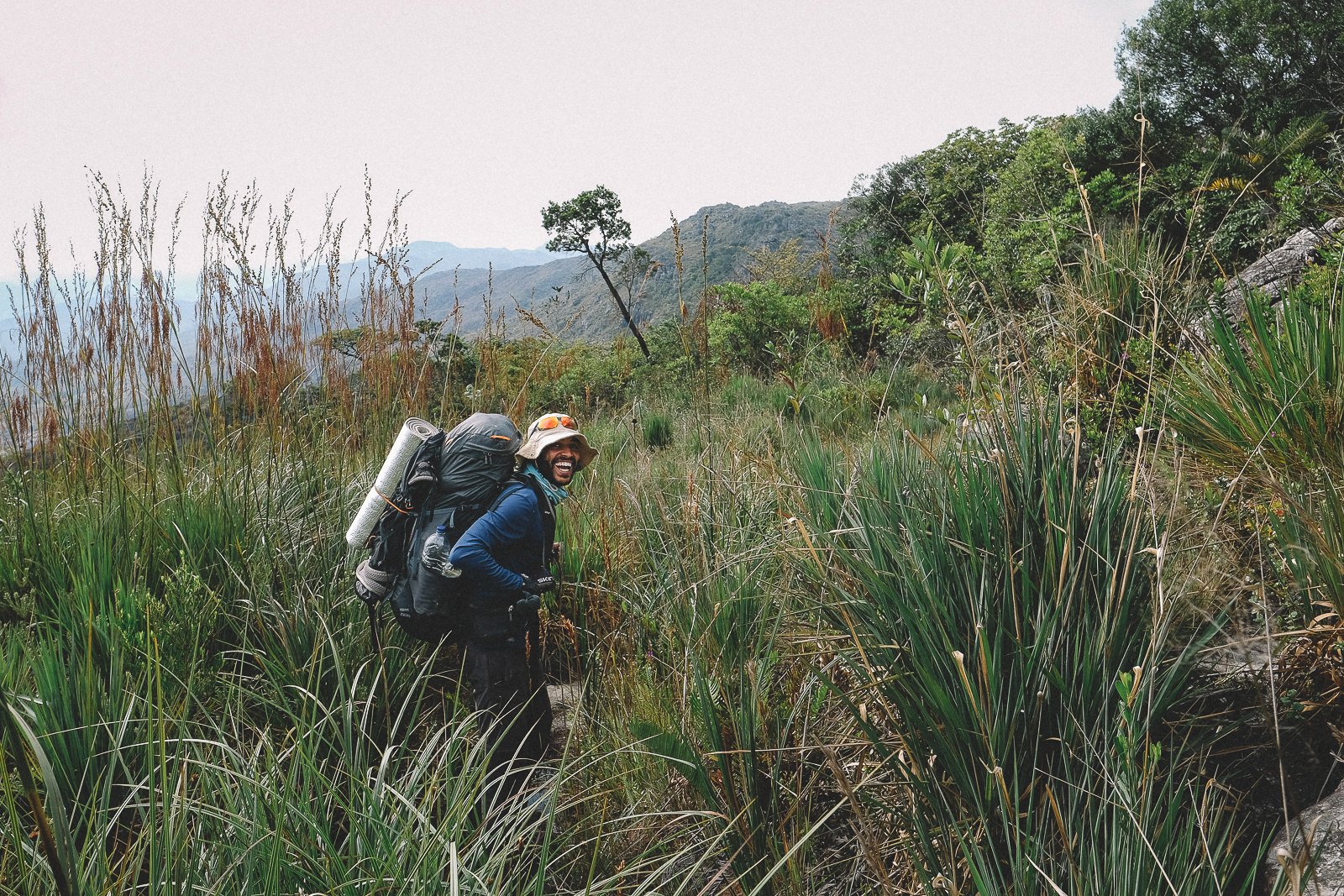
Watching Riots. Bolivia, 2001
I. What makes a trek great?
Clearly, there’s much more to evaluating a trek than how difficult it is. There’s how beautiful the route is—the landscapes, the vegetation, the trails themselves. There’s how interesting it is, in terms of biodiversity, scenery, communities. There’s how crowded or empty it is. There’s the matter of where you sleep and—if you sleep in villages or homes along the way—how you’re received along the route.
On the more intangible side of things, there’s the sense of discovery, the sense of history, and the senses of peace and danger and remoteness and mystery. There is revelation and understanding.
The way you feel when you’re moving. The way you feel when it’s over.
And of course there are your own tastes and sensibilities for all of these things.
Really, when you think deeply about it, there’s a lot that goes into what makes a trek appealing or appaling. Enriching or entertaining. Transformative or ephemeral.
And yet. All of that said, difficulty is a good and practical place to start the evaluation. It is perhaps the best possible self-selector. And it’s also relatively easy to measure.
Or so I thought.

Trail conditions. Vale do Rio Preto, April
II. Let’s Talk about trail Difficulty
How we measured
Remember how there’s a lot more to a trek than how difficult it is? It turns out, there’s a lot more to how difficult a trek is than distance and elevation (oh, if only it were so simple).
That said, miles and meters are among the most telling metrics when it comes to evaluating trail difficulty, and (thankfully) they’re also the easiest to map.
Altitude comes to mind.
There’s also terrain. It’s relatively easy to trek along flat ground. It’s harder if the trail keeps disappearing into tall grass (or worse, a bog) periodically. It’s harder still if each step requires the use of a machete. It’s Level 4 hard if there are Warrior Wasps (Synoeca cyanea / Marimbondo-tatu) chasing you.
Ultimately, we used these four metric in determining how difficult each trek is:
· Distance (kilometers—sorry fellow Americans)
· Elevation (meters)
· Altitude. Broken into three categories:
· Terrain. Broken into five bundles: Easy. Medium. Hard. Very Hard. And (extreme voice) The Snowman.
· We also suggested Pack size, which we approximated (sigh), using the best available
What we didn’t measure: guided or unguided, how many travelers travelers trek it each year (actually we did this, but we put it on a different map. I’ll post that one day in my “free” time)
I’ll also save you the time: Elisa and I haven’t done all—or even most—of these trips. In fact,
II.
The Field
There are unquestionably—undoubtedly—other, more difficult (and easier) treks in the world. There’s nothing to stop you from trekking from your house into the closest (or furthest) active volcano. But you have to draw the line somewhere. For me and the purposes of this study, that line was “universally recognized by serious trekkers”.
In a word, “iconic”: we wanted to put our expeditions against global icons—the proving grounds that built the mythology of adventure travel… , to help us understand them better, and also to help travel industry contextualize this new type of immersive, challenging, but also pricey trip that Gift of Go was offering.
You know the icons: Macchu Picchu (obviously. and obviously very easy in a study about trail difficulty), Kilimanjaro, Patagonia “O”, the Camino de Santiago, Annapurna (a trek I’ve always imagined sits close to Gift of Go’s spirit, and that Elisa and I plan to do one day). But also (extreme challenging voice): The Snowmannnn (in Bhutan).
We removed long-distance trails like the Appalachian Trail (USA), Continental Divide Trail (USA), Pacific Crest Trail (USA) for obvious reasons: they’re certainly iconic, but they’re also not expeditions. They’re VERY do it at your own pace. Some people take 6 months to the ADT. Some people take 6 weeks. That sort of variance complicates the study, and also
Here, in no particular order, is the full list we came up with:
Macchu Picchu
Kilimanjaro (Machame Route)
Everest Base Camp
Annapurna Circuit
Patagonia “O” Circuit
(extreme challenging voice) The Snowman Trek
GR20
Walker’s Haute Route
Tour du Mont Blanc
Camino de Santiago
John Muir Trail
Kumano Kodo
Because we started this exercise to better understand our own 2026–27 Expeditions, and because two of them (DWTLT and The Highlands of Brazil) aren’t pure treks—but include significant stretches of trekking—we decided to throw a pair of other internationally famous multi-modal oranges into the mix as well:
Mongolia Steppe Expedition
Pamir Highway / Silk Road
II.
The Gift of Go Expeditions
Elisa and I are guiding four Expeditions in 2026–27, and I was curious to see how each stacked up against the field of global icons.
Diamonds/Wild Tales + Lost Trails (28 days)
A Diamantine Tale (21 days)
The Highlands of Brazil (14 days)
The Serra Circuit (12 days)
II.
The Findings
What we found was…
The Field
If you did Macchu Picchu and thought to yourself “this is the hardest thing I’ve ever done”, then ADT probably isn’t going to make you a happy camper (although The Serra Circuit or a shorter Bespoke trek might).
If, on the other hand, you just came back from Annapurna and thought to yourself, man, I wish I could have experienced it 40 years ago, you should probably contact us asap (really. our spots are limited).