

How We Go
AN Introduction to Trekking, Riding & Overlanding in The Serra do Espinhaço
2026–27
The Story of Brazil is written in trails, dirt roads, kitchen tables, and small villages — and few places tell that story as clearly as the Serra do Espinhaço. Here, high savannah and Atlantic Forest, river valleys and plateaus, and colonial towns and rural communities are all stitched together by historic trails and little-traveled dirt roads.
Whether you join us on an Expedition, a Journey, or a Bespoke trip, you’ll find that trekking, riding, and overlanding each have a part to play in that story. In our experience, there’s no richer way to understand a place than to move slowly through it, and the Espinhaço’s labyrinth of historic trails and bucolic backroads lends itself perfectly to that.
However you choose to travel with us, you’ll feel the story in your legs as much as in your conversations.
If you’d like to see how it all translates into actual itineraries,



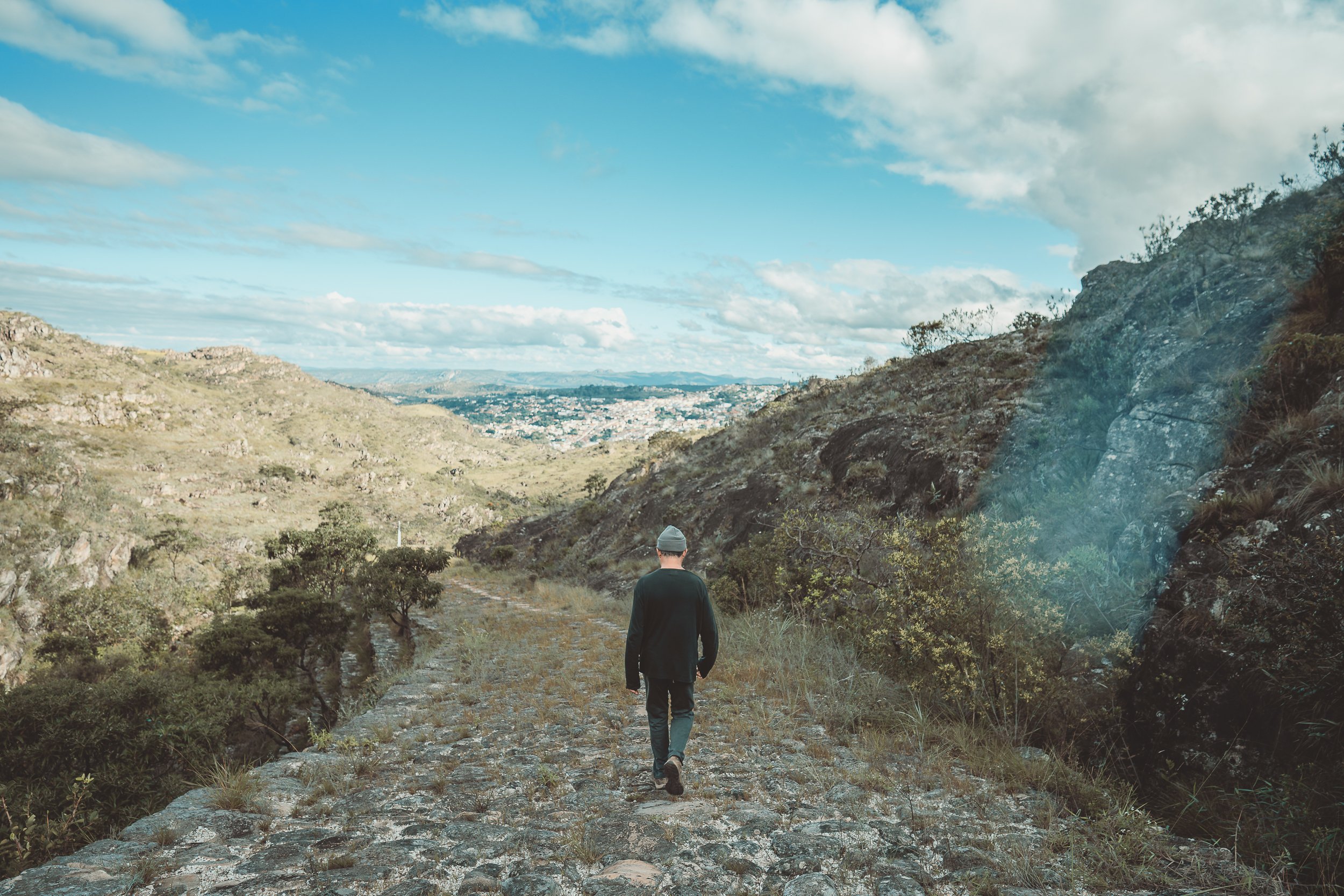
Caminho dos Escravos (April)
The Trails
Three centuries of movement. Years of rediscovery.
Getting from Point A to Point B has always been an adventure in the Serra do Espinhaço, and nowhere is that more evident than along its network of historic trails — spectacular, and almost always empty.
You’ll see all kinds of paths here, from urban footpaths and game trails to lightly used dirt roads, former railway beds, and Park-administered nature trails in conservation units, but three types of historic trail shape most of what we do in the backcountry:
– Colonial stone paths, built by enslaved Africans to carry diamonds and gold along the Estrada Real.
– Tropeiro trails, carved by mule drivers who moved goods and stories between towns well into the 20th century.
– Smugglers’ descaminhos, the “wrong ways” once used to move contraband, later walked and recorded by European naturalists crossing the Cerrado.
Our team has spent years rediscovering this lost network, walking it with residents, listening to the folks who live along int, documenting landsacpes and stories, and charting new ways through. As much as we’ve loved having the trail to ourselves, it’s a greater pleasure to share it with curious, adventurous travelers.
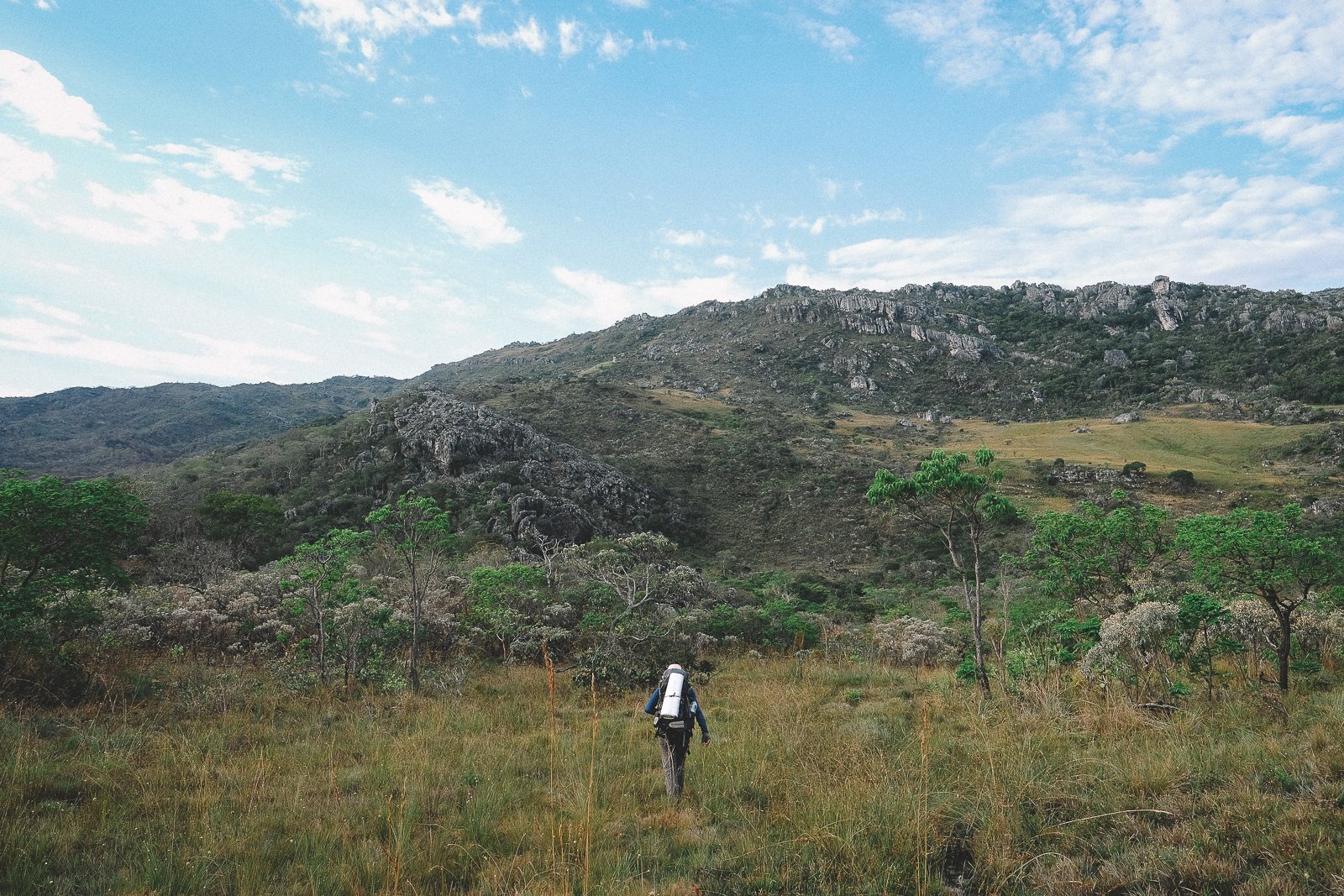
Trekking in the Jequitinhonha River Valley (October)
Trekking
The way the Espinhaço has always been crossed.
For us, trekking is still the purest way to understand the nature, culture, and history of a place. In the Espinhaço, it’s also often the most practical: there are stretches of backcountry where your own two feet are the only way to get between communities.
You don’t need to be an elite athlete to enjoy the trails here. If you’re joining us on an Expedition or a Journey, though, you should expect long, active days — typically with 15–25 km on foot and significant elevation gain and loss on varied mountain terrain. On some days we push our legs harder; on others the pace is gentler. The pattern, however, stays the same: big landscapes, effortful movement, and real terrain.
If that sounds ambitious, we can always adjust. Bespoke trips are where we mix and match: shorter treks, more overland days, more time in towns or at waterfalls, or extra rest days built in between. The goal isn’t to exhaust you; it’s to make sure the route matches your capacity and curiosity.
Trekking is our most sought-out guided activity, and it continues to shape how we see the region. From our vantage point, it’s a sight to behold.

Riding in the Black River Valley (April)
Trail Riding / Horse Trekking
Riding through the hinterlands.
Horses and pack animals have been part of life in the Espinhaço since gold was first discovered here in the early 18th century, and they still play a vital role in local culture, work, and transport. They also offer one of the most memorable ways to move through the range.
If you’ve ever dreamed of steadying a sturdy steed through the Brazilian hinterlands, this is where that dream belongs. The serras around Diamantina are welcoming even for first-time riders, while the remote river valleys and open dirt roads of the Sertão and Berço give experienced riders plenty to work with.
On many Expeditions and Journeys, you can expect a handful of optional riding days, which often double as rest days for weary legs. On Bespoke trips, some travelers choose a single, unforgettable day in the saddle, while others build whole itineraries around riding, with hikes and overlanding woven in.
Regardless of whose hooves are moving, we recommend you catch your breath, look up from the trail, and lean into the Espinhaço’s long tradition of tropeirismo and cavalgadas.

Crossing the Rio Pardo (August)
Overlanding
Between backroads and bushwhacks.
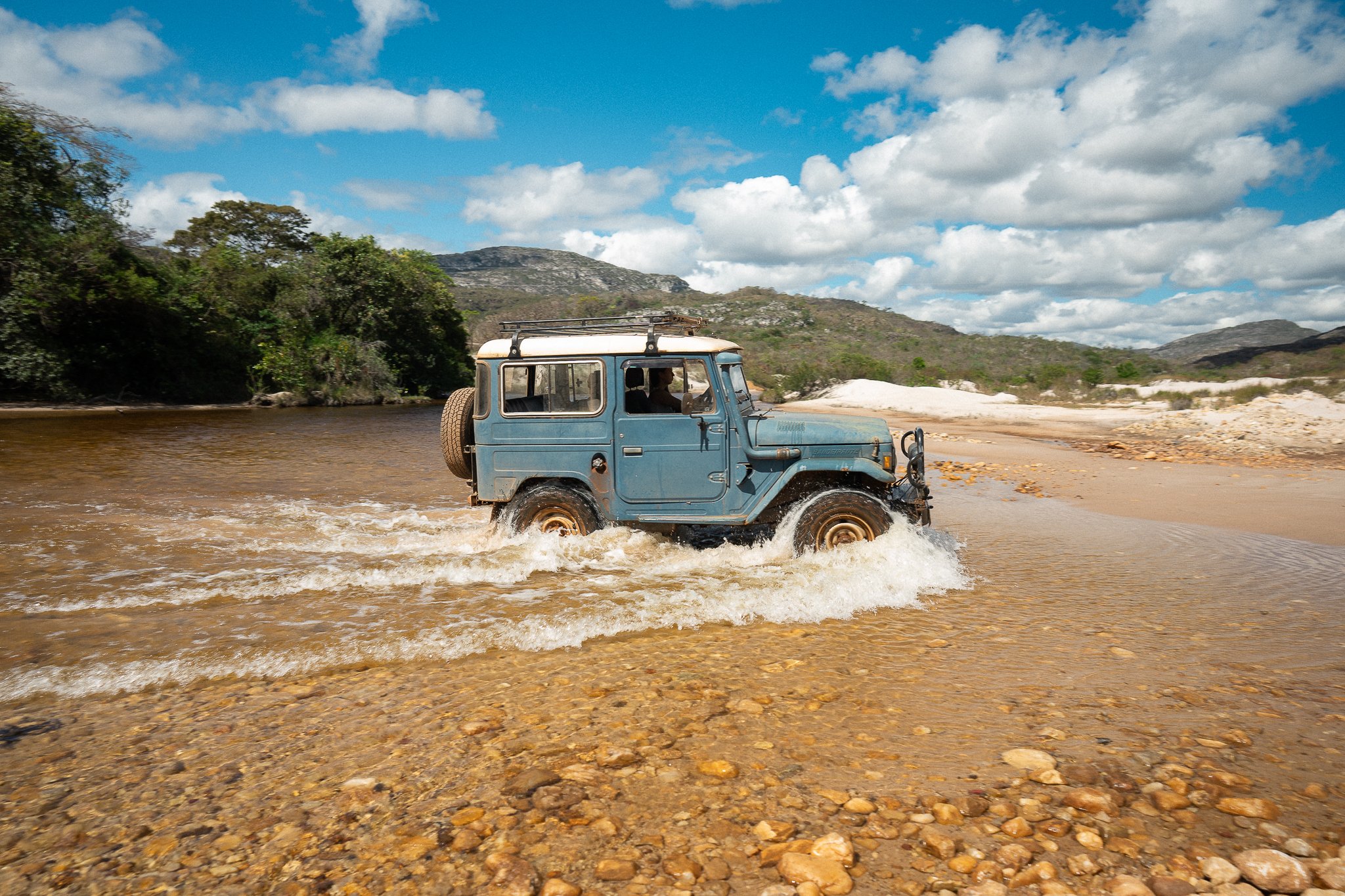
Our earliest explorations of the Espinhaço weren’t on foot or on horseback. From 2018–2020, we criss-crossed the range mostly by vehicle, piloting a 1989 Toyota Bandeirante named “Gaúcha” from one small community to the next. We’d arrive, grab our packs, walk to local sites, then come back to eat, drink, talk, and take notes.
Today, we still spend plenty of time in vintage 4x4s — leaf-sprung, diesel-powered workhorses that support our crossings and keep the wheels of the journey turning. Overlanding helps us:
– cover big distances between valleys and plateaus;
– connect remote trailheads and tiny communities;
– move support vehicles and crew in ways that keep everyone safe.
If you join us on a Bespoke trip and care more about time in communities than about long days on the trail, overlanding often becomes the backbone of the itinerary: more villages, more waterfalls, and more stops in less time, with the option to get out and walk when it makes sense.
We’d advise you not to underestimate the adventurous side of travel by vehicle here. Washboarded dirt roads, stone causeways, narrow bridges, and the occasional water crossing are all part of the commute — and that’s just the front country. Further afield, in Sempre Vivas, the “roads” become obstacle courses, with sandpits, jagged rocks, seasonal marshes, and forest-enshrouded double-track.
As your captain speaking, we recommend you relax and enjoy the ride.
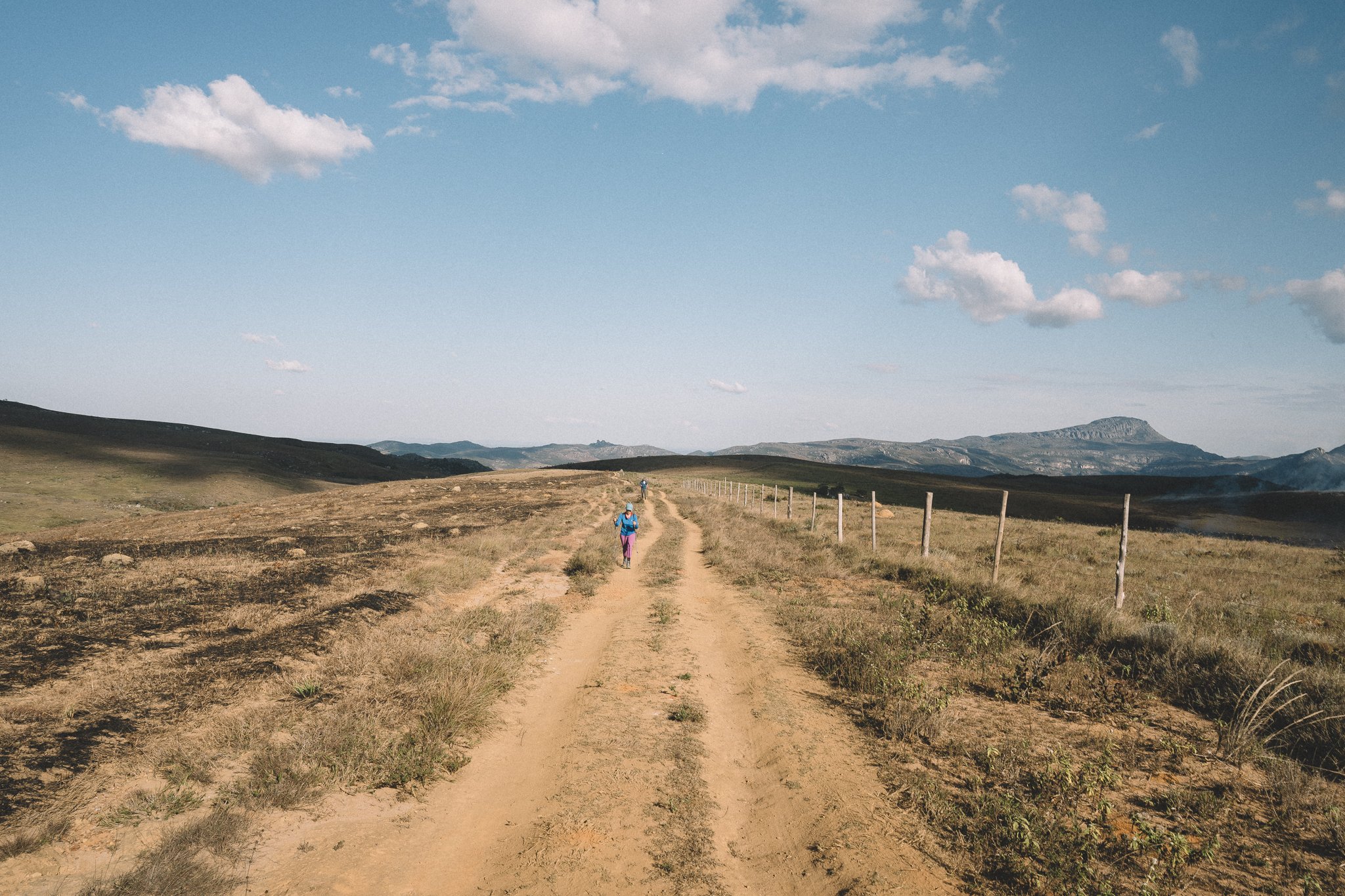
Trekking On the Chapada do Couto (July)
If you’d like to see how trekking, riding, and overlanding come together on a real itinerary,
[See our 2026–27 Expeditions →]